작성자: Kai Life Editorial Team
If saved recipes are difficult to find, use one small tagging rule instead of adding more folders: give each item a type tag, a time tag, a planning tag, and an action tag. A 15-minute routine can then turn a mixed collection of recipes, meal notes, and shopping lists into a system that is easier to browse and maintain.
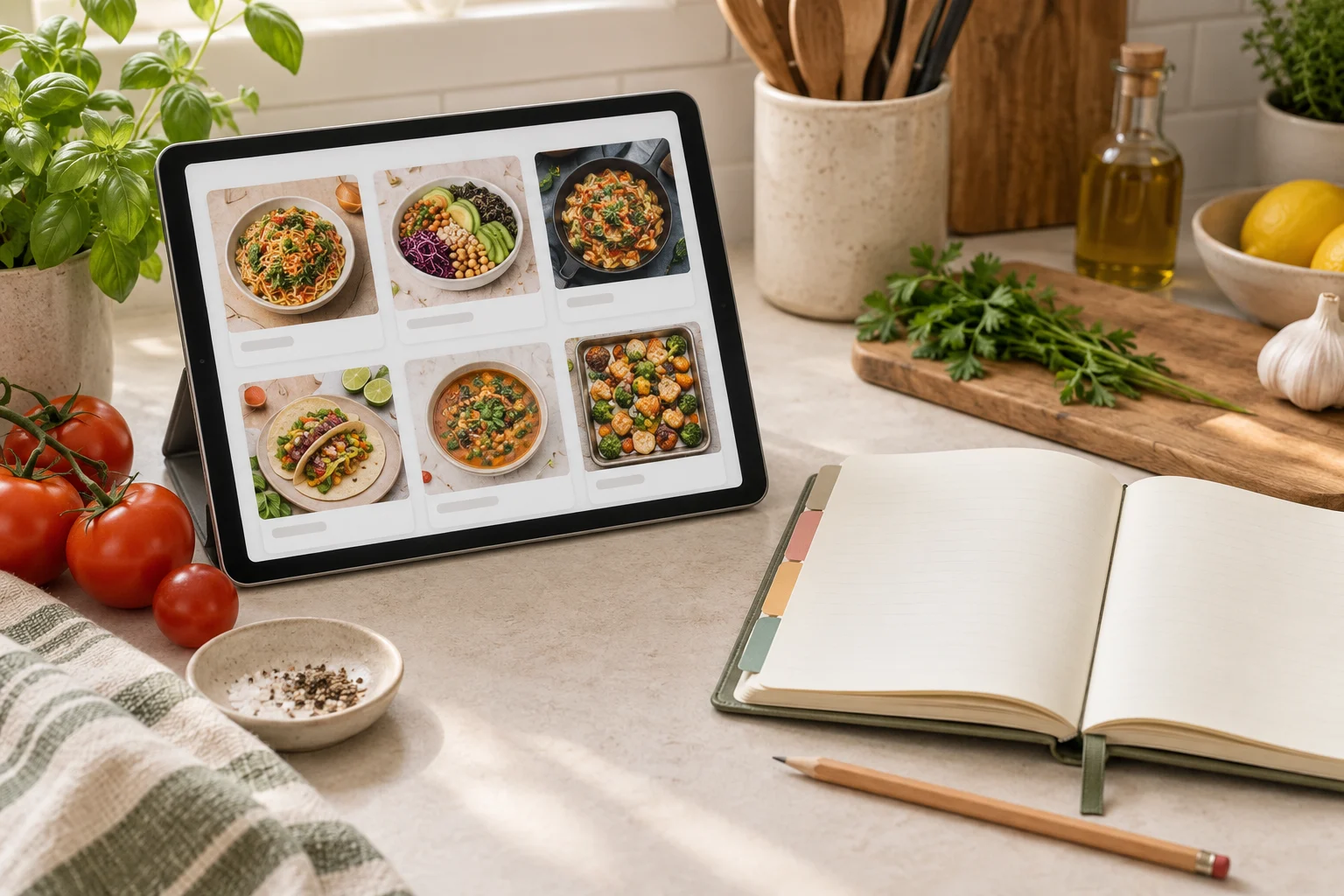
This approach is designed for busy people who save recipes in several places, such as notes, bookmarks, screenshots, messages, or paper lists. It does not require moving everything into one app. The useful part is the shared naming pattern.
The four-part tagging rule
Use four questions when you label a saved item:
- What is it? Add a type tag such as
recipe,meal-note,shopping-list, ortechnique. - How much time does it fit? Add a time tag such as
quick,weeknight,slow, orprep-ahead. - Where does it belong in planning? Add a planning tag such as
breakfast,lunch,dinner,snack, orside. - What should happen next? Add an action tag such as
try,repeat,adapt,buy, orarchive.
A tag set might look like this:
recipe / weeknight / dinner / try
The point is not to describe every detail. The point is to create enough predictable language for future searches.
Why a small vocabulary helps
Recipe collections often become hard to search because each saved item is labeled differently. One note might say “fast dinner,” another “easy meal,” and another “busy-night food.” They may describe a similar use, but a search for one phrase will not necessarily surface the others.
A limited vocabulary reduces that problem. Choose one preferred word for each idea and use it repeatedly. For example, select quick rather than alternating between fast, easy, and 15-min. You can still write natural descriptions in the note itself; the tags provide the consistent index.
Keep tags separate from ingredients and personal comments. “Tomato, rice, and lemon” are useful contents, while weeknight and try explain how you expect to use the item. Separating these functions makes the collection easier to scan.
The 15-minute routine
Minutes 1–3: Prepare
Choose one capture location to work on during this session. It could be a recipe note, a bookmark folder, a spreadsheet, or a paper stack. Do not attempt to reorganize every kitchen record at once.
Write down the four tag groups somewhere visible:
| Group | Question | Example tags |
|---|---|---|
| Type | What is this item? | recipe, meal-note, shopping-list |
| Time | When does it fit? | quick, weeknight, slow |
| Planning | How might it be used? | breakfast, lunch, dinner |
| Action | What is the next decision? | try, repeat, adapt |
Pick a short list of approved tags before sorting. If a new label comes to mind, record it in a temporary note rather than adding it immediately. This keeps the first pass moving.
Minutes 4–8: Sort
Process only the items you can see in the selected collection. For each item, answer the four questions. If an answer is unclear, leave that group blank or use a neutral label such as review. Avoid spending the session researching ingredients, rewriting instructions, or comparing similar recipes.
For a saved recipe, you might write:
recipequickdinnertry
For a meal note, you might write:
meal-noteweeknightlunchrepeat
For a shopping reminder, you might write:
shopping-listprep-aheaddinnerbuy
Minutes 9–12: Act
Use the action tag to make a small decision about each item. The action is not a promise to cook or purchase anything. It is simply a way to separate current possibilities from notes that no longer need attention.
try: interesting, but not yet evaluated in your routine.repeat: a meal idea you would consider using again.adapt: useful starting material that needs edits to fit your preferences or schedule.buy: a shopping-related reminder that needs a later decision.archive: information you want to retain without keeping it in the active view.
At this stage, avoid turning the routine into a cooking session. The goal is to improve retrieval and reduce ambiguous notes, not to complete every food-related task.
Minutes 13–15: Review
Search or scan the collection using two tags together. Examples include quick + dinner, meal-note + repeat, or shopping-list + buy. Check whether the results resemble the question you would ask on a busy day.
If the results feel too broad, adjust one tag rather than creating several new ones. If the results feel too narrow, remove a tag from the search before changing the system. Finish by writing down any vocabulary decisions that should apply next time.
How to write tags that remain useful
Choose the way you search
Tags should reflect the words you are likely to type when looking for something. If you think “dinner this week,” a tag such as dinner may be more useful than a detailed category that you rarely remember.
Keep each tag focused
A tag works best when it answers one kind of question. Do not use quick-dinner for every purpose if separate quick and dinner tags make combinations easier. The right level of detail depends on the number of saved items and how you browse them.
Separate current action from personal judgment
Words such as “good,” “favorite,” and “interesting” can be subjective. They may still be useful as comments, but action tags are often easier to apply consistently. For example, repeat says what you may do with the item, while “best” requires a more personal interpretation.
Use one format
Pick a format and keep it stable. Lowercase single words are easy to type, but a hyphenated phrase may be clearer for a specific concept. The format matters less than consistency across the collection.
A copyable kitchen organization checklist
- Choose one recipe, meal-note, or shopping-list collection for the session.
- Write down the approved type, time, planning, and action tags.
- Apply no more than one tag from each group when the information is clear.
- Use a temporary
reviewlabel when a decision would take too long. - Keep ingredients and personal comments in the note, not in the tag vocabulary.
- Test two-tag searches that match real planning questions.
- Record unfamiliar labels for later review instead of expanding the system immediately.
- Stop after 15 minutes and continue from the next visible item another time.
What to do with older or duplicated notes
Older collections often contain repeated links, incomplete meal notes, or several versions of one idea. During the first pass, label the items before deciding whether to merge them. A tag such as review can hold uncertain records without interrupting the rest of the routine.
When two notes appear to serve the same purpose, compare their action tags. One may be a reference recipe and the other a personal adaptation. Keeping both can be reasonable if they answer different questions. If they do not, place the less useful version in archive rather than deleting it during a rushed session.
For shopping lists, distinguish between a reusable reference and a current reminder. A general list of items to consider can use shopping-list and reference, while a list connected to a particular meal can use buy and the relevant planning tag. This prevents a long-term note from being confused with a current task.
FAQ
How many tags should one saved recipe have?
Start with up to four: one type, one time, one planning, and one action tag. Add more only when a repeated search problem shows that another dimension is useful.
What if I save recipes in multiple apps?
Use the same vocabulary wherever the app allows tags or searchable text. If one tool does not support tags, place a short label line at the top of the note, such as recipe | quick | dinner | try.
Should ingredients become tags?
Usually, ingredients can remain in the recipe text or note body. Ingredient tags may be useful for a collection built specifically around ingredient-based searches, but adding them to every item can make the system slower to maintain.
When should I revise the tag list?
Review it after several short sessions or when searches repeatedly fail. Remove labels that mean nearly the same thing, combine terms that are used interchangeably, and keep a small record of changes so older notes can be updated gradually.
Conclusion
A manageable kitchen organization system does not need a long taxonomy. The four-part rule—type, time, planning, and action—gives each saved recipe or meal note a practical place in future searches. Use the 15-minute routine to prepare a small vocabulary, sort a limited collection, assign next actions, and test searches that reflect real life. Over time, this creates a shared language for recipes, meal notes, and shopping lists without requiring a complete reorganization day.