Money & Saving

생활비를 계획하고 절약 습관을 만드는 기본 가이드
Essential guides to planning everyday expenses and building better saving habits.

  • Household Spending Organization: A Simple Four-Step Checklist

    Household Spending Organization: A Simple Four-Step Checklist

    작성자: Kai Life Editorial Team

    Household spending organization becomes easier when the goal is not to record every detail forever, but to create a clear view of where money went and what needs attention next. A practical approach is to use four steps: prepare, sort, act, and review. You can begin with recent bank or card records, group them into a small number of useful categories, identify recurring payments and unclear entries, then review the system briefly each month.
    Household Spending Organization: A Simple Four-Step Checklist — topic illustration

    Why a small grouping system is useful

    Many spending records become difficult to use because they contain too much detail or use categories that do not help with a decision. For example, separating every grocery store, convenience store, and delivery service may create a long list without showing the household pattern. A smaller structure can make the record easier to scan.

    The purpose of grouping is not to judge each purchase. It is to answer practical questions such as:

    • Which payments repeat each month?
    • Which expenses change with household activity?
    • Which entries are difficult to identify?
    • Which category needs a closer look before the next review?

    A useful category is one that helps you decide what to check, keep, change, or discuss. If a category does not support a decision, it may be too detailed for your current system.

    Step 1: Prepare the records before sorting

    Collect a manageable period of records, such as one recent month. Use the sources that contain your household activity, which might include a bank account, payment card, cash notes, or a receipt folder. You do not need to rebuild older records before starting. Beginning with a defined period keeps the first review from expanding into a large project.

    Create a working list with a few basic columns:

    Date Description Amount Initial note

    At this stage, copy the information without trying to make a decision about every entry. Mark entries that need a second look, such as an unfamiliar merchant name, a combined payment, or a purchase that may belong to more than one household purpose.

    Keep private account numbers and other sensitive details out of shared notes. A short description is usually enough for organization.

    Step 2: Sort spending into decision-friendly groups

    Use a limited set of groups that reflects how your household reviews spending. The following structure is a starting point, not a required classification:

    • Home and regular bills: housing-related payments, utilities, communication, and other household services.
    • Food and daily living: groceries, meals, household supplies, and routine necessities.
    • Transport and movement: public transport, fuel, parking, and other travel-related spending.
    • Flexible household spending: clothing, activities, gifts, personal items, and purchases that vary.
    • Unclear or one-off: entries that need confirmation or do not fit the current structure.

    You can rename these groups to match your home. The important point is to keep the number of groups small enough for a quick monthly review. A separate group for every merchant may be useful for a specific investigation, but it can make routine maintenance slower.

    For mixed purchases, choose one consistent method. You could record the whole transaction in the group that best describes its main purpose, or split it when the separate amounts are easy to identify. Write a short note about the method so household members can use the same approach later.

    A simple comparison table

    After sorting, compare categories using a table that focuses on action rather than judgment.

    Group Entries to check Repeats? Next action
    Home and regular bills Yes / No / Unsure
    Food and daily living Yes / No / Unsure
    Transport and movement Yes / No / Unsure
    Flexible household spending Yes / No / Unsure
    Unclear or one-off Yes / No / Unsure

    This table does not need to become a formal budget. It is a way to make the record easier to interpret.

    Step 3: Act on the clearest items first

    Once the entries are grouped, choose only a few actions. Too many changes at once can make a simple record-keeping system harder to continue. Start with items that are clear and easy to verify.

    Possible actions include:

    • Confirm the name or purpose of an unclear payment.
    • Mark a recurring payment so it is easier to recognize next month.
    • Move a transaction into a more useful category.
    • Add a short explanation for a one-off household purchase.
    • Decide who will record cash spending and where the note will be kept.
    • Choose one date for the next monthly review.

    Recurring payments deserve a separate label because they can be overlooked when scanning individual transactions. The label does not mean the payment needs to be canceled or changed. It simply distinguishes a repeating item from a purchase that may not appear again.

    For unclear entries, avoid guessing. Use a neutral note such as “check receipt” or “confirm with household member.” A record that acknowledges uncertainty is more useful than one that gives an unsupported explanation.

    Step 4: Review and adjust the system

    At the next review, check whether the categories helped you understand the records. The review is also a chance to improve the process itself.

    Ask these questions:

    • Did any category receive many entries that felt unrelated?
    • Were there repeated payments that were difficult to recognize?
    • Did the “unclear or one-off” group become too large?
    • Did the notes contain enough information for another household member?
    • Was the chosen review time practical?

    If a group is too broad for a useful decision, divide it once. If two groups lead to the same action, consider combining them. The organization system should reflect how your household works now; it does not need to remain unchanged.

    A 15-minute monthly action plan

    A short routine can help prevent the records from becoming a large unfinished task. Adjust the timing to the amount of activity in your household.

    1. Minutes 1–3: Open the selected account, card, receipt, or cash records for the review period.
    2. Minutes 4–7: Add missing entries and mark unfamiliar descriptions.
    3. Minutes 8–11: Sort entries into the household groups and label repeating payments.
    4. Minutes 12–14: Choose one to three clear follow-up actions.
    5. Minute 15: Record the next review date and note any category change.

    If the records cannot be reviewed within this time, do not assume that more categories will solve the problem. The period may contain too many transactions, or several sources may need to be combined first. In that case, divide the work by source or use a longer review window.

    Copyable household spending checklist

    Use this checklist in a notebook, spreadsheet, or notes application:

    • [ ] Select one review period.
    • [ ] Collect the available spending records.
    • [ ] Remove or protect unnecessary sensitive information.
    • [ ] Mark unfamiliar descriptions for later confirmation.
    • [ ] Group each entry using the household’s current categories.
    • [ ] Label payments that repeat.
    • [ ] Add a short note for one-off or mixed purchases.
    • [ ] List one to three follow-up actions.
    • [ ] Record the next review date.
    • [ ] Reconsider categories that were confusing or unused.

    Common problems and practical adjustments

    The categories keep multiplying

    When a category is created for every special case, the monthly review can become a classification exercise. Return to the question, “What decision will this category support?” If there is no clear answer, place the entry in a broader group and add a brief note.

    Several people record spending differently

    Write a short shared rule for mixed purchases, cash entries, and recurring payments. The rule can be simple enough to fit at the top of the shared sheet. Consistency is more useful than a complicated classification standard.

    Some payments are hard to recognize

    Keep the original transaction description and add a separate plain-language note after confirming it. This preserves a reference for later checking without relying on memory.

    The monthly review is postponed

    Reduce the first task to identifying recurring payments and unclear entries. A partial review can show which records need attention and may make the next session more focused.

    FAQ

    How many spending categories should a household use?

    There is no single suitable number. Start with a small set that separates the decisions your household actually makes. Add a category only when the existing groups no longer make the records clear.

    Should cash purchases be included?

    Include them if you want the record to describe household spending more fully. A simple cash note with the date, amount, and group may be enough. If cash details are unavailable, mark the gap rather than inventing an entry.

    Do recurring payments need their own category?

    Not necessarily. A recurring label can work alongside the main spending group. For example, a communication payment can remain under home and regular bills while also being marked as recurring.

    Is this a budget?

    This method is mainly an organization system. It helps you understand and maintain spending records. You can use the information for a separate household planning process, but this checklist does not set targets or provide financial advice.

    Conclusion

    Household spending organization can remain practical when the system is built around a few useful groups and a short review routine. Prepare the records, sort them by household purpose, act on the clearest questions, and review whether the structure still helps. The goal is a record that people in the household can understand and maintain, not a complicated document that requires constant attention.
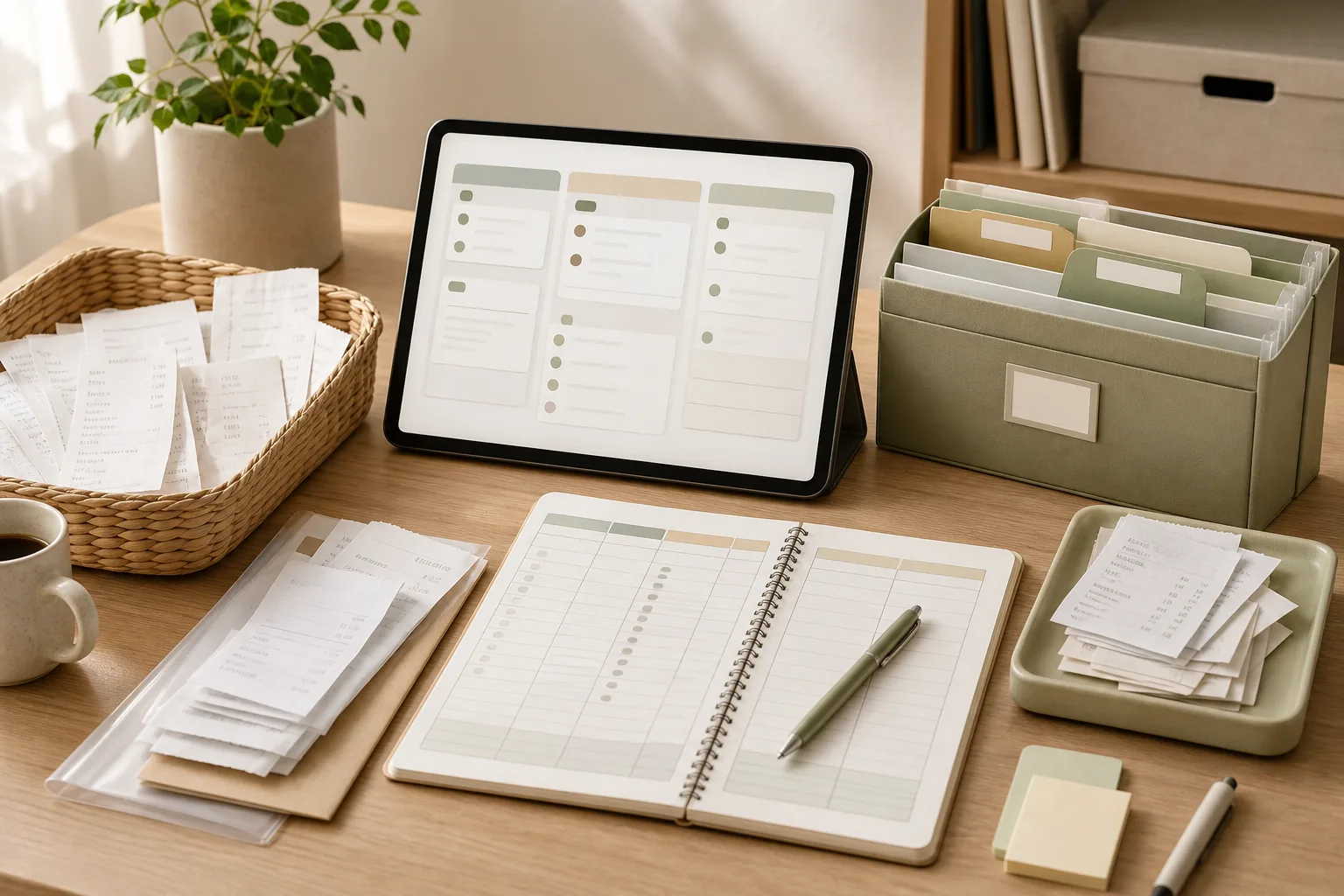
  • 생활비 정리 4단계: 월별 지출을 단순하게 나누는 체크리스트

    생활비 정리 4단계: 월별 지출을 단순하게 나누는 체크리스트

    작성자: Kai Life 편집팀

    월별 생활비를 단순하게 정리하려면 모든 지출을 자세히 쪼개기보다 준비·분류·실행·점검의 4단계로 나누고, 자주 확인할 항목과 가끔 확인할 항목을 구분하는 것이 좋습니다. 핵심은 지출 이름을 완벽하게 통일하는 데 있지 않고, 다음 달에도 같은 방식으로 기록할 수 있는 기준을 만드는 데 있습니다.

    생활비 정리 4단계: 월별 지출을 단순하게 나누는 체크리스트 — 주제 설명 이미지

    1단계: 무엇을 기록할지 먼저 정하기

    생활비 기록이 복잡해지는 첫 번째 이유는 모든 거래를 같은 수준으로 관리하려 하기 때문입니다. 시작할 때는 이번 달에 실제로 확인할 필요가 있는 항목만 정합니다. 예를 들어 식비, 교통비, 주거 관련 비용, 통신비, 정기 결제, 생활용품처럼 가구의 의사결정에 도움이 되는 범위부터 선택할 수 있습니다.

    기록 대상 정하기

    • 매달 반복되는 정기 지출을 별도로 표시합니다.
    • 금액이나 빈도가 자주 달라지는 변동 지출을 구분합니다.
    • 한 번 발생했지만 다음 달에도 확인할 필요가 있는 지출은 별도 메모로 남깁니다.
    • 금액이 작더라도 반복되거나 누락되기 쉬운 항목은 기록 대상에 포함합니다.

    처음부터 항목을 많이 만들기보다 한 달 동안 실제로 사용할 수 있는 수로 시작하는 편이 관리하기 쉽습니다. 같은 성격의 지출을 여러 이름으로 기록하고 있다면, 세부 명칭은 메모로 남기고 큰 분류는 하나로 합칠 수 있습니다.

    2단계: 생활비를 네 가지 기준으로 나누기

    생활비 정리에는 다음 네 가지 기준을 사용하면 됩니다. 이 기준은 정답표가 아니라, 지출의 성격을 빠르게 판단하기 위한 틀입니다. 가구의 상황에 맞지 않는 항목은 이름을 바꾸거나 합쳐도 됩니다.

    분류 판단 질문 기록 방법
    고정 지출 매달 비슷한 시기에 반복되는가? 금액과 결제일을 함께 기록
    변동 지출 사용량이나 선택에 따라 달라지는가? 사용 날짜와 항목을 간단히 메모
    비정기 지출 매달 발생하지 않지만 미리 준비할 필요가 있는가? 발생 월과 용도를 표시
    확인 필요 성격이나 필요 여부가 아직 불분명한가? 일단 보류하고 점검 때 결정

    정기 결제와 자동 지출을 따로 보기

    정기 결제는 금액보다도 반복 여부와 결제일을 확인하는 것이 중요합니다. 통신, 구독, 멤버십, 관리비처럼 자동으로 빠져나가는 항목은 일반 변동 지출과 섞으면 놓치기 쉽습니다. 결제일이 다르더라도 같은 표 안에서 정기 지출로 묶고, 실제로 사용하는지 확인할 수 있도록 상태 칸을 둡니다.

    정기 결제를 기록할 때는 다음 네 가지 정보만 남겨도 충분합니다.

    • 항목 이름
    • 결제일 또는 확인할 시점
    • 금액 기록란
    • 유지·변경·확인 필요 상태

    3단계: 15분 실행표로 이번 달 기록 시작하기

    새로운 가계부 형식을 오래 설계하기보다, 15분 동안 현재 상태를 옮겨 적는 방식으로 시작해 보세요. 실제 금액을 어디에 입력할지는 가구가 이미 사용하는 메모장, 표, 가계부 도구 중 편한 것을 선택하면 됩니다. 이 글에서는 특정 도구를 전제로 하지 않습니다.

    15분 실행 순서

    1. 3분: 이번 달 결제 내역이나 영수증을 한곳에 모읍니다.
    2. 4분: 각 항목에 고정, 변동, 비정기, 확인 필요 중 하나를 표시합니다.
    3. 3분: 정기 결제만 따로 모아 결제일과 상태를 적습니다.
    4. 3분: 분류가 애매한 항목은 억지로 결정하지 않고 확인 필요로 남깁니다.
    5. 2분: 다음 점검 날짜와 확인할 항목을 정합니다.

    복사해서 쓰는 월별 기록표

    날짜 지출 메모 분류 반복 여부 다음 행동
    고정·변동·비정기·확인 필요 반복·일회성 유지·확인·분류 변경
    고정·변동·비정기·확인 필요 반복·일회성 유지·확인·분류 변경
    고정·변동·비정기·확인 필요 반복·일회성 유지·확인·분류 변경

    이 표의 목적은 지출을 평가하는 것이 아니라 다음 행동을 정하는 것입니다. 따라서 금액을 입력하기 어려운 항목이 있더라도 먼저 이름과 분류만 기록할 수 있습니다. 나중에 금액을 확인할 항목은 빈칸으로 두기보다 ‘확인 필요’라고 표시하면 누락과 미확인을 구별하기 쉽습니다.

    4단계: 월말에 짧게 점검하고 기준을 고치기

    점검 단계에서는 지출을 일률적으로 줄이려 하기보다 기록 방식이 실제 생활과 맞는지 확인합니다. 분류가 자주 바뀌거나 같은 항목을 여러 곳에 적고 있다면 항목 수를 줄이는 것이 우선일 수 있습니다.

    월말 점검 질문

    • 이번 달에 한 번도 사용하지 않은 분류가 있었나요?
    • 같은 성격의 지출이 서로 다른 항목에 나뉘어 있나요?
    • 정기 결제의 결제일과 상태를 확인했나요?
    • ‘확인 필요’로 남은 항목 중 다음 행동이 정해진 것이 있나요?
    • 기록을 미룬 이유가 항목 수, 확인 시간, 입력 방식 중 무엇이었나요?

    기록이 자주 밀린다면 의지의 문제로 단정하지 말고 절차를 줄여 보세요. 예를 들어 매번 세부 분류를 고르는 대신 우선 고정·변동만 표시하고, 월말에 비정기 지출을 추가로 확인할 수 있습니다. 반대로 정기 결제가 누락된다면 정기 결제 목록만 별도 표로 두는 편이 적합할 수 있습니다.

    상황별 예외 처리 기준

    한 지출이 여러 목적을 포함하거나 가족 구성원이 나누어 결제하는 경우에는 분류를 완벽하게 나누기 어렵습니다. 이때는 다음과 같은 간단한 원칙을 사용할 수 있습니다.

    • 여러 항목이 섞였지만 다시 나누는 데 시간이 많이 들면 대표 목적 하나로 기록하고 메모를 남깁니다.
    • 반복되는 혼합 지출이라면 다음 달에도 같은 이름을 사용합니다.
    • 일회성이고 다시 확인할 필요가 없다면 상세 분류보다 발생 사실만 남깁니다.
    • 환불, 취소, 가족 간 정산처럼 원래 지출과 연결되는 항목은 별도 메모로 관계를 표시합니다.
    • 분류 기준이 가족마다 다르면 표 상단에 짧은 정의를 적어 기록자에 따른 차이를 줄입니다.

    이런 예외를 미리 정해 두면 애매한 지출이 생길 때마다 새로운 기준을 만들지 않아도 됩니다. 다만 가구의 기록 목적이 달라지면 기준도 달라질 수 있으므로, 한 달 사용 후 불편한 부분을 수정하는 것을 전제로 합니다.

    한눈에 보는 생활비 정리 체크리스트

    • 이번 달에 기록할 생활비 범위를 정했나요?
    • 고정 지출과 변동 지출을 구분했나요?
    • 정기 결제의 결제일과 상태를 적었나요?
    • 비정기 지출을 확인할 수 있는 칸을 마련했나요?
    • 애매한 항목을 ‘확인 필요’로 남길 수 있나요?
    • 15분 안에 현재 기록을 업데이트할 수 있나요?
    • 월말 점검 날짜와 다음 행동을 정했나요?

    FAQ

    생활비 항목을 몇 개로 나누는 것이 좋나요?

    가구의 지출 구조와 기록 목적에 따라 다릅니다. 처음에는 의사결정에 자주 쓰는 큰 분류로 시작하고, 반복적으로 구분할 필요가 생긴 항목만 나누는 방식이 부담이 적습니다. 항목 수가 많아 기록이 중단된다면 분류를 합치는 것이 우선입니다.

    정기 결제는 생활비와 따로 관리해야 하나요?

    반드시 별도 파일로 관리할 필요는 없지만, 일반 변동 지출과 구분해 보는 것이 편리합니다. 같은 표 안에 정기 결제 표시와 결제일 칸을 추가해도 됩니다.

    금액을 모르는 지출은 어떻게 기록하나요?

    금액을 추측해 입력하기보다 지출 이름과 날짜만 적고 ‘확인 필요’로 표시하는 편이 안전합니다. 이후 확인한 금액을 보완하면 됩니다.

    가계부를 매일 쓰기 어렵다면 어떻게 하나요?

    매일 기록을 목표로 정하기보다 결제 내역을 모아 15분 단위로 정리하는 방식을 시도할 수 있습니다. 다만 현금 지출이나 공동 지출이 많다면 누락을 줄이기 위해 간단한 지출 메모를 그때그때 남기는 편이 도움이 될 수 있습니다.

    마무리

    생활비 정리는 지출을 세밀하게 분류하는 작업보다, 다음 달에도 반복할 수 있는 기록 기준을 만드는 작업에 가깝습니다. 준비 단계에서 범위를 정하고, 네 가지 분류로 성격을 나눈 뒤, 15분 실행표로 기록을 시작하고, 월말에 불편한 기준만 고치면 됩니다. 처음부터 완성된 체계를 만들기보다 가족의 생활 패턴에 맞는 최소한의 표를 만든 뒤 한 달씩 조정해 보세요.


  • A 15-Minute Monthly Receipt Archive for Household Spending

    A 15-Minute Monthly Receipt Archive for Household Spending

    작성자: Kai Life Editorial Team

    A simple monthly receipt archive can be created in 15 minutes by gathering the month’s receipts, separating items by action, recording only useful details, and storing the final notes in one consistent place. The aim is not to build a detailed accounting system. It is to make household spending records easy to find when you need to check a purchase, notice a recurring payment, or compare one month with another.

    A 15-Minute Monthly Receipt Archive for Household Spending — topic illustration

    Why a small archive is easier to maintain

    Receipts become difficult to use when they are scattered across wallets, bags, email inboxes, shopping apps, and screenshots. A monthly archive gives each record a clear home and a short review point. It can also separate three different needs that are often mixed together:

    • Reference: keeping enough information to identify a purchase later.
    • Action: marking a receipt that needs a return, warranty check, reimbursement, or follow-up.
    • Awareness: recording patterns such as subscriptions, routine bills, or unusually large household purchases.

    Keeping those purposes separate helps prevent over-recording. A receipt that only needs to be found later may need a date, merchant, amount, and short note. It may not need every product line copied into a spreadsheet.

    The Prepare–Sort–Act–Review framework

    1. Prepare: create one monthly landing place

    Choose one physical or digital location for the month. This could be a labeled envelope, a folder, a note, or a spreadsheet tab. Use a naming pattern that is easy to scan, such as 2025-03 Household Spending. The specific tool matters less than having one predictable destination.

    Before starting, collect the records that are easiest to overlook:

    • Paper receipts from wallets, bags, or drawers.
    • Email receipts and order confirmations.
    • App purchase histories or screenshots.
    • Notes about cash purchases.
    • Recurring payment notices that arrived during the month.

    Set a timer for 15 minutes. The time limit keeps the task focused on useful organization rather than a complete reconstruction of every transaction.

    2. Sort: use three action piles

    Sort each record into one of three groups:

    Group Use it for Next step
    Keep Purchases that may be useful to reference later File or save a short record
    Act Returns, missing items, warranty questions, or reimbursements Add a clear follow-up note
    Discard or merge Duplicates, unreadable scraps, or records already stored elsewhere Remove only after checking for a useful copy

    When a purchase exists in both paper and digital form, keep the format that is easier for the household to retrieve. If a physical receipt contains information that is not visible in the digital copy, retain the physical version or add a note before disposing of anything.

    3. Act: write the minimum useful record

    For each item in the Keep group, record a small set of details. A practical entry can include:

    • Date or month
    • Merchant or service name
    • Amount, if relevant to your household review
    • Category or purpose
    • Return, warranty, reimbursement, or other follow-up date
    • A short identifying note, such as “replacement filter” or “school supplies”

    Use plain descriptions that another household member can understand. “Home item” may be too vague six months later, while “kitchen storage container” is more useful. The note should identify the purchase without requiring a long explanation.

    Recurring payments deserve a separate mark. Add a small label such as recurring or renewal when a charge repeats monthly, annually, or on another schedule. This does not require a financial analysis. It simply makes repeated charges easier to spot during a later review.

    4. Review: close the month with a short check

    Use the final minutes to check whether the archive answers the questions your household is likely to ask. For example:

    • Can we identify the source of this purchase?
    • Is any receipt waiting for a return or other action?
    • Did we record the recurring payments that need attention?
    • Are there duplicate records that can be merged?
    • Would another person find this archive without asking where it is?

    If a record does not answer a realistic question, avoid adding detail simply to make the archive look complete. The purpose is retrieval and review, not creating a second copy of every shopping history.

    A timed 15-minute action plan

    This schedule can be adjusted to fit the number of records in the month.

    Time Task Output
    Minutes 0–2 Open the monthly folder or prepare the envelope and gather loose records One working area
    Minutes 2–6 Separate records into Keep, Act, and Discard or merge Three clear groups
    Minutes 6–11 Record the minimum useful details for Keep items A searchable monthly list
    Minutes 11–13 Mark recurring payments and follow-up items Visible action labels
    Minutes 13–15 Complete one action and store the archive A closed monthly routine

    If the timer ends while records remain, stop at a sensible point and label the unfinished group. You can carry it into the next session rather than allowing the archive task to expand without a boundary.

    Copyable monthly archive table

    Use this table as a starting point. Remove columns that do not help your household and add a column only when it supports a repeated decision.

    Date Merchant or service Amount Purpose Recurring? Action or note
    YYYY-MM-DD Yes / No
    YYYY-MM-DD Yes / No
    YYYY-MM-DD Yes / No

    For a paper-first system, the same information can fit on a monthly cover sheet. For a digital system, use a note or spreadsheet that can be searched by merchant, purpose, or month. Avoid mixing personal notes with sensitive payment details that are not needed for household organization.

    Decision rules that keep the routine simple

    Keep a receipt when it has a future use

    A record is more useful when it supports a likely future task: finding purchase information, checking a return window, identifying a replacement item, or answering a household question. If the receipt has no practical reference value and another reliable record already exists, it may not need a separate duplicate.

    Write a note when the receipt is unclear

    Some merchant names do not explain what was purchased. Add a short purpose note while the transaction is still familiar. This is particularly helpful for mixed shopping trips or orders containing several household items.

    Separate follow-up from storage

    A filed receipt can disappear from attention. An action note should state what needs to happen and when you plan to revisit it. For example, “check return status on Friday” is more useful than “return?” A calendar reminder may be appropriate for an item with a time-sensitive follow-up.

    Use categories that match household decisions

    Categories should help you review records, not reproduce a complicated accounting chart. Examples include groceries, household supplies, transport, children’s items, personal care, and home maintenance. If two categories lead to the same decision, combine them.

    Monthly checklist

    • Choose the monthly folder, note, envelope, or table.
    • Gather paper, email, app, and cash-purchase records.
    • Sort each item into Keep, Act, or Discard or merge.
    • Record the date, merchant, amount, purpose, and useful note.
    • Mark recurring payments or renewal-related records.
    • Write a specific follow-up for every Act item.
    • Remove duplicates only after confirming another copy is available.
    • Store the finished archive where household members can find it.

    FAQ

    Should every receipt be entered?

    No. The archive can focus on records that support retrieval, follow-up, or a household review. The right level of detail depends on how your household uses the records and how much information is already available elsewhere.

    Is a spreadsheet required?

    No. A folder, note, envelope, or paper cover sheet can work. Choose a format that is easy to update and easy for the people in the household to locate.

    How should digital and paper receipts be combined?

    Choose one monthly location and add a short pointer when the original stays somewhere else. For example, a monthly note can state that the full digital receipt is in a named email folder. Avoid saving several indistinguishable copies without a reason.

    What if the archive is already several months behind?

    Start with the current month and create a short backlog list for older records. Prioritize items connected to an open action or a likely future question. A complete historical archive is not required to begin a usable routine.

    Conclusion

    A monthly receipt archive works best when it reduces searching rather than adding another demanding chore. Gather records in one place, sort them by action, record only useful details, mark recurring payments, and close the session with a short review. Repeating the same four steps gives household spending organization a stable shape while leaving room to adjust the format to your household’s actual needs.


  • 영수증을 월별로 분류하는 생활비 정리 15분 루틴

    영수증을 월별로 분류하는 생활비 정리 15분 루틴

    작성자: Kai Life 편집팀

    영수증을 월별로 분류하는 가장 간단한 방법은 저장 위치를 하나로 정한 다음, 해당 월의 영수증을 모아 날짜·지출 성격·처리 상태만 표시하는 것입니다. 처음부터 모든 항목을 세밀하게 나누기보다 15분 동안 준비, 분류, 기록, 점검을 순서대로 진행하면 생활비 기록을 꾸준히 이어가기 쉬워집니다.

    영수증을 월별로 분류하는 생활비 정리 15분 루틴 — 주제 설명 이미지

    생활비 정리를 시작하기 전에 정할 것

    영수증 정리가 오래 걸리는 이유는 분류 기준이 부족해서가 아니라 저장 방식이 여러 곳으로 흩어져 있기 때문인 경우가 많습니다. 종이 영수증은 서랍에 넣고 모바일 영수증은 문자나 이메일에 남겨 두면 월말에 누락 여부를 확인하기 어렵습니다. 먼저 기록의 중심이 될 장소를 하나 선택하세요.

    • 디지털 보관함: 월별 폴더를 만들고 사진이나 파일을 저장합니다.
    • 지출 기록표: 날짜, 사용처, 금액, 분류, 메모를 입력합니다.
    • 정기 결제 목록: 영수증이 반복적으로 발생하는 결제는 별도 표시합니다.

    중요한 점은 특정 앱이나 서비스가 아니라 같은 규칙을 반복하는 것입니다. 휴대전화 메모, 스프레드시트, 파일 폴더 중 이미 익숙한 도구를 선택하고, 관리 도구를 자주 바꾸지 않는 편이 좋습니다.

    추천하는 최소 기록 항목

    항목 기록 방법 확인 목적
    날짜 결제일 기준으로 입력 월별 분류
    사용처 상점이나 서비스 이름 입력 거래 확인
    금액 영수증에 적힌 금액 입력 월 지출 합계 확인
    분류 식비, 교통, 생활용품 등으로 선택 지출 흐름 파악
    메모 환불, 공동구매, 정기 결제 등 표시 나중에 다시 확인

    영수증을 월별로 분류하는 4단계

    1단계: 준비하기

    기록표 또는 메모를 열고 이번에 정리할 월을 먼저 적습니다. 책상, 가방, 차량, 현관 주변처럼 영수증이 자주 쌓이는 장소에서 종이 영수증을 모읍니다. 문자, 이메일, 쇼핑몰 주문 내역처럼 전자 형태로 남은 영수증도 함께 확인하되, 이 단계에서는 금액을 모두 입력하려고 하지 않아도 됩니다.

    영수증을 찾는 데 시간이 오래 걸린다면 자주 사용하는 결제 수단의 확인 위치를 메모해 두세요. 예를 들어 종이 영수증, 문자 알림, 이메일, 온라인 주문 내역처럼 네 가지 경로를 고정하면 다음 달 준비 시간이 줄어들 수 있습니다.

    2단계: 분류하기

    모은 영수증을 먼저 날짜 기준으로 해당 월과 이전·다음 달로 나눕니다. 결제일과 이용일이 다른 예약, 배송, 정기 결제는 영수증에 표시된 결제일을 우선 기록하고 필요한 경우 메모에 이용 기간을 적습니다.

    그다음 지출 성격을 너무 세분화하지 않고 가구가 실제로 자주 확인할 수 있는 수준으로 나눕니다. 다음과 같은 기본 분류로 시작할 수 있습니다.

    • 식비
    • 교통·이동
    • 생활용품
    • 의료·건강 관련 지출
    • 여가·취미
    • 정기 결제
    • 기타

    한 영수증에 여러 종류의 물품이 섞여 있어 나누기 어렵다면 전체 금액을 대표 분류에 기록하고 메모에 ‘혼합 구매’라고 남겨도 됩니다. 매번 완벽하게 나누는 것보다 같은 기준을 유지하는 편이 월별 비교에 유리합니다.

    3단계: 실행하기

    정리한 영수증에서 필요한 항목만 기록합니다. 아래 순서를 따르면 입력 중에 판단이 흔들리는 것을 줄일 수 있습니다.

    1. 날짜와 사용처를 입력합니다.
    2. 금액을 영수증 또는 결제 내역과 대조합니다.
    3. 가장 가까운 지출 분류를 선택합니다.
    4. 환불, 부분 취소, 가족 공동 지출, 정기 결제 여부를 메모합니다.
    5. 종이 영수증은 사진으로 보관하거나 정한 보관 기간에 맞춰 정리합니다.

    금액을 기록할 때는 추정값을 넣지 않는 것이 좋습니다. 확인이 되지 않는 항목은 빈칸으로 두기보다 ‘확인 필요’라고 표시하면 누락과 추정 기록을 구분할 수 있습니다. 같은 결제가 문자와 이메일에 모두 남아 있다면 중복 입력하지 않도록 사용처와 날짜를 함께 대조하세요.

    4단계: 점검하기

    마지막 3분은 입력한 기록을 검토하는 데 사용합니다. 전체 합계를 빠르게 확인하는 것보다 기록이 빠진 곳과 중복된 곳을 찾는 것이 우선입니다. 결제 알림 목록, 카드나 계좌의 거래 내역, 보관한 영수증을 모두 비교할 필요는 없으며, 평소 누락이 잦은 경로부터 확인하면 됩니다.

    • 이번 달 폴더에 다른 달 영수증이 들어가 있지 않은가?
    • 같은 사용처와 날짜가 두 번 입력되지 않았는가?
    • 정기 결제가 별도로 표시되어 있는가?
    • 환불이나 취소된 거래가 원래 지출로 남아 있지 않은가?
    • 확인하지 못한 금액에 추정값을 입력하지 않았는가?

    매달 반복하는 15분 실행표

    정해진 요일이나 날짜에 다음 순서로 진행해 보세요. 15분 안에 끝나지 않더라도 중단한 위치를 표시하고 다음 차례에 이어가면 됩니다. 시간 제한은 모든 기록을 완성해야 한다는 뜻이 아니라, 정리를 시작하고 범위를 관리하기 위한 기준입니다.

    시간 할 일 완료 기준
    0~3분 종이·모바일 영수증 모으기 확인할 영수증을 한곳에 모음
    3~6분 월별로 나누기 대상 월과 다른 월을 구분함
    6~11분 기록표 입력 날짜·사용처·금액·분류를 입력함
    11~13분 정기 결제와 예외 표시 반복 결제·환불·확인 필요 항목을 표시함
    13~15분 중복·누락 점검 다음에 확인할 항목을 남김

    복사해서 쓰는 월별 체크리스트

    • [ ] 이번 달 영수증을 종이와 디지털 경로에서 모았다.
    • [ ] 결제일을 기준으로 월을 나눴다.
    • [ ] 날짜, 사용처, 금액, 분류를 기록했다.
    • [ ] 정기 결제는 별도로 표시했다.
    • [ ] 환불·취소·공동 지출을 메모했다.
    • [ ] 중복 입력과 확인 필요 항목을 점검했다.
    • [ ] 다음 정리 때 먼저 볼 항목을 남겼다.

    정리 방식이 무너질 때 조정하는 방법

    영수증이 계속 쌓인다면 분류 항목을 더 늘리기보다 줄이는 것이 먼저입니다. 실제로 한 달에 거의 사용하지 않는 분류는 ‘기타’로 합치고, 자주 확인하는 항목만 독립적으로 유지하세요. 한 영수증을 여러 항목으로 쪼개는 데 시간이 많이 걸린다면 혼합 구매 원칙을 적용해 대표 분류와 메모만 남길 수 있습니다.

    종이 영수증이 흐려지거나 분실될 우려가 있는 경우에는 보관이 필요한 항목을 사진으로 남길 수 있습니다. 다만 모든 영수증을 일률적으로 이미지로 저장하면 파일이 다시 쌓일 수 있으므로, 월별 폴더와 파일명 규칙을 함께 정하는 것이 좋습니다. 예를 들어 ‘월-날짜-사용처’ 형식처럼 본인이 알아보기 쉬운 이름을 사용하세요.

    가구 구성원이 함께 지출하는 경우에는 사람별 기록보다 공동 지출 여부를 먼저 표시하는 방식이 간단할 수 있습니다. 누가 결제했는지 꼭 확인해야 하는 가정이라면 ‘결제자’ 항목을 추가하되, 필요하지 않은 정보까지 기록해 관리 부담을 키우지는 않는 편이 좋습니다.

    결론: 생활비 기록은 완벽함보다 반복 가능한 기준

    월별 영수증 정리는 모든 구매를 세밀하게 분석하는 작업이 아니라, 나중에 필요한 거래를 다시 찾을 수 있게 만드는 기본 정리입니다. 저장 장소를 하나로 정하고, 날짜·사용처·금액·분류를 같은 순서로 기록한 뒤, 정기 결제와 예외 사항만 별도로 표시해 보세요. 15분 루틴을 지키기 어렵다면 기록 항목이나 분류 수를 줄이고, 확인하지 못한 내용은 추정하지 말고 ‘확인 필요’로 남기는 방식부터 시작할 수 있습니다.

    자주 묻는 질문

    영수증이 없는 지출도 생활비 기록에 넣어야 하나요?

    가능하면 결제 알림이나 주문 내역 등 확인 가능한 자료를 기준으로 입력하세요. 확인 자료가 없으면 금액을 추정해 확정값처럼 기록하기보다 사용처와 확인 필요 상태만 남기는 편이 안전합니다.

    영수증을 반드시 지출 항목별로 나눠야 하나요?

    반드시 그럴 필요는 없습니다. 월별 흐름만 확인하려면 날짜와 사용처, 금액만으로도 시작할 수 있습니다. 식비와 정기 결제처럼 자주 비교할 항목부터 분류하고, 나머지는 기타로 묶어도 됩니다.

    정기 결제는 일반 영수증과 어떻게 구분하나요?

    매달 또는 일정한 주기로 반복되는 서비스나 회비는 정기 결제로 표시하고, 결제일·사용처·메모를 함께 남기세요. 실제 결제 주기나 해지 상태가 불확실한 경우에는 결제 내역을 확인한 뒤 수정하는 것이 좋습니다.

    15분 안에 끝내지 못하면 어떻게 해야 하나요?

    중단한 위치를 기록하고 다음 정리 시간에 이어가면 됩니다. 한 번에 전체를 끝내려 하기보다 영수증을 모으는 단계와 기록하는 단계를 나누면 부담을 조절할 수 있습니다.


  • A 15-Minute Household Spending Organization Note for One Purchase

    A 15-Minute Household Spending Organization Note for One Purchase

    작성자: Kai Life Editorial Team

    For a simple household spending organization routine, set a timer for 15 minutes and write one focused note about the purchase you are considering. Record the reason, the amount or cost range you know, what alternatives exist, whether any recurring payment is involved, and the next action. The goal is not to create a complete budget in one sitting. It is to leave a useful record that helps you revisit the decision with less confusion.

    A 15-Minute Household Spending Organization Note for One Purchase — topic illustration

    Why use a one-day purchase note?

    Everyday spending records often become difficult when they try to capture everything at once. A purchase note has a narrower purpose: it preserves the context around one decision. That context can include what problem the purchase is meant to solve, which options were considered, and whether the cost continues after the first payment.

    This format can be used for a household item, a service, a replacement, or a planned activity. It is also suitable when several people share household decisions. A short note gives everyone a common reference without requiring a detailed financial system.

    The note is not a prediction of whether the purchase will feel worthwhile later. It is an organization tool. Keep observations separate from assumptions, and leave uncertain fields marked for later checking.

    The 15-minute prepare, sort, act, and review method

    Minutes 0–3: Prepare the note

    Open a paper notebook, shared document, or spreadsheet. Use one entry for one purchase. Start with a plain title such as “replacement headphones” or “monthly cleaning service.” Add the date and the person or household area connected with the decision.

    Then write the reason in one sentence. Try to describe the situation rather than justify the purchase. For example: “The current item is difficult to use during weekday mornings” is more useful than “I need a better one.” A specific reason gives the later review something to compare with.

    • Purchase or service name
    • Date of the note
    • Reason for considering it
    • Who will use it
    • Known cost or cost range

    Minutes 3–7: Sort the information

    Separate facts, questions, and preferences. Facts are details already confirmed in your records or from the information you have in front of you. Questions are items that need checking. Preferences are personal or household priorities, such as easier maintenance, fewer steps, or a smaller physical footprint.

    This separation helps prevent an unconfirmed detail from looking like a settled fact. It also keeps the note useful if the purchase is postponed or the available options change.

    Type What to write Example prompt
    Fact Information already available What cost, timing, or condition is known?
    Question Information that still needs checking Is there an ongoing charge or renewal?
    Preference What matters to the household Which feature would make regular use easier?

    For spending records, include the payment pattern as a separate field. A single payment, a repeating charge, a usage-based charge, and an unclear payment schedule have different record-keeping needs. If the pattern is unclear, write “check payment terms” rather than filling the gap with a guess.

    Minutes 7–11: Act with a small comparison

    Choose a small number of options to compare. The purpose is not to collect every possible choice. It is to make the decision criteria visible. Use the same criteria for each option so that one attractive detail does not dominate the whole note.

    Option Known first cost Ongoing payment? Main benefit Open question
    Option A Write amount or “check” Yes, no, or unclear What problem it addresses What still needs review
    Option B Write amount or “check” Yes, no, or unclear What problem it addresses What still needs review
    Wait or use current option Write known short-term cost Any related payment? What delay preserves What would trigger another review?

    Including “wait or use the current option” gives the note a useful baseline. It does not label waiting as good or bad. It simply makes the alternative visible, which can be helpful when the purchase is optional or the information is incomplete.

    For recurring payments, record the charge name, expected frequency if known, payment method, and the action needed to review or cancel it according to the relevant terms. Do not rely on memory alone for a payment that may continue after the first decision.

    Minutes 11–13: Choose the next action

    End the decision section with one next action. Examples include checking a payment page, measuring available space, asking another household member for input, reviewing an existing expense note, or postponing the decision until a named date.

    Use a conditional statement when the information is incomplete:

    If the ongoing charge is acceptable and the item fits the stated need, compare the final option again before purchase. If either point remains unclear, keep the note open and check that detail first.

    This wording keeps the note practical without treating an uncertain decision as settled.

    Minutes 13–15: Review and save

    Read the note once and remove information that does not help the decision. Check that the reason, payment pattern, comparison, and next action are visible near the top. Add a simple status such as “considering,” “waiting for information,” “purchased,” or “not proceeding.”

    If the purchase happens later, return to the same note rather than starting from memory. Add the actual payment date and any relevant follow-up observation. If it does not happen, record the reason only when that information will help with a future decision.

    Copyable one-day purchase checklist

    Copy the following checklist into a notes app, shared document, or paper planner:

    • Purchase: ____________________
    • Date of note: ____________________
    • Reason for considering it: ____________________
    • Who will use it? ____________________
    • Known first cost or cost range: ____________________
    • Payment pattern: one-time / recurring / usage-based / unclear
    • Related recurring payment to check: ____________________
    • Option A: ____________________
    • Option B: ____________________
    • Wait or current option: ____________________
    • Most important comparison point: ____________________
    • Open question: ____________________
    • Next action and date: ____________________
    • Status: considering / waiting / purchased / not proceeding

    How to keep spending records simple afterward

    Use a consistent location for these notes. A shared folder, a dated notebook, or one spreadsheet can work if household members know where to look. Keep the structure stable while allowing the content to stay brief.

    It can also help to distinguish a decision note from a transaction record. The decision note explains why an option was considered. The transaction record captures what actually happened. Combining both in one entry is fine, but label each section so later review does not confuse an estimate with a completed payment.

    For recurring payments, create a separate list or filter. Useful fields include the service name, the date it was noticed, the payment frequency if confirmed, and the next review date. Avoid copying terms that have not been checked. A blank or “to verify” label is more reliable than an invented detail.

    Common problems and small adjustments

    The note becomes a long research project

    Return to the one-question limit: what information is needed for the next action? Record additional research elsewhere if it is useful, but keep the purchase note focused.

    The comparison feels subjective

    Write down two or three household priorities before comparing options. The priorities can be practical, such as ease of use, space, maintenance, or payment simplicity. A visible criterion makes the reasoning easier to revisit.

    No one updates the record

    Assign the next action to a person and date, even if the task is small. A note with no owner can remain open indefinitely. If no follow-up is needed, mark the status and close the entry.

    The household has different opinions

    Record the disagreement as a question or preference rather than trying to erase it. For example, note that one person values lower ongoing effort while another values a lower first cost. This can clarify what information would actually help the group decide.

    FAQ

    Does this replace a household budget?

    No. It is a focused record for one purchase decision. A household may use it alongside whatever broader tracking method fits its needs.

    What if I do not know the price yet?

    Write “check” or a clearly labeled estimate and add the source or next checking step if available. Keep uncertain information visibly separate from confirmed details.

    Should every small purchase get a note?

    Not necessarily. Use the routine when a purchase involves comparison, a recurring payment, shared household input, or a decision you may want to revisit. Very routine purchases may need only an ordinary transaction record.

    When should the note be reviewed?

    Review it when the next action is due, when the payment pattern changes, or when the purchase is completed. A short status update can be enough.

    Conclusion

    A 15-minute one-day note can make household spending organization more manageable by narrowing attention to one decision. Prepare the record, sort facts from questions and preferences, compare a few options, check for recurring payments, choose one next action, and review the note before saving it. The resulting record does not need to predict the future. It only needs to make the current decision easier to understand and revisit.


  • 구매 전 생각을 정리하는 생활비 15분 메모 루틴

    구매 전 생각을 정리하는 생활비 15분 메모 루틴

    작성자: Kai Life 편집팀

    생활비 정리를 꾸준히 하려면 모든 지출을 완벽하게 기록하려 하기보다, 구매 전 15분 동안 ‘왜 필요한가, 언제 필요한가, 다른 방법은 없는가’를 짧게 메모하는 편이 실천하기 쉽습니다. 이 루틴은 준비·분류·실행·점검의 네 단계로 구성되며, 정기 결제와 예정된 구매를 함께 확인할 때 특히 유용합니다. 다만 실제 가계 상황과 구매 목적에 따라 기록 항목은 줄이거나 늘려야 합니다.

    구매 전 생각을 정리하는 생활비 15분 메모 루틴 — 주제 설명 이미지

    생활비 기록이 자주 끊기는 이유부터 살펴보기

    생활비 기록이 중단되는 이유는 의지가 부족해서라기보다 기록 방식이 생활 흐름과 맞지 않기 때문인 경우가 많습니다. 영수증을 모아 한꺼번에 정리하거나 모든 지출에 같은 수준의 설명을 붙이려 하면 시작 자체가 부담스러워집니다.

    구매 전 메모는 이 문제를 다르게 다룹니다. 결제가 끝난 뒤 기억을 복원하는 대신, 아직 선택할 수 있는 시점에 판단 기준을 남깁니다. 기록의 목적도 ‘잘 샀는지 평가하기’가 아니라 다음과 같이 좁게 잡습니다.

    • 이번 지출의 목적을 한 문장으로 확인하기
    • 지금 필요한 지출인지 예정해도 되는지 구분하기
    • 이미 있는 물건이나 다른 방법으로 대체할 수 있는지 살펴보기
    • 한 번의 구매인지 반복 지출로 이어지는지 표시하기

    이 메모는 금융상품 선택, 세금, 대출, 투자 판단을 다루는 자료가 아닙니다. 일상적인 구매와 가구의 정기 지출을 정리하기 위한 생활 기록 도구로 사용하세요.

    4단계 생활비 정리 프레임워크

    1단계: 준비 — 기록할 범위를 좁히기

    먼저 오늘 확인할 범위를 정합니다. 하루에 모든 소비를 분석하지 말고, 구매 예정 항목과 정기 결제처럼 반복되거나 놓치기 쉬운 항목을 우선 적습니다. 메모 앱, 종이 수첩, 공동 가계 문서 중 이미 자주 쓰는 도구 하나만 선택하는 것이 좋습니다.

    준비 단계에서 사용할 기본 항목은 다음과 같습니다.

    • 확인 날짜
    • 구매 또는 결제 항목
    • 예상 금액 또는 금액을 확인할 위치
    • 기록을 함께 확인할 가족 구성원

    금액을 바로 확인하기 어려우면 숫자를 억지로 채우지 말고 ‘확인 필요’라고 적습니다. 빈칸을 정확하지 않은 추정치로 채우면 이후 비교가 흐려질 수 있습니다.

    2단계: 분류 — 지출의 성격을 나누기

    다음으로 각 항목을 성격에 따라 나눕니다. 분류는 정답을 찾는 과정이 아니라, 비슷한 지출을 같은 기준으로 다시 볼 수 있게 하는 과정입니다.

    분류 확인 질문 메모 예시
    필수 지금 미루면 생활에 바로 불편이 생기는가? 이번 주 안에 필요한 소모품
    예정 필요하지만 날짜를 조정할 수 있는가? 다음 점검일에 다시 확인
    선택 원하는 이유와 미루기 어려운 이유가 같은가? 필요성과 기분 전환을 구분
    반복 다음 달 또는 정해진 주기로 다시 결제되는가? 정기 결제 확인 목록에 이동

    하나의 항목이 두 분류에 걸칠 수도 있습니다. 예를 들어 처음에는 선택 지출처럼 보여도 매달 자동으로 결제된다면 ‘선택·반복’으로 표시할 수 있습니다. 이런 경우 분류를 억지로 하나로 줄이기보다 짧은 메모를 덧붙이는 편이 현실적입니다.

    3단계: 실행 — 구매 전 15분 안에 판단하기

    분류가 끝나면 실제 구매 여부를 결정합니다. 중요한 점은 일률적으로 구매를 미루는 것이 아니라, 구매 전 생각을 기록한 뒤 선택하는 것입니다. 필요한 물건이라면 구매 시점과 확인 사항을 남기고, 보류할 항목이라면 다시 볼 날짜를 정합니다.

    다음 비교표를 복사해 메모 앱이나 가계 기록장에 사용할 수 있습니다.

    항목 내 메모
    무엇을 사려는가?
    사용 목적은 무엇인가?
    언제까지 필요한가?
    이미 가진 것 또는 대체 방법은?
    한 번의 지출인가, 반복 지출인가?
    오늘 결정할 이유가 있는가?
    다시 확인할 날짜는?

    ‘오늘 결정할 이유가 있는가?’라는 질문은 구매를 막기 위한 문장이 아닙니다. 사용 시점이 분명하거나 이미 정해 둔 일정이 있다면 그 이유를 적으면 됩니다. 반대로 이유가 ‘놓칠까 봐’처럼 불안에만 연결되어 있다면, 확인 날짜를 정한 뒤 잠시 보류하는 선택도 기록할 수 있습니다.

    4단계: 점검 — 결제 후 한 줄만 남기기

    구매 후에는 긴 후기를 쓸 필요가 없습니다. 실제 사용 여부, 예상과 달랐던 점, 다음에 다시 확인할 기준 중 하나만 한 줄로 남깁니다. 이 기록은 과거 소비를 비난하기 위한 것이 아니라 다음 구매의 질문을 다듬기 위한 자료입니다.

    예를 들어 ‘자주 사용함’, ‘비슷한 물건이 집에 있었음’, ‘정기 결제 여부를 다시 확인할 것’처럼 짧게 적을 수 있습니다. 사용 전이라면 결과를 단정하지 말고 ‘다음 점검일에 확인’이라고 표시합니다.

    하루 15분 실행표

    시간을 정해 두면 생활비 기록이 특정한 의지에만 의존하지 않게 됩니다. 아래 표는 하루 한 번 진행하는 기본형입니다. 가족의 지출 구조에 따라 각 시간을 조정해도 됩니다.

    시간 할 일 남길 결과
    0~3분 오늘의 구매 예정과 최근 정기 결제를 모으기 확인할 항목 목록
    3~7분 필수·예정·선택·반복으로 표시하기 항목별 분류
    7~12분 목적, 시급성, 대체 가능성, 반복 여부를 적기 구매 전 판단 메모
    12~15분 구매·보류·확인 필요로 다음 행동 정하기 다시 볼 날짜와 담당자

    가구 구성원이 함께 관리한다면 ‘담당자’ 항목을 추가하세요. 누가 결제했는지를 따지기보다, 누가 정기 결제 내역을 확인하고 누가 구매 전 질문을 남길지 정하는 방식이 편리합니다. 한 사람이 모든 기록을 맡으면 그 사람이 바쁜 날 루틴 전체가 멈출 수 있기 때문입니다.

    복사 가능한 생활비 기록 체크리스트

    아래 목록은 매일 전부 작성해야 하는 양식이 아닙니다. 오늘 확인할 항목만 골라 사용하세요.

    • 준비: 오늘 확인할 구매와 정기 결제를 한곳에 모았는가?
    • 분류: 각 항목을 필수·예정·선택·반복 중 하나 이상으로 표시했는가?
    • 목적: 무엇을 위해 필요한지 한 문장으로 적었는가?
    • 시점: 오늘 꼭 결정해야 하는 이유가 있는지 확인했는가?
    • 대체: 이미 가진 것, 빌리기, 수리, 일정 조정 등 다른 방법을 떠올렸는가?
    • 반복: 다음에도 자동 또는 정기적으로 나갈 가능성을 표시했는가?
    • 실행: 구매·보류·확인 필요 중 다음 행동을 정했는가?
    • 점검: 다음에 다시 볼 날짜와 확인할 내용을 남겼는가?

    체크하지 못한 항목이 있어도 기록을 폐기하지 마세요. 이 루틴의 목적은 완성도 높은 장부를 만드는 것이 아니라, 구매 전 생각을 일정한 형식으로 꺼내 보는 데 있습니다.

    정기 결제와 비교표를 함께 관리하는 방법

    정기 결제는 한 번의 구매보다 기억에서 빠지기 쉽습니다. 별도의 정기 결제 표를 만들어 서비스명, 결제 주기, 다음 확인일, 사용 여부, 해지 또는 변경 검토 여부만 기록해 보세요. 실제 결제일이나 금액을 확인하지 못했다면 추정하지 말고 해당 결제 내역을 확인할 위치를 적습니다.

    항목 확인 내용 다음 행동
    서비스 또는 항목 무엇에 대한 반복 지출인가? 결제 내역 위치 확인
    주기 매월, 매년 등 확인 가능한 주기 다음 확인일 설정
    사용 여부 최근 사용 사실을 알고 있는가? 사용 여부 기록
    가구 내 공유 여부 다른 구성원도 알고 있는가? 공동 기록에 반영

    비교표를 사용할 때는 항목 수를 지나치게 늘리지 않는 것이 좋습니다. 생활비 정리의 비교 기준은 ‘가장 좋은 선택’을 찾기 위한 것이 아니라, 내 목적에 필요한 차이를 확인하기 위한 것입니다. 예를 들어 사용 빈도, 보관 공간, 반복 여부처럼 현재 가구의 문제와 직접 연결된 항목만 남기면 표를 다시 보기 쉽습니다.

    실행 전에 확인할 예외와 주의점

    • 식료품이나 긴급한 생활용품처럼 시간이 중요한 구매는 15분 기록을 짧게 줄이고 필요한 정보만 확인합니다.
    • 가족 구성원마다 필요한 기준이 다르면 하나의 결론을 강요하기보다 각자의 목적을 먼저 적습니다.
    • 정기 결제를 검토할 때는 실제 약관, 결제 내역, 해지 절차를 직접 확인해야 합니다.
    • 기록에 없는 금액이나 사용 사실을 기억만으로 확정하지 않습니다.
    • 보류가 항상 절약을 뜻하는 것은 아니며, 필요한 구매를 지나치게 미루지 않도록 사용 시점을 함께 적습니다.

    FAQ

    매일 15분을 확보하기 어렵다면 어떻게 하나요?

    처음에는 15분 전체를 지키기보다 3분짜리 준비 단계만 시작할 수 있습니다. 구매 예정 항목 한 개의 목적과 다시 볼 날짜만 적어도 루틴의 출발점이 됩니다. 익숙해진 뒤 정기 결제 점검이나 구매 후 한 줄 기록을 추가하세요.

    금액을 기록하지 않아도 생활비 정리가 되나요?

    금액 기록은 중요한 정보지만, 정확히 확인할 수 없는 숫자를 추정해 적는 것은 피해야 합니다. 먼저 목적, 시점, 반복 여부를 기록하고 실제 결제 내역을 확인한 뒤 금액을 보완하는 방식이 적절합니다.

    구매를 보류하면 일률적으로 잘한 선택인가요?

    그렇지 않습니다. 보류는 하나의 선택일 뿐이며, 필요한 시기를 놓치거나 다른 비용을 만들 수도 있습니다. 보류할 때는 다시 확인할 날짜와 필요한 조건을 함께 적어야 합니다.

    가족과 기록을 공유할 때 가장 먼저 정할 것은 무엇인가요?

    누가 어떤 항목을 확인할지 정하는 것이 먼저입니다. 기록 형식보다 역할이 모호하면 같은 지출을 중복 확인하거나 아무도 확인하지 않는 일이 생길 수 있습니다. 공동 문서에는 담당자와 다음 확인일을 함께 표시해 보세요.

    결론: 구매 전 한 줄이 생활비 기록을 이어가게 한다

    생활비 정리는 모든 지출을 완벽하게 분석하는 작업이 아닙니다. 구매 전 목적과 시점, 대체 가능성, 반복 여부를 짧게 확인하고 구매·보류·확인 필요 중 하나를 정하는 과정에 가깝습니다. 오늘은 구매 예정 항목 하나와 정기 결제 하나만 골라 15분 실행표를 적용해 보세요. 기록이 쌓이면 어떤 지출을 자주 놓치는지, 어떤 질문이 가족에게 필요한지 점검할 수 있습니다. 다만 실제 금액과 결제 조건은 해당 내역을 직접 확인하고, 가구의 상황에 맞게 기록 항목을 조정해야 합니다.


  • A 15-Minute Calendar Rule for Tracking Recurring Payments

    A 15-Minute Calendar Rule for Tracking Recurring Payments

    작성자: Kai Life Editorial Team

    If recurring payments are easy to forget, use a calendar rule that gives each payment a clear date, label, and review point. In a 15-minute routine, collect the payment information you already have, enter each due date into one calendar, group entries by timing, and review upcoming items before they become urgent. This approach is for household spending organization rather than detailed budgeting: the goal is to make recurring payment dates visible and easier to maintain.

    A 15-Minute Calendar Rule for Tracking Recurring Payments — topic illustration

    Why a calendar can simplify spending records

    Recurring payments are different from occasional purchases. A streaming service, utility bill, membership, insurance installment, school-related charge, or other regular expense may appear in a different account or message, yet each can affect the same household cash-flow picture. When the dates are scattered across email, paper notices, and banking apps, a small record can become difficult to check.

    A calendar does not replace account records. It provides a forward-looking view of what may need attention. The useful information is often limited to:

    • the payment name or household category;
    • the expected date or date range;
    • the payment method or account label;
    • the amount, if it is known and useful;
    • the next date to review the entry.

    Keep the calendar entry short. Detailed notes can remain in the original statement or account. The calendar should answer a practical question quickly: “What recurring payment should I check next?”

    The prepare-sort-act-review framework

    1. Prepare: collect only the information needed

    Set a timer for 15 minutes and gather the sources you already use to track household payments. These may include recent statements, payment notifications, a household notebook, or a banking app. You do not need to reconstruct every past purchase. Look for recurring items and record the information that will help with the next payment.

    If a payment date changes from month to month, record a date range or a reminder window instead of forcing it into a precise date. For example, “around the third week” may be more honest and useful than a date that looks exact but is not dependable.

    2. Sort: use a small set of calendar labels

    Sort entries by timing rather than by a long list of categories. A simple system can use labels such as:

    • Early month: payments near the beginning of the month;
    • Middle month: payments around the middle of the month;
    • Late month: payments near the end of the month;
    • Variable: payments whose date or amount needs checking.

    You can also add a short category label, such as “home,” “communication,” “membership,” or “education.” Use labels that make sense to your household. The system should remain readable when viewed on a small screen.

    3. Act: create one reminder before the payment date

    Enter the recurring payment on the calendar and add one reminder early enough for a practical check. The reminder is not a command to pay immediately. It is a prompt to confirm the date, amount, account, or available record.

    For a variable bill, the reminder can say “check amount.” For a fixed payment, it can say “confirm recurring payment.” If two household members manage different payments, include an owner label such as “Alex check” or “shared check.” Avoid putting sensitive account numbers or login details into a general calendar.

    4. Review: remove uncertainty from the next few weeks

    At the end of the 15-minute session, scan the next several weeks. Look for duplicate entries, missing payment methods, and dates that are only estimates. Mark entries that require another source for confirmation. This review makes the calendar a working record rather than a one-time list.

    A copyable recurring-payment table

    Use the table below in a notes app, spreadsheet, or household notebook. Keep one row per recurring payment. If the exact amount is not stable, write “varies” or leave the field for later review.

    Payment or category Expected date Amount Payment method Next action
    Example: internet Early month Known or varies Account or card label Confirm date and amount
    Example: membership Specific date Known or varies Account or card label Check renewal note
    Example: utility Variable Varies Account or card label Review latest notice

    For privacy, use a short payment-method label rather than a full account or card number. If the table is shared, decide which details are appropriate for everyone who can access it.

    The 15-minute action plan

    1. Minutes 1–3: choose the calendar. Select one shared calendar or notebook as the main location for recurring payment dates.
    2. Minutes 4–7: collect entries. Write down recurring payments that appear in your current records. Focus on the next payment date and the payment name.
    3. Minutes 8–10: sort entries. Group each item by early, middle, late, or variable timing. Add a short household category if it helps.
    4. Minutes 11–13: add reminders. Create one reminder before each payment date. Add “check amount” where the amount can change.
    5. Minutes 14–15: review. Scan the next few weeks, flag uncertain entries, and remove duplicates.

    If the list is longer than the available time, record the entries that are closest to their next date first. Continue with the rest during another short session. A partial, clearly marked record can be easier to improve than an ambitious system that is difficult to maintain.

    Copyable checklist

    • Choose one main calendar or notebook.
    • List recurring payments from current household records.
    • Record an exact date or a realistic date range.
    • Add a short category or household owner when useful.
    • Record a payment-method label without sensitive account details.
    • Mark amounts as known, variable, or needing review.
    • Create a reminder before the expected payment date.
    • Scan the next several weeks for duplicates or missing entries.
    • Review the calendar at a regular household check-in.

    How to keep the system manageable

    Use a maintenance rule that fits your household. One option is a short weekly scan of the next two weeks and a longer monthly review of the full recurring-payment list. The weekly scan focuses on upcoming dates. The monthly review focuses on changes: a new payment, a canceled service, a changed date, or an amount that now needs checking.

    Separate “recording” from “deciding.” Recording says what is expected and when. Deciding whether to continue a service or change a payment method is a separate household conversation. Keeping those activities distinct can make the calendar easier to update without turning every review into a larger financial project.

    When a payment is canceled, do not delete the history immediately if the record may help explain an older entry. Instead, mark it as canceled and remove future reminders after confirming that the calendar no longer needs them. When a payment changes, update the next date and add a short note about what needs confirmation.

    FAQ

    Should every household purchase go on the calendar?

    No. This method is intended for recurring or expected payments. One-time purchases can remain in ordinary spending records unless they need a separate reminder.

    What if the payment date changes each month?

    Use a reminder window, such as a week or part of the month, and label the entry as variable. The reminder can prompt you to check the latest statement or notification.

    Should the amount be included?

    Include it when the amount is stable and useful for a quick review. For bills that change, write “varies” and use the reminder to check the current amount. Avoid treating an old amount as a prediction.

    Can two people share the same calendar?

    Yes, if the household agrees on what information can be shared. Use clear labels for responsibility, and keep account numbers, passwords, and other sensitive details outside the calendar.

    How often should the list be updated?

    A short upcoming-date scan can happen weekly or at another interval that suits the household. A fuller review can happen monthly or when a payment, service, or account changes.

    Conclusion

    A recurring-payment calendar works best as a small visibility tool. In 15 minutes, prepare a short list, sort entries by timing, act by adding useful reminders, and review the next few weeks. The result is a clearer set of spending records without requiring a complicated budgeting system. Adjust the labels, reminder timing, and review schedule to match the way your household already manages payments.


  • 정기 결제일을 달력에 모으는 생활비 정리 15분 루틴

    정기 결제일을 달력에 모으는 생활비 정리 15분 루틴

    작성자: Kai Life 편집팀

    정기 결제일을 달력에 모으려면 먼저 통장 내역이나 결제 알림에서 반복 지출만 골라 날짜, 항목, 결제수단을 한 줄씩 적은 뒤 달력의 해당 날짜에 표시하면 됩니다. 처음부터 모든 지출을 완벽하게 분류할 필요는 없습니다. 매달 반복되는 항목을 우선 모으고, 금액이 바뀌는 지출은 ‘확인 필요’라고 표시하는 방식이 생활비 정리를 오래 유지하기에 편합니다.

    정기 결제일을 한곳에 정리하는 달력과 기록 도구

    왜 정기 결제일을 달력에 모을까

    생활비 기록이 복잡해지는 이유 중 하나는 지출이 발생한 뒤에야 결제 사실을 확인하기 때문입니다. 월초에는 빠져나갈 돈이 얼마나 되는지 알기 어렵고, 여러 날짜에 결제가 흩어져 있으면 같은 항목을 다시 확인하게 됩니다.

    정기 결제일을 달력에 모으면 ‘언제 무엇이 빠져나가는가’를 먼저 볼 수 있습니다. 이는 지출을 줄인다는 뜻이 아니라, 예정된 지출과 변동 지출을 구분해 생활비를 배치하는 기준을 만드는 일입니다. 결제일이 실제 승인일이나 출금일과 다를 수 있으므로, 달력에는 확인한 기준을 함께 적어 두는 것이 좋습니다.

    • 고정에 가까운 항목: 매달 비슷한 시기에 반복되는 구독료, 관리비 등
    • 금액이 달라지는 항목: 사용량이나 이용 실적에 따라 달라지는 요금
    • 일회성 항목: 한 번만 결제되거나 종료일이 정해진 지출
    • 확인 필요 항목: 결제일, 금액, 해지 여부가 불분명한 지출

    준비·분류·실행·점검 4단계

    1단계: 준비하기

    달력 하나와 최근 결제 내역을 확인할 수 있는 자료를 준비합니다. 은행이나 카드 앱의 거래 내역, 문자 알림, 이메일 영수증처럼 실제 결제 흔적이 남아 있는 자료를 기준으로 삼으세요. 기억에 의존해 목록을 만들면 누락이나 중복이 생길 수 있습니다.

    기록 항목은 처음부터 많게 만들지 않는 편이 좋습니다. 다음 네 가지만 있어도 시작할 수 있습니다.

    기록 항목 적는 내용 예시 표기
    날짜 출금 또는 결제 예정일 매월 12일
    항목 무엇에 쓰는 돈인지 통신, 구독, 관리
    금액 고정 또는 최근 확인 금액 고정 / 변동
    수단 어느 카드나 계좌인지 카드 A, 계좌 B

    2단계: 분류하기

    찾은 지출을 결제일 순서로 나열한 뒤, 금액의 성격을 표시합니다. 정확한 금액을 모르는 항목은 억지로 추정하지 말고 ‘변동’ 또는 ‘확인 필요’로 남깁니다. 생활비 기록에서 중요한 것은 빈칸을 없애는 것이 아니라 나중에 확인해야 할 대상을 분명히 하는 것입니다.

    결제일이 주말이나 공휴일과 겹칠 수 있는 항목은 실제 출금일이 달라지는지 확인합니다. 달력에는 ‘예정일’과 ‘실제 확인일’을 구분해 적을 수 있습니다. 예를 들어 ‘12일 예정, 출금 확인’처럼 짧게 표시하면 매달 점검하기 쉽습니다.

    3단계: 실행하기

    정기 결제 항목을 달력에 입력할 때는 긴 설명보다 같은 형식을 반복하는 것이 유용합니다. 다음과 같은 형식을 정해 보세요.

    [정기] 항목 / 금액 성격 / 결제수단

    예를 들어 금액이 매달 달라지는 항목이라면 ‘[정기] 통신 / 변동 / 카드 A’처럼 기록합니다. 금액이 고정된 항목은 확인한 금액을 적되, 변경 가능성이 있는 경우 ‘변경 확인’이라는 메모를 붙입니다. 캘린더 색상을 쓸 수 있다면 고정 지출, 변동 지출, 확인 필요를 서로 다른 색으로 구분할 수 있지만, 색상 사용이 부담스럽다면 기호만 사용해도 충분합니다.

    4단계: 점검하기

    달력에 모은 뒤에는 각 항목이 현재도 필요한지, 결제수단이 맞는지, 종료일이나 갱신일을 확인합니다. 이 과정은 해지를 권하는 절차가 아니라 기록을 최신 상태로 맞추는 절차입니다. 오래 사용하지 않은 서비스가 있어도 결제 사실과 이용 여부를 먼저 확인하고, 해지나 변경이 필요한 경우에는 해당 서비스의 공식 안내를 따르세요.

    15분 실행표로 시작하는 방법

    한 번에 모든 달을 정리하려 하기보다 15분을 네 구간으로 나누면 시작 부담을 낮출 수 있습니다. 시간이 부족하면 항목 수를 줄이고, 다음 점검 때 이어서 진행합니다.

    시간 할 일 완료 기준
    0~3분 자료 열기 카드·계좌 내역과 달력을 준비함
    3~7분 반복 지출 찾기 정기 결제 후보를 항목별로 적음
    7~11분 날짜와 성격 표시 고정, 변동, 확인 필요를 구분함
    11~15분 달력 입력과 점검 다음 결제일과 확인할 내용을 남김

    정기 결제가 많다면 첫 실행에서는 다음 결제일이 가까운 항목부터 기록합니다. 이후에는 한 달에 한 번 같은 요일이나 같은 날짜에 점검 시간을 정해 두면 됩니다. 점검 주기는 가구의 결제 방식에 따라 달라질 수 있으므로, 누락이 생긴다면 횟수를 늘리고 기록이 과해진다면 항목을 줄이세요.

    복사해서 쓰는 생활비 정리 체크리스트

    • [ ] 최근 결제 내역에서 반복되는 항목을 찾았다.
    • [ ] 각 항목의 예정일 또는 실제 출금일 기준을 확인했다.
    • [ ] 고정, 변동, 일회성, 확인 필요로 구분했다.
    • [ ] 금액을 모르는 항목을 임의로 추정하지 않았다.
    • [ ] 결제수단을 함께 적었다.
    • [ ] 달력에 다음 결제일을 입력했다.
    • [ ] 종료일, 갱신일, 변경 가능성을 확인할 메모를 남겼다.
    • [ ] 다음 점검 날짜를 정했다.

    자주 묻는 질문

    정기 결제가 몇 개 안 돼도 달력에 적어야 하나요?

    개수가 적다면 별도의 복잡한 관리표보다 달력 메모만으로도 충분할 수 있습니다. 중요한 것은 항목 수가 아니라 결제일을 잊지 않고 같은 방식으로 확인하는 것입니다.

    결제 금액이 매달 달라지면 어떻게 기록하나요?

    정확한 금액을 미리 알기 어렵다면 ‘변동’으로 표시하고, 실제 결제 후 금액을 확인하는 칸을 둡니다. 예산을 정할 때는 해당 항목의 변동 가능성을 고려하되, 이 글의 기록표에 임의의 금액을 확정해 넣지는 않는 편이 안전합니다.

    카드 결제일과 실제 출금일이 다르면 어느 날짜를 적나요?

    무엇을 관리하려는지에 따라 달라집니다. 결제 승인 흐름을 확인하려면 승인일을, 계좌 잔액을 관리하려면 실제 출금일을 기준으로 적을 수 있습니다. 두 날짜가 모두 중요하다면 ‘승인일 / 출금일’처럼 함께 기록하고, 서로 다른 기준을 섞지 않도록 표기 방식을 고정하세요.

    마무리

    생활비 정리는 복잡한 분석보다 반복 지출을 빠뜨리지 않고 확인하는 구조에서 시작할 수 있습니다. 최근 내역에서 정기 결제를 찾고, 날짜와 지출 성격을 분류한 뒤, 달력에 같은 형식으로 입력하고, 다음 달에 실제 내역과 대조해 보세요. 15분 안에 끝나지 않더라도 고정 지출 몇 개만 먼저 기록하고 다음 점검에서 이어가면 됩니다. 가구의 결제수단과 일정에 맞춰 기록 항목을 조정하는 것이 지속 가능한 생활비 기록의 핵심입니다.


  • A 15-Minute Grocery Price Comparison Table for Simpler Spending Records

    A 15-Minute Grocery Price Comparison Table for Simpler Spending Records

    작성자: Kai Life Editorial Team

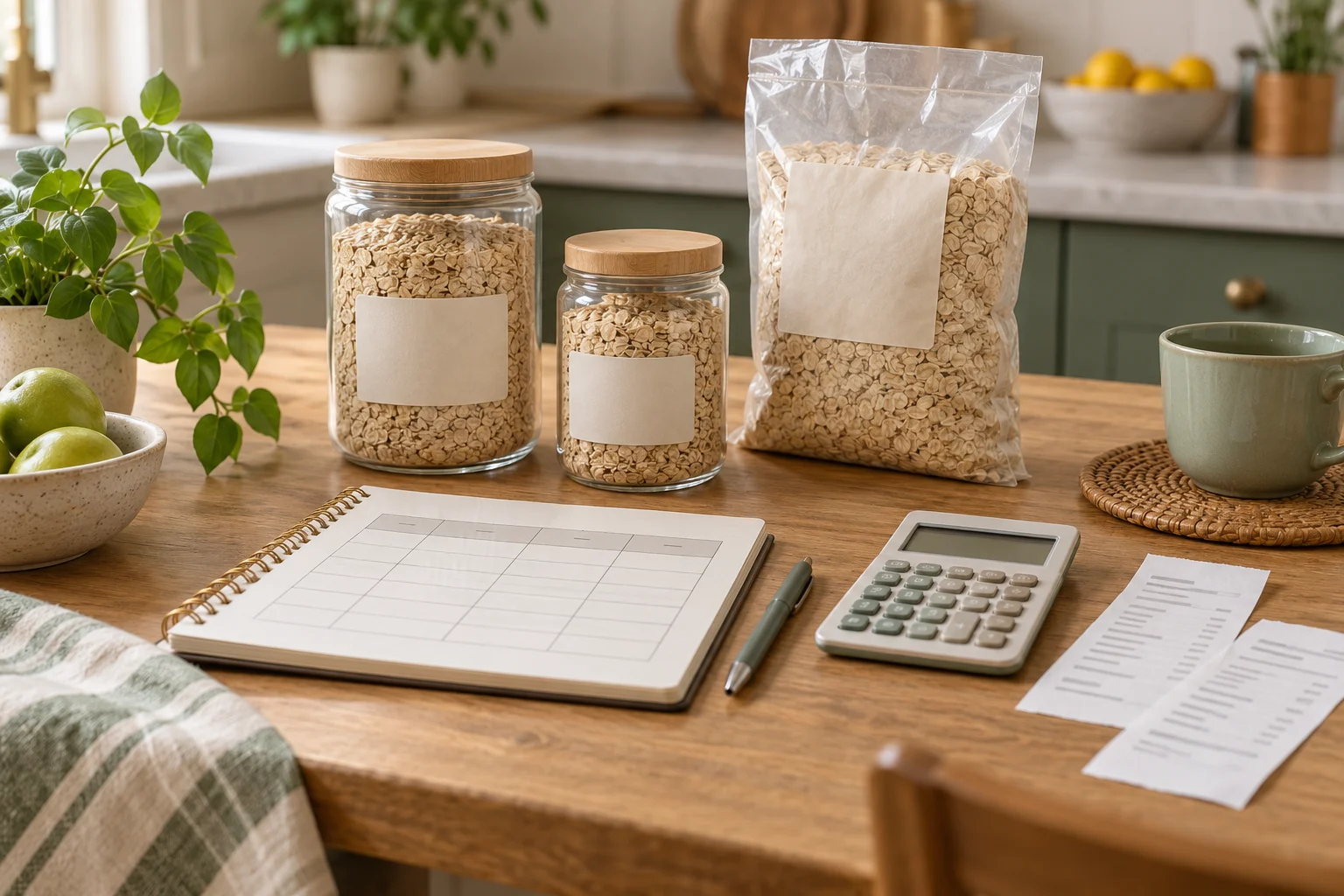
    A lightweight grocery price comparison table can help organize household spending without turning everyday shopping into a full accounting project. In about 15 minutes, choose a small group of repeat purchases, record the details in one table, compare like with like, and decide what—if anything—deserves attention next time you shop. The goal is a clear reference for household spending organization, not a promise of a specific saving amount.

    Grocery containers, a comparison table and calculator for comparing unit prices

    Why a small comparison table is useful

    Grocery records become difficult to maintain when they include too many categories, irregular items, and details that do not support a decision. A compact table keeps the record focused on products your household buys often enough to compare.

    For example, the table might include a staple food, a household cleaning item, a snack, or a personal-care product. The specific items are up to you. What matters is that each row answers a practical question: “What did we buy, in what size, from where, and what should we check next time?”

    This approach is different from trying to reconstruct every receipt. It is a reference system for recurring purchases. You can keep a separate general expense note if needed, while using the comparison table for items where price, pack size, or purchase location tends to vary.

    The prepare-sort-act-review framework

    1. Prepare: choose a narrow scope

    Begin with five to ten repeat purchases. A smaller list is easier to update and review. Avoid adding every item from the latest receipt just because it is available. A product belongs in the table when the information may help with a future shopping decision.

    Choose one recording location, such as a spreadsheet, notes app, or paper page. The best format is the one you are willing to open again. Keep the initial setup simple enough that another household member could understand the columns without a separate explanation.

    Use a date for each entry. Prices and pack sizes can change, so a dated note is more useful than an undated number that looks current long after the purchase.

    2. Sort: separate comparable information

    Record the product name, brand or version when relevant, pack size, purchase location, listed price, and a short note. If a promotion, substitute, or unusual package affected the purchase, write that in the note rather than hiding it in the price column.

    Try to compare products with similar sizes and qualities. A large pack and a small pack should not be treated as equivalent simply because both are labeled with the same product name. If you use a unit price, record the unit clearly, such as price per kilogram, liter, or item. The unit should match the way the product is sold and used.

    Do not create a unit comparison when the contents or quality are meaningfully different. In that case, label the difference plainly. A comparison table is more useful when it shows uncertainty than when it creates a misleadingly precise ranking.

    3. Act: make one modest decision

    After entering the information, select one action for the next shopping trip. Possible actions include checking a second store, buying a different pack size, postponing a nonessential purchase, adding a preferred option to a shopping list, or simply watching the item for another entry.

    One decision is enough for a short review. The table is not an instruction to choose the lowest displayed number in every situation. Availability, quality, travel time, household preferences, storage space, and the risk of unused food can all matter. Record the reason for a choice when it is not obvious.

    4. Review: keep only useful columns

    Review the table after a few shopping trips. Look for columns that you actually use and remove fields that create work without helping a decision. You may find that a notes column is more useful than a detailed category field, or that one product needs a pack-size note while another does not.

    A review also helps identify stale entries. Mark old information as outdated rather than silently treating it as a current price. If the table becomes difficult to scan, archive older rows and keep a short current view.

    A copyable grocery price comparison table

    Copy the following structure into a spreadsheet, document, or notes app. Add only the fields that support your shopping decisions.

    Date Item Brand or version Pack size Purchase location Price Unit, if used Note or next action
    YYYY-MM-DD Product name Optional Size or count Store or channel Amount Unit and basis Promotion, substitute, or check next time
    YYYY-MM-DD Product name Optional Size or count Store or channel Amount Unit and basis Promotion, substitute, or check next time
    YYYY-MM-DD Product name Optional Size or count Store or channel Amount Unit and basis Promotion, substitute, or check next time

    If you want a simpler version, use just five columns: date, item, pack size, location, and price. Start with that version if detailed entries are likely to interrupt your routine.

    The 15-minute action plan

    1. Minutes 1–3: Choose five to ten recurring grocery or household items. Leave out one-off purchases.
    2. Minutes 4–6: Open one recording location and create the table headings.
    3. Minutes 7–10: Enter the most recent information available from receipts, order history, or your existing expense notes. If a detail is unknown, leave it blank or label it as unknown.
    4. Minutes 11–13: Check whether the entries are comparable. Add pack size, unit, promotion, or substitution notes where they affect interpretation.
    5. Minutes 14–15: Choose one next action and set a review point after a few future shopping trips.

    This schedule is a starting format rather than a requirement. If the available information is incomplete, record what you know and avoid filling gaps from memory with false precision.

    Checklist for maintaining the record

    • Prepare: I selected a small list of repeat purchases.
    • Prepare: I chose one place to store the table.
    • Sort: I included the date and pack size for each entry.
    • Sort: I separated different versions or qualities instead of combining them.
    • Sort: I labeled any unit comparison clearly.
    • Act: I chose one practical next step rather than trying to change every shopping habit.
    • Review: I marked old, promotional, or uncertain information.
    • Review: I removed columns that do not help with a decision.

    Common problems and simple adjustments

    The table takes longer than shopping

    Reduce the number of items and columns. A record with five useful rows is more sustainable than a detailed record that stops after one entry. You can add fields later if a recurring question appears.

    Prices look different because pack sizes differ

    Keep the pack size visible and add a clearly labeled unit comparison when appropriate. If the products differ in quality or contents, note that distinction instead of relying on the unit number alone.

    Promotions make the history confusing

    Keep the observed purchase price, but label it as a promotion or special condition. This preserves what happened without presenting the entry as a normal reference price.

    The record becomes outdated

    Add dates and review the current rows after several shopping trips. Archive older observations if they make the table hard to read. Older entries can remain useful as context, but they should not be mistaken for current information.

    Several people in the household shop

    Use shared column names and a short note about unusual substitutions. If each person records information differently, agree on a small convention for dates, pack sizes, and locations. Consistency makes the table easier to interpret than detailed instructions.

    FAQ

    Do I need to record every grocery purchase?

    No. This routine is intended for recurring purchases and comparison questions. One-off items can remain in ordinary expense notes if you track them separately.

    Should I compare only prices?

    Price is one useful field, but it is not the only consideration. Pack size, quality, availability, travel effort, storage, and the likelihood of using the product can affect a household decision. Use the note column to preserve those considerations.

    Is a spreadsheet necessary?

    No. A notes app or paper page can work. A spreadsheet may help when you want to sort dates or calculate a unit figure, but the system should remain understandable and easy to update.

    How often should I update the table?

    Update it when a repeat purchase provides information that could affect a future choice. A short review after a few shopping trips is often more practical than trying to maintain a fixed daily schedule.

    Conclusion

    A grocery price comparison table works best as a small household reference, not as a second job. Prepare a narrow list, sort information by date and comparable size, act on one observation, and review the format when it becomes less useful. Starting with a 15-minute table can create a clearer record while leaving room for real-world factors that a single price cannot capture.


  • 생활비 정리: 장보기 가격 비교표를 15분 만에 만드는 법

    생활비 정리: 장보기 가격 비교표를 15분 만에 만드는 법

    작성자: Kai Life 편집팀

    장보기 가격을 기록하는 가장 간단한 방법은 모든 영수증을 완벽하게 분석하는 것이 아니라, 반복 구매 품목을 정해 같은 기준으로 비교표에 남기는 것입니다. 준비 3분, 분류 4분, 실행 5분, 점검 3분으로 나누면 한 번에 약 15분 동안 생활비 기록을 정리할 수 있습니다. 다만 판매처, 용량, 할인 조건이 다르면 단순한 결제 금액만 비교하기 어렵기 때문에 기록 항목을 먼저 통일해야 합니다.

    식품 용량과 가격을 비교하기 위한 기록표와 계산기

    비교표가 필요한 이유

    장보기 비용은 한 번의 큰 지출보다 여러 번의 작은 결제가 누적되어 체감하기 어려울 수 있습니다. 영수증을 보관하는 것만으로는 어떤 품목의 가격이 달라졌는지, 정기적으로 반복되는 지출이 무엇인지 바로 확인하기 어렵습니다.

    비교표는 가계부 전체를 대신하는 도구가 아니라, 반복되는 구매를 관찰하는 간단한 메모입니다. 예를 들어 쌀, 달걀, 우유, 세제처럼 일정한 간격으로 구매하는 품목을 정하고 구매일, 판매처, 용량, 결제 금액, 할인 여부를 남기면 다음 장보기 때 확인할 기준이 생깁니다. 품목 수를 처음부터 늘리면 입력 부담이 커지므로 가구에서 자주 사는 항목부터 시작하는 것이 좋습니다.

    15분 실행 루틴: 준비·분류·실행·점검

    1단계 준비: 기록 범위 정하기

    처음에는 최근 장보기에서 반복적으로 등장한 품목을 5~10개 정도 고릅니다. 정확한 개수보다 계속 기록할 수 있는 범위가 중요합니다. 간식처럼 구매 빈도나 종류가 크게 달라지는 항목은 별도 묶음으로 두고, 포장 단위가 비교적 일정한 품목을 우선 선택하면 표를 유지하기 쉽습니다.

    • 반복 구매가 잦은 품목
    • 판매처나 구매 방식이 자주 바뀌는 품목
    • 가격 차이를 확인하고 싶은 품목
    • 정기적으로 함께 결제되는 생활용품

    기록 기간도 미리 정합니다. 매번 장을 볼 때 갱신할지, 일주일에 한 번 모아서 입력할지 선택하면 됩니다. 중요한 것은 실제로 확인할 수 있는 영수증이나 결제 내역만 기록하고, 기억에 의존해 빈칸을 채우지 않는 것입니다.

    2단계 분류: 같은 기준으로 묶기

    비교표의 핵심은 같은 품목을 같은 단위로 보는 것입니다. ‘우유’라고만 적으면 용량과 제품 종류가 달라질 수 있으므로 품목명에 필요한 조건을 덧붙입니다. 단, 특정 브랜드를 반드시 유지할 필요는 없습니다. 가구가 실제로 비교하려는 기준에 따라 일반 품목, 규격, 구매 형태를 정하면 됩니다.

    구분 기록 예시 확인할 점
    품목 달걀, 세제, 휴지 비슷한 용도의 항목끼리 묶기
    규격 개수, 중량, 용량 포장 단위가 같은지 확인
    판매처 동네 매장, 온라인몰, 대형 매장 배송비나 회원 조건 포함 여부
    가격 조건 정상가, 할인, 쿠폰, 묶음 다음 구매에도 적용 가능한지

    묶음 상품은 총액만 적으면 단품과 비교하기 어렵습니다. 필요한 경우 ‘묶음 수량’과 ‘실제 사용 단위’를 따로 적습니다. 단가 계산이 번거롭다면 처음에는 포장 단위가 같은 상품만 비교해도 충분합니다.

    3단계 실행: 결제 내역을 표에 옮기기

    이제 최근 영수증이나 결제 내역에서 확인 가능한 정보만 옮깁니다. 아래 양식은 메모 앱, 스프레드시트, 종이 수첩에 그대로 사용할 수 있습니다.

    구매일 품목 규격 판매처 금액 할인·메모
    ____ ____ ____ ____ ____원 ____
    ____ ____ ____ ____ ____원 ____
    ____ ____ ____ ____ ____원 ____

    금액을 입력할 때는 배송비, 적립금, 쿠폰처럼 최종 결제에 영향을 준 요소를 메모란에 적습니다. 할인 가격만 기록하면 다음 구매에서 같은 조건을 재현할 수 없는 경우가 있으므로 ‘쿠폰 사용’, ‘묶음 구매’, ‘배송비 포함’처럼 짧은 표시를 남기는 편이 안전합니다.

    4단계 점검: 다음 행동 하나만 정하기

    표를 만든 뒤에는 모든 가격을 분석하려 하지 말고 다음 장보기에서 확인할 행동 하나를 정합니다. 예를 들어 ‘다음번에는 같은 용량끼리 비교하기’, ‘배송비가 붙은 주문은 별도로 표시하기’, ‘정기적으로 결제되는 생활용품을 먼저 확인하기’처럼 구체적으로 적습니다.

    가격이 낮은 항목을 일률적으로 선택해야 하는 것은 아닙니다. 품질, 이동 시간, 배송 조건, 보관 가능 여부, 가족의 사용량이 다르기 때문입니다. 비교표의 목적은 최저가를 단정하는 것이 아니라, 어떤 조건에서 지출이 달라졌는지 알아보는 데 있습니다.

    복사해서 쓰는 생활비 기록 체크리스트

    • 이번 기록에 포함할 반복 구매 품목을 정했는가?
    • 같은 품목의 용량이나 개수를 확인했는가?
    • 판매처와 구매일을 함께 적었는가?
    • 쿠폰, 묶음, 배송비 등 가격 조건을 표시했는가?
    • 기억으로 추정한 금액을 사실처럼 입력하지 않았는가?
    • 다음 장보기에서 확인할 행동을 하나 정했는가?
    • 더 이상 사용하지 않는 품목이나 열을 줄였는가?

    체크리스트에서 빈 항목이 생겨도 기록을 중단할 필요는 없습니다. 확인하지 못한 값은 ‘확인 필요’라고 표시하고 다음 기록부터 보완합니다. 빈칸을 억지로 채우는 것보다 불확실성을 남기는 편이 기록의 신뢰성을 유지하는 데 도움이 됩니다.

    정기 결제와 장보기 기록을 구분하는 방법

    장보기 비교표와 정기 결제 기록은 목적이 다릅니다. 장보기 표는 품목별 가격과 구매 조건을 살피는 데 적합하고, 정기 결제 목록은 매달 또는 일정한 주기로 빠져나가는 금액을 확인하는 데 유용합니다. 두 항목을 한 표에 모두 넣으면 표가 복잡해질 수 있으므로 별도 목록으로 관리하는 방법을 고려할 수 있습니다.

    기록 종류 핵심 항목 점검 질문
    장보기 품목, 규격, 판매처, 금액 이번 구매 조건은 지난 기록과 같은가?
    정기 결제 서비스명, 결제일, 금액, 결제 주기 현재도 사용하는 항목인가?
    지출 메모 날짜, 금액, 용도, 확인 상태 나중에 용도를 알아볼 수 있는가?

    정기 결제를 해지하거나 변경할지는 사용 여부와 계약 조건을 확인한 뒤 판단해야 합니다. 이 글의 기록법은 결제 내역을 정리하는 방법이며, 개별 계약의 해지 가능 여부나 환불 조건을 대신 판단하지 않습니다.

    기록이 오래 유지되도록 줄이는 방법

    표가 복잡해질수록 기록을 빼먹기 쉬워집니다. 다음 원칙으로 열을 줄여 보세요.

    1. 필수 열부터 둡니다. 구매일, 품목, 금액만으로 시작하고 필요한 경우에만 판매처와 규격을 추가합니다.
    2. 표현을 통일합니다. 같은 품목을 매번 다른 이름으로 적지 않습니다.
    3. 가격과 판단을 분리합니다. 금액은 사실대로 적고, ‘다음에 비교’ 같은 의견은 메모란에 구분합니다.
    4. 기록일을 정합니다. 장보기 직후 또는 주말처럼 생활 흐름에 맞는 시점을 고릅니다.
    5. 오래된 항목을 정리합니다. 더 이상 구매하지 않는 품목은 삭제하기보다 보관 영역으로 옮겨 현재 표를 간단하게 유지합니다.

    가구 구성이나 구매 습관이 바뀌면 비교 기준도 바뀔 수 있습니다. 예전과 다른 포장 단위를 구매하게 됐다면 과거 금액과 단순 비교하지 말고, 새 기준을 표에 추가한 뒤 그 시점부터 다시 관찰합니다.

    자주 묻는 질문

    모든 장보기 품목을 기록해야 하나요?

    그럴 필요는 없습니다. 반복 구매가 많거나 가격 변화를 확인하고 싶은 품목부터 시작하는 편이 현실적입니다. 기록하지 않은 항목은 비교 대상에서 제외하고, 필요성이 생겼을 때 추가하면 됩니다.

    할인 가격과 정상 가격 중 무엇을 적어야 하나요?

    실제 결제 금액을 기본으로 적고, 할인·쿠폰·묶음 여부를 별도로 표시하는 방법이 무난합니다. 할인 조건이 다음 구매에도 적용된다는 보장이 없으므로 금액만 보고 일반적인 가격으로 해석하지 않도록 주의합니다.

    온라인 장보기와 오프라인 장보기를 비교해도 되나요?

    가능하지만 배송비, 최소 주문 금액, 수령 시간, 회원 조건처럼 가격 외 요소가 다를 수 있습니다. 표의 메모란에 이런 조건을 남기면 단순 결제 금액만 비교하는 오류를 줄일 수 있습니다.

    얼마나 자주 표를 점검해야 하나요?

    장보기 빈도에 맞춰 매번 또는 일주일에 한 번 점검할 수 있습니다. 자주 구매하지 않는 품목은 한 달 단위로 확인해도 됩니다. 중요한 것은 빈도보다 중단하지 않을 정도로 부담을 낮추는 것입니다.

    마무리: 비교표는 생활비를 판단하기 위한 메모

    생활비 정리는 모든 지출을 완벽하게 통제하는 작업이 아니라, 반복되는 지출을 알아보기 쉬운 형태로 바꾸는 과정입니다. 품목을 좁혀 시작하고, 규격과 가격 조건을 함께 기록하며, 15분이 지나면 그날의 기록을 마무리하세요. 표에서 확인한 사실을 바탕으로 다음 장보기에서 확인할 행동 하나만 정해도 기록이 단순한 보관을 넘어 생활비 점검 도구로 활용될 수 있습니다.


THANKS KAI CONTACT

WeChat

위챗에서 QR코드를 스캔해 주세요.
Scan the QR code in WeChat.

Thanks Kai WeChat contact QR code위챗 열기 / Open WeChat