작성자: Kai Life Editorial Team
For a short trip, you can build a useful packing list in 15 minutes by first checking the trip basics, then sorting items into a few categories, packing only what supports the plan, and reviewing the list once before leaving. This travel planning organization routine is designed for independent travelers who want a quick system that works across different kinds of local visits and short journeys.
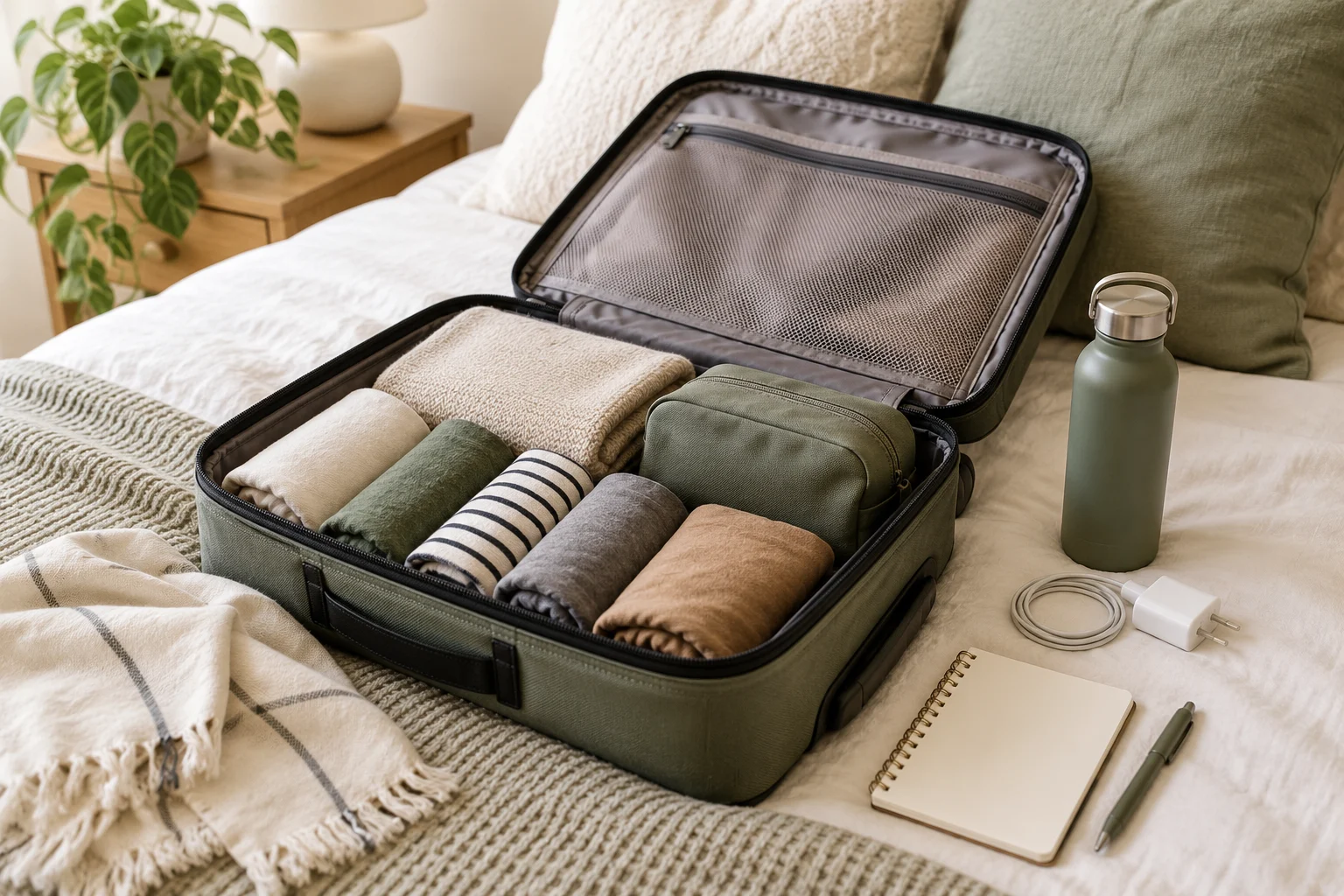
Why a short-trip packing list can become complicated
Packing often takes longer when the decision is treated as one large question: “What might I need?” A better approach is to connect each item to a real part of the trip. Your transport, accommodation, planned activities, access to basic supplies, and personal requirements all affect the list.
The goal is not to create a universal list. A city visit, an overnight stay, a family visit, and a day of outdoor activities can require different items. The goal is to create a repeatable decision process that helps you notice important needs without adding unnecessary objects.
Use four stages:
- Prepare: collect the few facts that affect packing.
- Sort: group possible items by purpose.
- Act: place the selected items together and record what is still missing.
- Review: check the packed set against your departure and return plans.
Minute 0–3: Prepare the trip information
Start with your itinerary, booking details, calendar, or trip notes. You do not need to rewrite the entire plan. Look for information that changes what you carry.
- Write the departure and return dates or times.
- Note how many nights you will be away, if applicable.
- List the main activities in short phrases, such as walking, dining, swimming, work, or visiting family.
- Check the accommodation and transport information for practical constraints.
- Record any personal items that cannot be replaced easily during the trip.
At this stage, avoid browsing for additional places or building a detailed itinerary. New research can expand the scope of the trip and make the packing decision less clear. Keep the preparation focused on information already relevant to this visit.
A compact trip snapshot
| Question | Short note | Packing effect |
|---|---|---|
| When am I leaving and returning? | Dates or time window | Clothing, food, medication, and charging needs may change |
| Where will I sleep? | Accommodation type | Check what is already available and what you prefer to bring |
| How will I travel? | Walking, public transport, car, or another option | Consider carrying comfort, access, and document storage |
| What will I do? | Short activity list | Pack items that support the actual plan |
| What is personally important? | Health, accessibility, work, or routine needs | Set these aside before optional items |
Minute 3–7: Sort possible items into four groups
Place possible items into four groups. You can use a table, notes app, open bag, or a clear surface. The sorting step separates decisions that are often mixed together.
1. Essentials
Essentials are items linked to identity, access, communication, health, or the ability to complete the trip. Examples may include identification, required payment methods, keys, medication, glasses, and a phone. The exact items depend on your circumstances and destination.
2. Clothing and personal care
Choose clothing based on the number of days, planned activities, and available washing or changing options. Personal care items should reflect what you use and what is available at your destination. Smaller quantities can reduce bulk, but personal health and comfort take priority over saving space.
3. Activity-specific items
These are objects needed because of a particular plan, such as work materials, exercise clothing, a reusable water container, or equipment for a hobby. If an item is connected to no activity in your trip notes, pause before adding it.
4. Convenience items
Convenience items can make a trip more comfortable but are less central to completing it. Examples include entertainment, an extra accessory, or a backup item. Select these after the first three groups, so they do not crowd out essentials.
| Group | Decision question | Action |
|---|---|---|
| Essentials | Would access, health, or communication be affected without it? | Set aside early |
| Clothing and personal care | Does the trip length or activity plan support bringing it? | Choose a reasonable quantity |
| Activity-specific | Which planned activity requires it? | Match it to a trip note |
| Convenience | Will it provide enough value to justify carrying it? | Review last |
Minute 7–11: Act with a focused packing list
Now turn the sorted groups into a list you can use immediately. Write one line per item or item group. Avoid vague entries such as “everything I need,” because they are difficult to check. Use clear phrases like “charging cable,” “sleepwear,” or “work document.”
Pack or place together the items already available. For anything missing, record a short follow-up action rather than leaving it in your memory. For example, write “collect key from desk,” “wash clothing,” or “check booking message.” This turns packing into a visible task list.
Use this copyable checklist as a starting structure:
- Trip information: dates, route, accommodation details, and planned activities reviewed
- Access: identification or required documents, keys, payment method, and tickets or booking details
- Communication: phone, charging equipment, and any needed work or contact information
- Health and routine: medication, glasses, accessibility items, and personal care needs
- Clothing: clothing for the trip length and activities, sleepwear, and suitable footwear
- Activity items: only the equipment or materials linked to the actual plan
- Comfort: a small selection of optional items after the essential groups are complete
- Before leaving: keys, lights or appliances, rubbish, notifications, and transport timing checked according to your situation
For a reusable digital version, create a note titled Short trip packing with the same headings. Copy it for each journey, then remove sections that do not apply. A consistent structure reduces the need to start from a blank page.
Minute 11–13: Connect packing with itinerary organization
A packing list is more useful when it sits beside your itinerary organization system. Keep three short lists together:
- Plan: places, appointments, and activities you intend to visit or attend.
- Pack: items that support those plans.
- Notes: useful details such as opening information, meeting points, or questions to confirm.
This separation prevents a place list from becoming a packing list. A restaurant, museum, park, or shop may belong in your place list, but it does not automatically require a special item. Add an item only when the plan creates a clear practical need.
You can also use a small connection table:
| Trip note | Possible preparation | Status |
|---|---|---|
| Planned activity | Relevant clothing or equipment | To pack, packed, or not needed |
| Transport detail | Document, ticket, timing, or carrying adjustment | To check or complete |
| Accommodation detail | Personal item not provided or preferred | Confirm or pack |
| Personal routine | Health, work, or accessibility item | Set aside early |
Minute 13–15: Review and close the task
The final review should be short. Compare the packed items with the trip snapshot, then check the items most likely to be forgotten. Review your actual departure situation rather than adding more possibilities.
- Confirm that essential documents, keys, communication items, and personal requirements are accounted for.
- Check that clothing and activity items match the length and purpose of the trip.
- Look for missing actions, such as charging a device or collecting an item from another room.
- Remove duplicates and optional items that no longer seem worthwhile.
- Place the bag, outerwear, and departure-day items where they are easy to find.
Then close the note. If a future trip reveals a repeated omission, update the template after returning rather than constantly adding items before every departure.
Common packing decisions that need a pause
“I might need it” items
Uncertainty is a useful signal, but it is not a decision by itself. Ask whether the item supports a known activity, a personal requirement, or a realistic contingency. If not, place it in the convenience group and review it at the end.
Weather-dependent items
Weather can affect clothing and equipment, but conditions vary by destination and date. Check a reliable forecast or local information when it is relevant to your trip, then adjust the list. Do not treat a generic packing template as a substitute for current conditions.
Shared items
If you are traveling with another person, clarify who is carrying shared items. Record the owner beside the item in your trip notes. This can reduce duplicate packing while keeping responsibility visible.
Health and accessibility needs
Personal health and accessibility requirements should be handled before optional convenience items. This article does not replace advice from a qualified professional. If a prescribed treatment, medical device, or accessibility arrangement is part of your routine, use the instructions that apply to you and confirm destination-related requirements when relevant.
A reusable 15-minute routine
Save the following sequence as a note or calendar description:
- Prepare for 3 minutes: review dates, transport, accommodation, activities, and personal requirements.
- Sort for 4 minutes: separate essentials, clothing and personal care, activity items, and convenience items.
- Act for 4 minutes: gather selected items and write follow-up actions for anything unavailable.
- Review for 2 minutes: compare the bag with the trip snapshot and remove duplicates.
- Close: save the updated trip notes and put departure-day items in one visible place.
Conclusion
A short-trip packing list does not need to be a long inventory. The practical value comes from using a repeatable structure: prepare with the trip facts, sort by purpose, act on clear items, and review against the itinerary. Keeping a place list, trip notes, and packing list close together can make decisions easier without turning every journey into a large planning project.
FAQ
How many items should a short-trip packing list contain?
There is no useful universal number. The list should reflect the trip length, activities, accommodation, transport, and personal requirements. Start with essentials, then add activity and convenience items only when they have a clear role.
Should I use a paper list or an app?
Use the format you can check easily during preparation. A paper list works well for a visible packing surface, while a note app can be copied for future trips and connected with itinerary details.
How can I avoid overpacking?
Link each nonessential item to a known activity or realistic need. Review convenience items last, remove duplicates, and distinguish between an item that would be pleasant and one that supports the actual trip.
What should I do if my plans change?
Update the trip snapshot first, then revise the activity-specific section. Recheck clothing, documents, and transport-related items after the change instead of rebuilding the entire list from the beginning.