작성자: Kai Life Editorial Team
A clearer entryway does not require a long cleaning session. This 15-minute home organization routine gives each task a short time window: prepare the space, sort what has collected there, act on each category, and review the setup before stopping. It is designed for one- or two-person homes where the entryway often handles shoes, bags, coats, parcels, keys, and items waiting to leave.
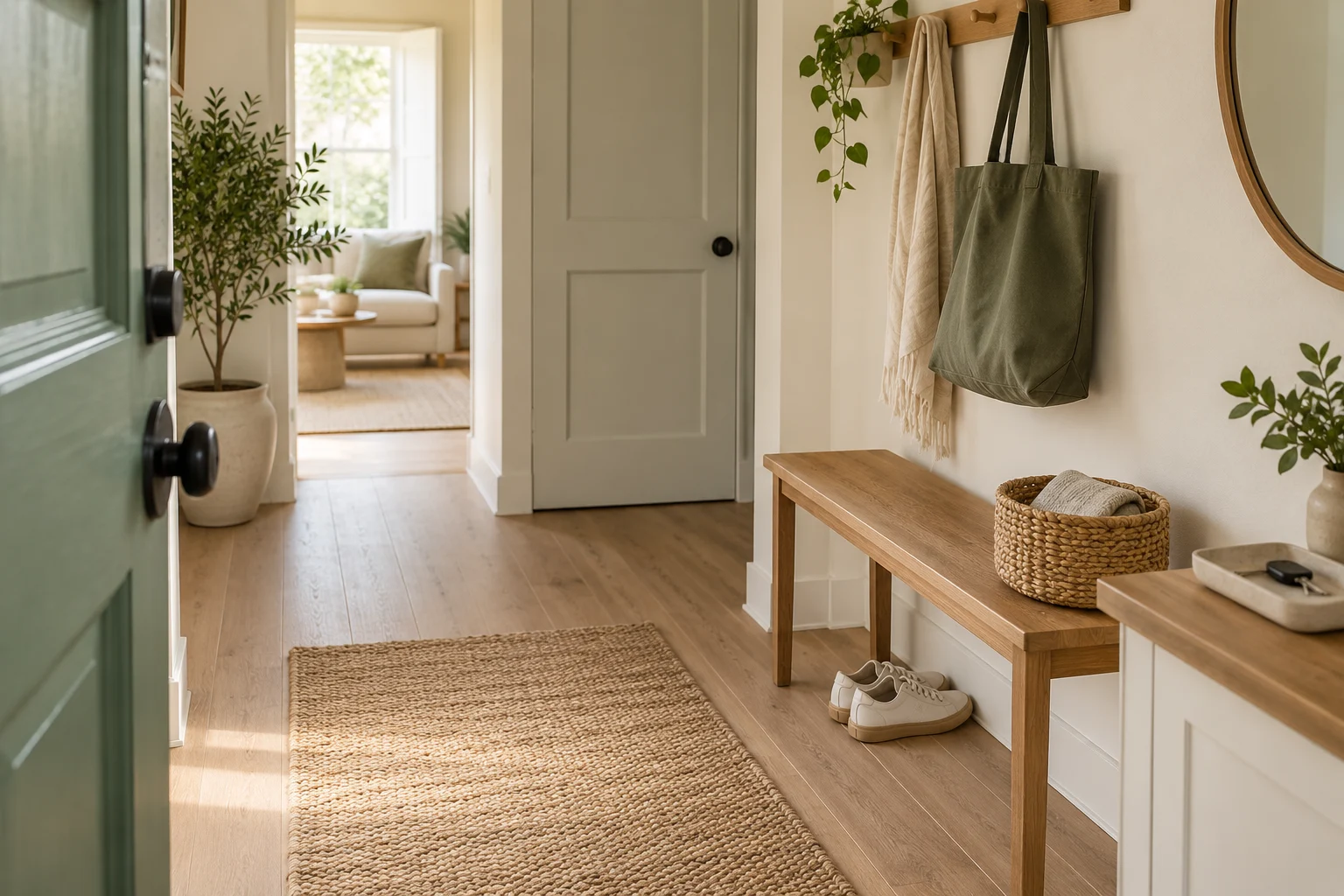
The goal is not to make the entrance look staged. The goal is to create a simple home flow: items arriving in the home have a temporary landing point, items leaving have a visible departure point, and everyday objects have storage rules that are easy to repeat.
Why a short routine works better than a full reset
Entryways collect mixed categories. A tote bag can sit beside recycling, a parcel, a pair of shoes, and something that belongs in another room. When every object requires a separate decision, a quick tidy-up can feel larger than it is.
A short routine reduces that friction by using the same order each time. You are not trying to reorganize the entire home. You are clearing one transition area and deciding what should happen to the objects currently there.
Use this routine when you have around 15 minutes after work or when the entryway has become difficult to use. If you are tired, reduce the scope to the floor, the main surface, and the items needed for the next morning.
The four-part framework: prepare, sort, act, review
1. Prepare the area
Set a timer for 15 minutes. Bring a small bag or box for items that belong elsewhere, and choose one temporary spot for things that need a later decision. Avoid gathering extra containers at the start. More containers can create another sorting project before the entryway has been cleared.
Make the working area visible. Open the door or switch on the light, move one object at a time, and keep a clear place for items that are staying. Preparation should make the next action obvious, not add a new layer of planning.
2. Sort by next action
Sort each item into one of four groups:
- Stay here: the item is used at the entryway and has a defined place.
- Return elsewhere: the item belongs in another room or another part of the home.
- Leave soon: the item needs to go out, such as a return, donation, parcel, or recycling.
- Decide later: the item needs a separate decision and should not consume the whole routine.
This sorting method focuses on movement rather than abstract categories. You do not need to decide whether an item is “organized” or “messy.” You only need to identify its next useful action.
3. Act on the groups
Return the items that belong elsewhere. Put outgoing items beside the door, near the keys, or in another place connected to the next departure. Place staying items in their assigned locations. Keep the decide-later group small; if it grows, record a specific follow-up action instead of leaving an unnamed pile.
For shared homes, avoid creating a vague communal surface. Give shared items one visible zone and give personal items separate zones where possible. A rule such as “keys go in the small tray” is easier to follow than “keep the console clear.”
4. Review the flow
Use the final minutes to walk through the entryway as if you were arriving home and leaving again. Can you put down a bag without moving several other objects? Can you find the item needed for the next departure? Does anything have a storage location that is technically available but inconvenient to use?
If an item repeatedly remains in the entryway, treat that pattern as information. Its current home may be too far away, too full, or unrelated to how the item is used. Adjust the rule rather than blaming the routine.
A minute-by-minute 15-minute action plan
| Time | Action | Decision to make |
|---|---|---|
| 0–2 minutes | Set a timer, bring a return bag or box, and clear a small working area. | What is the smallest part of the entryway to reset today? |
| 2–6 minutes | Sort visible items into stay, return elsewhere, leave soon, and decide later. | What is each item’s next action? |
| 6–10 minutes | Return misplaced items and move outgoing items to the departure point. | Which action can be completed now rather than postponed? |
| 10–13 minutes | Put entryway items in their assigned places. | Is each location easy to reach during a normal arrival? |
| 13–15 minutes | Review the walking path and note one adjustment for next time. | What repeatedly returns to the same spot? |
Storage rules that support a calmer home flow
Storage rules work best when they describe an action a person can perform without much thought. Start with the objects that appear most often, then give them a location based on frequency and timing.
- Daily-use items stay within easy reach. Keys, frequently used bags, and everyday outerwear should not require moving several other items first.
- Departure items have a departure point. Returns, parcels, library items, or things going to work can sit in one designated area near the exit.
- Rarely used items do not occupy prime space. Seasonal accessories and occasional equipment can use a less convenient location.
- Small items need containment. A defined tray, hook, or small box can prevent keys and similar objects from spreading across a surface.
- Capacity is visible. If a hook, basket, or shelf is consistently full, reduce the number of items assigned to it or choose a different location.
Keep rules specific enough to guide both people in a shared home. “Bags go on the hooks” is clearer than “bags stay tidy.” If two people use different bags or coats, separate labels or zones can reduce accidental mixing.
Copyable entryway checklist
Save or copy this checklist for the next short tidy-up:
- Prepare: Set a 15-minute timer.
- Prepare: Bring one bag or box for items that belong elsewhere.
- Sort: Separate stay-here items from return-elsewhere items.
- Sort: Identify items that need to leave the home soon.
- Sort: Put uncertain items in one limited decide-later group.
- Act: Return misplaced items to their actual homes.
- Act: Put outgoing items at the place connected to the next departure.
- Act: Put keys, bags, shoes, and outerwear in defined locations.
- Review: Check whether the path through the entryway is easy to use.
- Review: Write down one storage rule or location to adjust.
What to do when the routine keeps breaking down
If the same object returns to the floor, ask three questions: Where is it used? When is it used next? What makes its current storage location inconvenient? The answer may suggest a better home near the entryway or a smaller set of items kept there.
If the surface becomes a general holding area, define its purpose. It might hold keys and mail for a short period, but not clothing, tools, food containers, and parcels at the same time. A narrow rule gives the surface a clear job.
If 15 minutes is too much on a particular day, use a reduced version: clear the walking path, move outgoing items to the exit, and place only the most visible daily-use items in their homes. A smaller repeatable action can provide useful information about what the entryway needs next.
FAQ
Should I organize the whole home during this routine?
No. Keep the boundary to the entryway and items directly connected to it. If you find objects for other rooms, place them in the return-elsewhere group and move them later without turning the session into a full-home project.
What if I do not have much storage near the door?
Use categories and timing instead of adding equipment immediately. Choose one place for keys, one departure point for outgoing items, and one location for daily footwear or bags. If the setup remains difficult, review which items genuinely need to stay near the entrance.
How should two people share the entryway?
Create a small shared zone for shared items and separate zones for personal items when possible. Agree on the meaning of each zone, then test the arrangement during normal arrivals and departures. If one person repeatedly avoids a location, discuss the movement needed to use it.
When should I handle the decide-later group?
Give it a separate time or a specific next action. For example, “check the return label tomorrow” is more useful than leaving a box in the entryway with no decision attached. Keep this group limited so it does not become permanent storage.
Conclusion
A 15-minute entryway routine works as a small home organization system: prepare the area, sort by next action, act on each group, and review the flow. The most useful result is not a temporarily empty surface. It is a set of storage rules that matches how people actually arrive, leave, and move through the home.
Start with the smallest visible entryway zone, use the checklist, and observe which items repeatedly resist the current setup. Those patterns can guide the next adjustment without requiring a large decluttering project.