작성자: Kai Life Editorial Team
To group cleaning tools in one practical station, choose one easy-to-reach location, collect the tools from around the home, separate them by frequency and use, then return only the useful items to that station. A 15-minute tidy-up works best when the goal is not to redesign every cupboard, but to create a clear home base for the tools used most often.
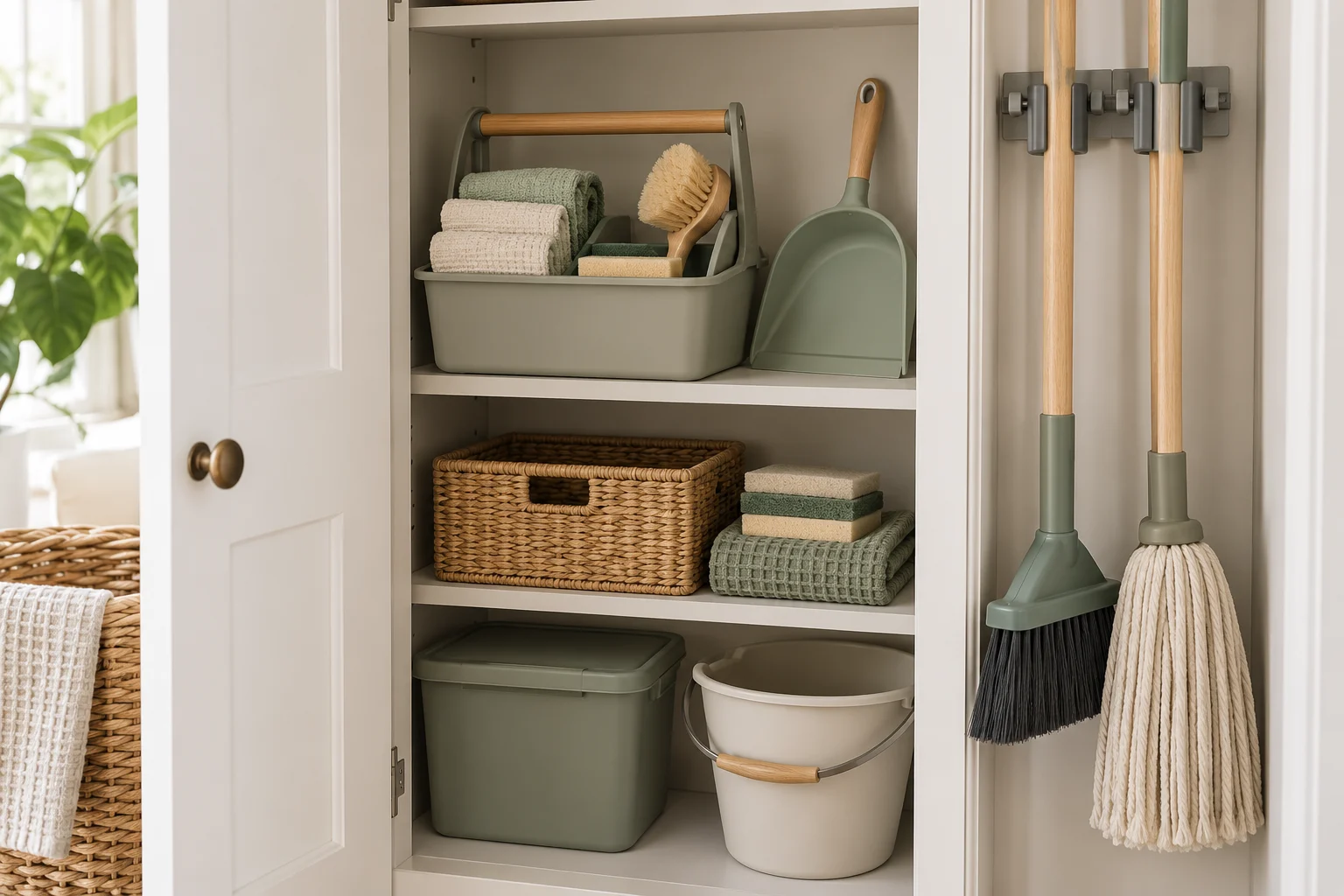
What a practical cleaning station needs to do
A cleaning station is a designated place for everyday cleaning supplies and tools. It can be a cupboard, a shelf, a narrow corner, a utility area, or another location that fits the home. The best location is not necessarily the largest one. It should reduce unnecessary walking and make it easy to put an item away after use.
For a one- or two-person home, a small station often works better when it has a limited purpose. Keep frequently used items together, while storing occasional or specialist items elsewhere if the station becomes crowded. This creates a simple storage rule: the more often an item is used, the easier it should be to reach.
- Daily or frequent items: place them at the front or at hand level.
- Weekly items: place them behind or below the frequent-use group.
- Occasional items: store them separately if they make the main station difficult to use.
- Items with unclear purpose: pause before giving them space in the station.
The 15-minute prepare, sort, act, review routine
Minutes 0–3: Prepare the area
Choose one station before moving anything. Open the cupboard or clear the shelf, then place a temporary collection spot nearby. A box, basket, or clean section of floor can work as a holding area. The collection spot keeps the process contained and makes it easier to see what you actually own.
Gather a cloth or small bag for rubbish and a separate place for items that belong in another room. Avoid starting with several storage areas at once. One station and one collection spot are enough for this routine.
Minutes 3–7: Sort by use, not by object type
Bring cleaning tools from nearby rooms to the collection spot. Sort them into three practical groups:
- Use often: tools used for quick spills, surfaces, floors, or other regular tasks.
- Use sometimes: tools used during a longer weekly or occasional clean.
- Unsure or unused: items that are damaged, duplicated, empty, or not connected to a current task.
Sorting by use helps the station support a home’s real cleaning flow. A tool that is useful but rarely needed does not have to occupy the easiest-to-reach position. If an item is used in a specific room, consider whether storing it near that room would save more effort than moving it to the central station.
Minutes 7–12: Act and assign each group a place
Return the frequent-use group first. Keep similar actions together where practical, such as surface-cleaning items, floor-care tools, and small touch-up tools. The exact categories can vary by home; the useful test is whether a person can find and return an item without opening several containers.
Use existing containers when possible. A small basket can hold loose items, while taller tools may need an open side or a vertical space. Keep the arrangement visible enough that forgotten items do not disappear at the back. If a container hides the contents, label it with a plain description such as “floor care” or “quick clean.”
Keep the station safe and suitable for the space. Follow the instructions on any cleaning product, keep incompatible products separate, and store supplies away from children or pets when relevant. Do not combine products merely to save space. If a container is leaking, damaged, or missing important information, set it aside for careful review rather than placing it back in the station.
Minutes 12–15: Review the flow
Test the station with a simple imaginary task: wiping a surface, handling a small spill, or cleaning a floor. Can you locate the relevant tool quickly? Is anything blocking the item you reach for most? Can the tool be returned without creating a new pile?
Make one adjustment, then stop. The purpose of the 15-minute routine is to create a workable starting point. A short review later can improve the arrangement after the station has been used in real life.
Storage rules that keep the station manageable
A few repeatable rules are more useful than a complicated organizing system. Write the rules on a note inside the cupboard or save them with the checklist below.
| Situation | Storage rule |
|---|---|
| Used frequently | Keep near the front or at an easy-to-reach height. |
| Used in one specific room | Consider local storage if carrying it back and forth adds effort. |
| Used occasionally | Place behind the everyday group or in a separate area. |
| Duplicate items | Keep only the quantity that fits the household’s routine; review the rest. |
| Loose small tools | Group them in one open or clearly labeled container. |
| New item entering the station | Decide where it belongs before putting it away. |
These rules protect the station from becoming a general dumping place. They also make the system easier to explain to another person in the home. Shared spaces work better when the storage decision is visible rather than dependent on one person remembering it.
Copyable 15-minute checklist
- Choose one cleaning-tool station.
- Clear enough space to see the available storage.
- Set up a temporary collection spot.
- Collect cleaning tools from nearby rooms.
- Sort items into frequent, occasional, and unsure or unused groups.
- Return frequent-use tools first.
- Group loose tools in an existing basket or container.
- Move room-specific tools closer to their point of use when that makes sense.
- Separate damaged, leaking, empty, or unclear items for review.
- Test the station with one common cleaning task.
- Make one final adjustment.
- Set a short review point after the station has been used.
Common problems and practical adjustments
The station is too full
Return to the use-based groups and remove occasional items from the easiest-to-reach area. A full station may need a second location for specialist tools, or it may contain duplicates that are not supporting the current routine.
Tools keep moving around the home
Look at where the tool is actually used. A central station can be helpful for shared supplies, but a frequently used room-specific tool may be easier to manage near its task. The aim is a sensible home flow, not a single location at any cost.
The station looks tidy but is hard to use
Reduce hidden layers. If reaching one item requires moving several others, change the order or use a more open container. A visually neat arrangement that slows down ordinary tasks will be difficult to maintain.
Two people put items away differently
Use broad labels and simple zones instead of detailed instructions. For example, separate “quick clean” from “floor care” if those categories match the household’s habits. Review the arrangement together after a few uses and change only the part that causes confusion.
FAQ
Does a cleaning station need special organizers?
No. The station can begin with the storage already available at home. Containers are useful when they solve a specific problem, such as loose small tools or a difficult-to-see shelf, but buying supplies is not required for the routine.
Should every cleaning tool be kept in one place?
Not necessarily. Shared everyday tools can benefit from one station, while a tool used repeatedly in one room may be easier to store there. The decision should follow the home’s movement pattern and the tool’s actual frequency of use.
How often should the station be reviewed?
Review it after using the station for a short period and whenever the arrangement begins to slow down a routine. A brief reset is usually easier than waiting until the storage area becomes difficult to sort.
What should happen to items in the unsure group?
Keep them outside the main station while deciding what to do. Check whether they are usable, relevant to the household, and safe to store. Avoid forcing an uncertain item into the station simply because it already exists.
Conclusion
A practical cleaning-tool station starts with a clear location and a small set of storage rules. In 15 minutes, prepare one area, sort tools by use, return the most frequent items first, and review the flow with a real task in mind. The result does not need to be elaborate. It needs to make the next small cleaning job easier to begin and easier to finish.