작성자: Kai Life Editorial Team
To review recurring subscriptions in 15 minutes, gather the latest payment records, place each recurring charge in one comparison table, sort the list by usefulness and review date, choose a specific action for each item, and set a future review date. The aim is not to build a detailed budget. It is to create a clear household spending organization system that makes recurring payments easier to notice and discuss.
Why a one-page review helps
Recurring payments can become difficult to track when information is spread across bank statements, email receipts, app stores, family members’ accounts, and paper notes. A one-page view brings the practical details together without requiring a complex finance system.
The page can answer four useful questions:
- What recurring payment is this?
- Who uses it and how often?
- When should the household review it?
- What action, if any, should happen next?
This approach focuses on organization rather than financial advice. It does not require judging a purchase by price alone. A service may be valuable because it supports work, education, communication, entertainment, or household routines. The table simply makes the current arrangement easier to see.
Prepare: collect the information without overbuilding the system
Start with one place for the review. This could be a sheet of paper, a notes app, or a spreadsheet. Choose the format that household members can open and update with the least friction.
Collect recent evidence from places you already use, such as:
- Bank or card transaction records
- Email receipts and renewal notices
- App-store subscription pages
- Household members’ payment records
- Invoices or account settings for recurring services
For each item, record the name shown on the payment record rather than relying on memory. Payment descriptions can differ from the brand or service name, so add a short plain-language label if the charge is unclear.
Keep the first pass narrow. The purpose is to identify recurring payments, not to classify every household purchase. One-off purchases, variable utility bills, and irregular expenses can be listed separately for a later review if needed.
Sort: use a comparison table that supports decisions
A useful table contains enough detail to support a conversation but not so many columns that updating it becomes a burden. Copy the template below into a document or spreadsheet.
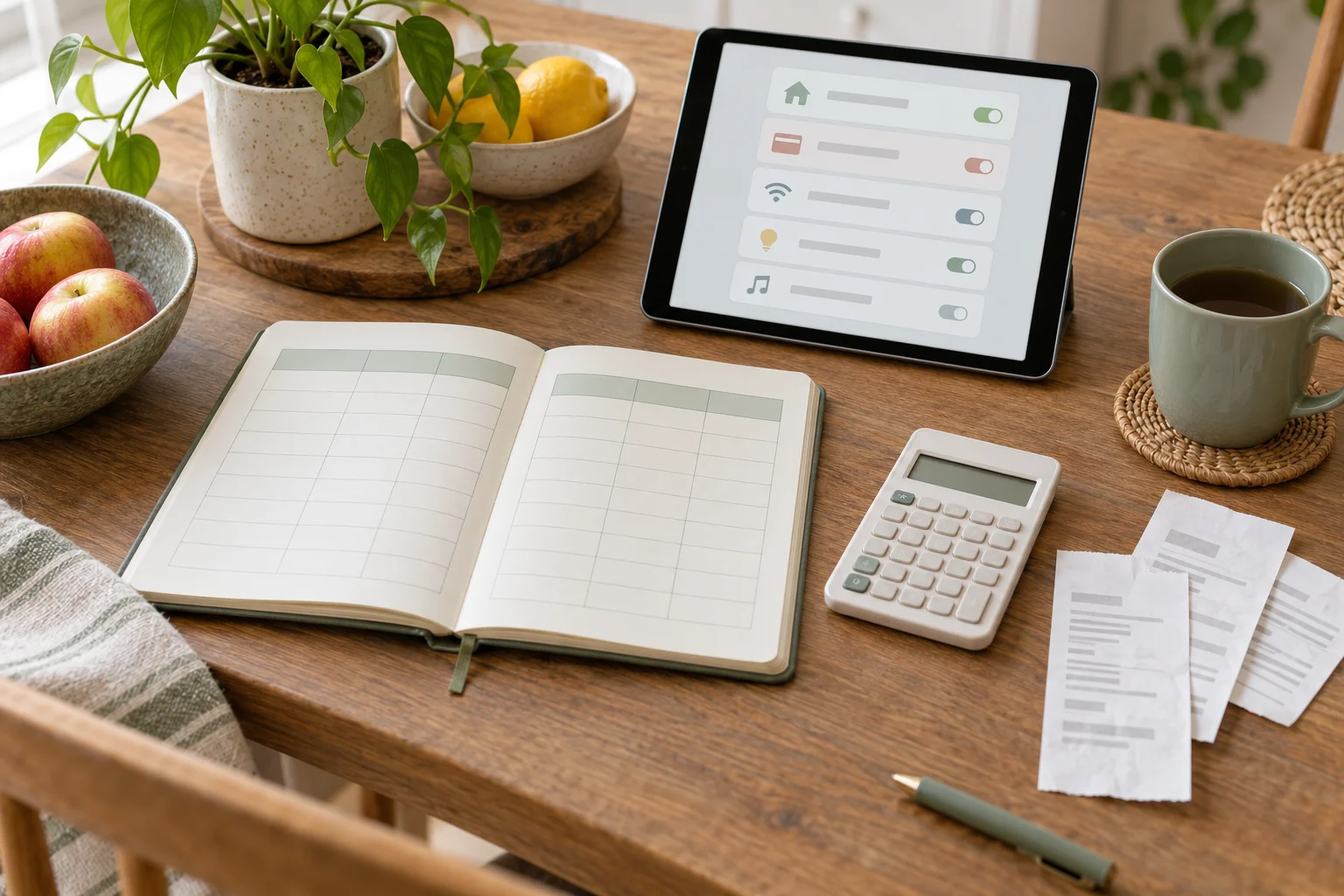
| Service or payment | User | Payment note | Usefulness | Next action | Review date |
|---|---|---|---|---|---|
| Example service | Person or household | Renewal or payment detail | Keep, question, or unclear | Keep, check, pause, or cancel | Date to revisit |
Use short labels instead of long explanations. For example, “used for school work” or “shared by two people” may be more useful than a detailed review. If the payment amount or billing interval is known from your own records, add it to the payment note. If it is not clear, write “check record” rather than guessing.
For the usefulness column, try three neutral labels:
- Keep: The household currently relies on it or has a clear reason to retain it.
- Question: The service may be useful, but the household needs to confirm usage, duplication, or timing.
- Unclear: The payment or service is not yet identified well enough to decide.
These labels delay a rushed decision when the evidence is incomplete. They also make the table more useful for a household conversation.
Act: choose one next step for each row
After the list is visible, assign one practical next action to each entry. The action should describe something a person can do, not a vague intention.
- Keep: Add a short reason and a future review date.
- Check: Open the account or receipt to confirm the payment details.
- Ask: Confirm with the household member who uses the service.
- Compare: Check whether another household payment serves a similar purpose.
- Pause or cancel: Follow the service’s account instructions after the household agrees.
- Monitor: Leave the item in the table and review it after a defined period.
Writing the next action prevents the page from becoming a passive list. It also separates identification from decision-making. A charge can be recorded today even when the household needs more information before changing it.
When more than one person pays for subscriptions, note the responsible person or account location in a private field if that helps coordination. Avoid storing passwords, full payment card details, or security answers in the table.
The 15-minute action plan
Use a timer if a short session helps the household stay focused. The following structure is designed for a first pass, not a complete financial review.
- Minutes 0–3: Prepare. Open the chosen page and gather the payment records, receipts, or account screens that are readily available.
- Minutes 3–7: List. Add each recurring payment you can identify. Record the service name, user, and a brief payment note.
- Minutes 7–10: Sort. Mark each row as keep, question, or unclear. Group similar services or payments that may overlap.
- Minutes 10–13: Act. Assign one next action to each row. Complete a quick confirmation when the relevant account or receipt is already open.
- Minutes 13–15: Review. Choose a future review date, note unresolved questions, and store the page where household members can find it.
If the list is longer than the available time, stop after recording the items you found and write “continue list” as the next action. A partial, clearly labeled record can be more practical than rushing through every account.
A copyable household checklist
Use this checklist before closing the review:
- Prepare: I chose one shared location for the recurring-payment list.
- Prepare: I checked the payment records and receipts available to me.
- Sort: I recorded the service name as it appears in the payment record.
- Sort: I added the likely user or household purpose.
- Sort: I marked items as keep, question, or unclear.
- Act: I gave each row a next action.
- Act: I avoided guessing when a payment detail was uncertain.
- Review: I wrote a future date for the next check.
- Review: I stored the page in a location household members can access.
Make the routine easier to repeat
The system works best when the next review requires little setup. Keep the table name clear, such as “Recurring payments review,” and place it with other household records. If a new subscription starts, add it when the receipt or confirmation arrives rather than waiting for the next review session.
A short note can also explain how the table is used: “Add recurring payments, record questions, and review the next actions on the selected date.” This gives household members a shared starting point without requiring a long set of rules.
Consider separating three kinds of information:
- Current list: Services and recurring payments that need household attention.
- Questions: Charges that need identification or confirmation.
- Past decisions: A brief record of what was changed and when, if the household finds that useful.
Do not put confidential login details in the spending record. The table is an organization tool, not a replacement for secure account management.
Common problems and practical adjustments
“I cannot identify the payment name.”
Copy the payment description exactly, then label it “unclear” and record where you plan to investigate it. Check an available receipt, account page, or household member’s records rather than relying on assumptions.
“Different people use different payment accounts.”
Add a user or account-location note that helps the household coordinate. Keep the note general and avoid recording sensitive account credentials.
“The table is becoming too detailed.”
Remove columns that do not support a decision. A service name, user, payment note, next action, and review date may be enough for a simple system.
“We do not agree about whether to keep a service.”
Mark the row as “question,” record the specific point to discuss, and choose a date for revisiting it. The table can hold the unresolved item without forcing an immediate conclusion.
FAQ
How often should a household review recurring subscriptions?
Choose a schedule that fits the household’s routines, such as a monthly, quarterly, or seasonal review. The useful choice is one that people can remember and carry out. A new or changed payment can be added outside that schedule.
Should the table include payment amounts?
It can, if the amount is available in your own records and helps the household understand the entry. If the amount changes or is uncertain, include a note such as “verify current record” rather than entering an unconfirmed figure.
What should happen to an unfamiliar recurring charge?
Record the charge, mark it as unclear, and investigate it through the relevant payment record or account channel. Avoid deleting the row before its source and purpose are understood.
Is a spreadsheet required?
No. Paper, a notes app, or another shared document can work. The key feature is a single, readable view with a clear next action for each item.
Conclusion
A one-page recurring-payment review turns scattered spending records into a manageable household routine. In 15 minutes, prepare the records, sort them into a comparison table, assign practical actions, and set a review date. The result is not a promise of lower spending; it is a clearer system for noticing recurring payments and deciding what deserves attention next.