작성자: Kai Life Editorial Team
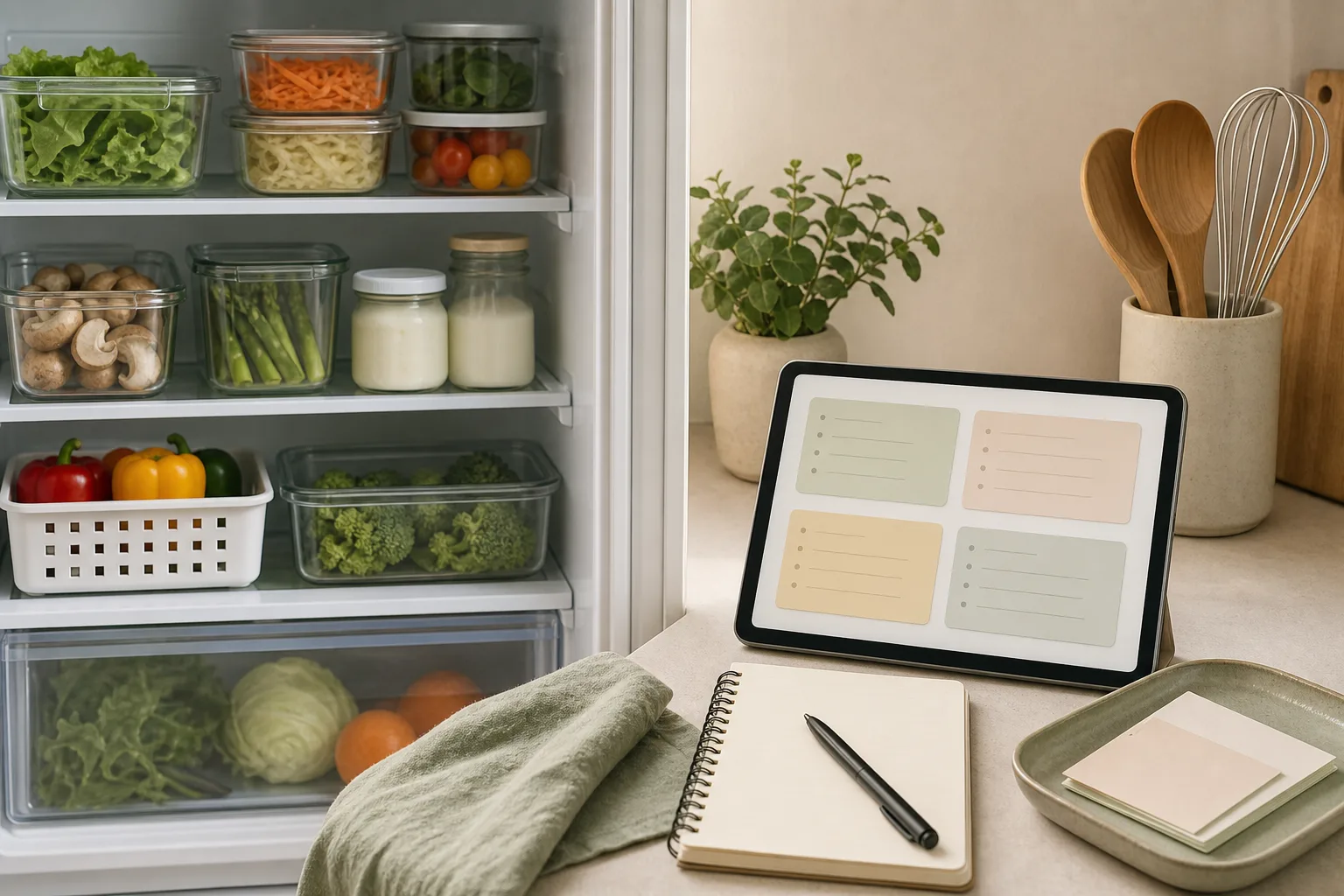
If your refrigerator feels difficult to plan from, use a short routine rather than a detailed inventory. In about 15 minutes, prepare one place for notes, sort ingredients into a few practical groups, turn selected items into meal notes, and review the shopping list for gaps. The goal is not to record every detail. It is to create a current enough picture to support the next meal and the next shopping decision.
Why a lightweight system works better than a full inventory
A refrigerator list can become another task to maintain. Recording every package, quantity, and date may be more detail than a busy household can keep current. A lighter system focuses on decisions that are useful today:
- What ingredients should be noticed soon?
- What can be combined into a simple meal?
- What is missing for a meal that is already being considered?
- What should be added to the next shopping list?
This approach treats the list as a working note, not a permanent database. Items can be added, crossed out, moved, or rewritten as plans change. Use paper, a notes app, or a shared household document—the method stays the same.
The four-step refrigerator routine
1. Prepare: create one visible capture point
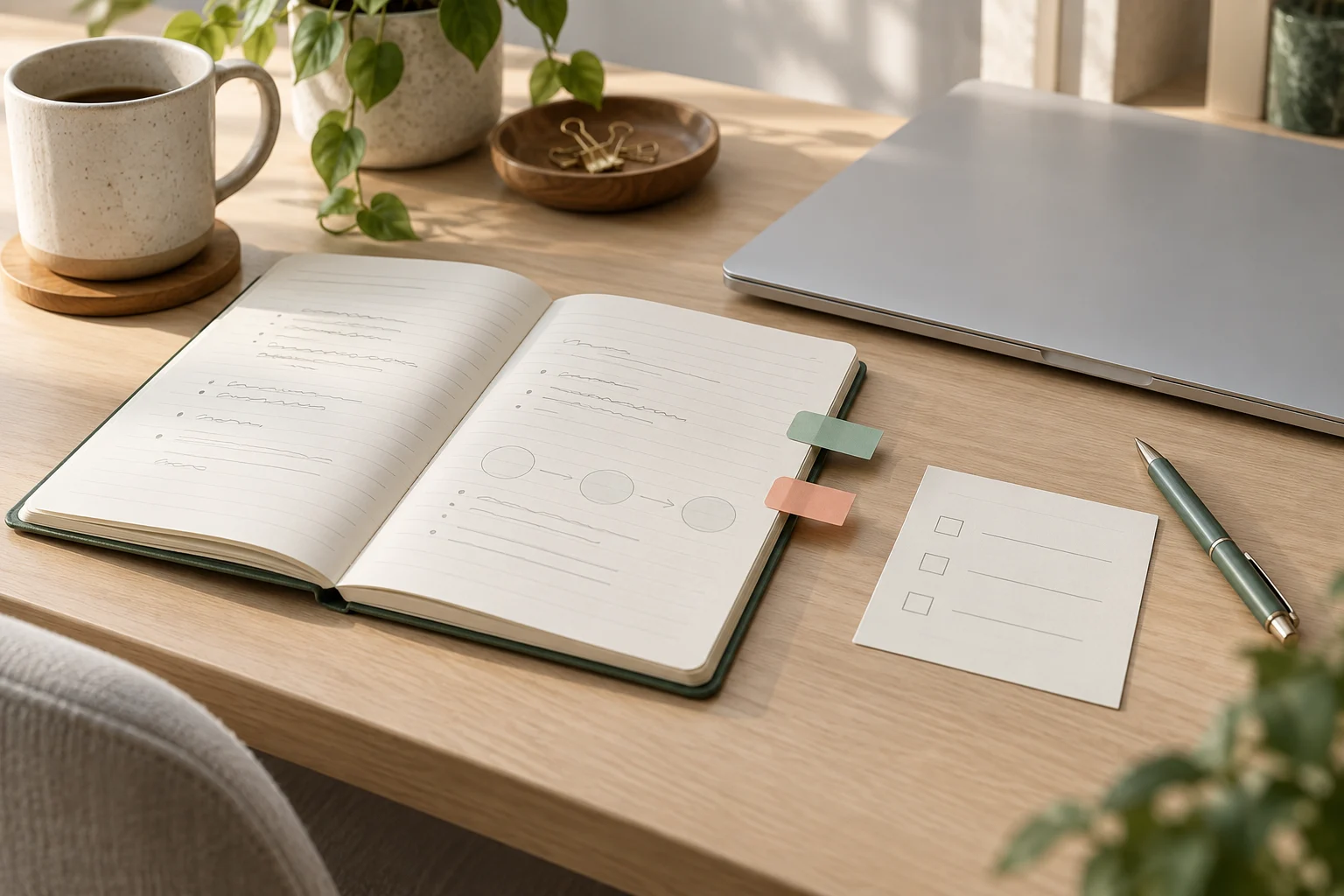
Choose one place for refrigerator notes before you begin. A single note is easier to update than several separate lists. Give it four headings:
- Use soon: ingredients you want to consider first.
- Meal ideas: combinations or dishes you may make.
- Shopping list: items needed for planned meals or regular household use.
- Check later: items that need a closer look or a decision.
Keep the language short. “Greens,” “eggs,” or “leftover rice” is usually more useful during a quick review than a long description. If more than one person shops or cooks, use wording that another person can understand without asking for clarification.
2. Sort: scan by decision, not by shelf
Look through the refrigerator and place each noticeable item into one of three working groups:
- Use soon: ingredients you want to give attention to in the next planning window.
- Flexible: ingredients that can fit several meals or remain available for later planning.
- Needs a decision: items that are unclear, incomplete, or not connected to a current plan.
This is an organization step, not a food-safety assessment. Do not use the routine to decide whether food is safe to eat. For safety questions, follow the relevant official guidance for your location and the product’s labeling.
For each group, write only what changes your next action. For example, “vegetables—use in a bowl or stir-fry” is a useful planning note. A detailed count of every item may slow the routine without helping you choose what to do.
3. Act: convert ingredients into small meal notes
Choose one or two ingredients from the “use soon” group and connect them with a meal format. The format can remain broad:
- grain bowl with a protein and vegetables
- sandwich or wrap with a side
- simple soup or one-pot meal
- egg-based meal with vegetables
- leftover combination for lunch
Write a meal note using this structure:
Meal idea: [main ingredient] + [supporting ingredient] + [simple format].
Missing: [one or two items, if needed].
Flexible swap: [another ingredient already available].
The purpose is to reduce the number of decisions at mealtime. You are not committing to a fixed menu. You are creating a few starting points that can adapt to time, appetite, and what is available.
4. Review: clean the note and stop
Use the final minutes to review the note rather than continuing to reorganize the refrigerator. Remove items that are no longer relevant, combine duplicate shopping entries, and move unresolved questions to “check later.” Then stop at the end of the time block.
A useful review asks:
- Does the note show the ingredients I want to consider first?
- Are meal ideas connected to ingredients already available?
- Does the shopping list support a real plan rather than a vague possibility?
- Can someone else understand the note quickly?
A practical 15-minute action plan
| Time | Action | Output |
|---|---|---|
| Minutes 0–2 | Open one note or place one sheet where it is easy to find. | One capture point with four headings |
| Minutes 2–7 | Scan the refrigerator and write short ingredient names. | Use soon, flexible, and needs-a-decision groups |
| Minutes 7–11 | Choose one or two ingredients and write meal formats. | Two or three adaptable meal notes |
| Minutes 11–14 | Add only the shopping items that support those notes or a known household need. | Focused shopping list |
| Minute 15 | Remove duplicates, mark unclear items, and finish. | A short note ready for the next decision |
If the refrigerator is crowded or the household has several meal planners, use the same structure across separate sections rather than creating a complicated database. The routine should fit the way decisions are made in your home.
Copyable kitchen organization checklist
Copy the following checklist into a notes app or print it for a weekly planning session:
- Prepare: one note or page is ready.
- Sort: I marked items as use soon, flexible, or needs a decision.
- Meal notes: I connected one or two ingredients to simple meal formats.
- Shopping list: I added only items connected to a plan or known need.
- Review: I removed duplicates and moved unclear items to check later.
- Stop: the routine is complete even if the note is not exhaustive.
Ways to keep meal notes useful
Use formats instead of rigid recipes
A format leaves room for substitutions and changing schedules. “Wrap with vegetables and a filling” may remain useful when the original ingredient is unavailable. A detailed recipe note can be added later if the meal becomes a regular choice.
Separate planning from safety decisions
Organization notes can show what to consider, but they should not replace product labels, official food-safety guidance, or your own careful judgment. Avoid using a personal tracking note as proof that an item is suitable to eat.
Make the shopping list action-oriented
Instead of keeping a large list of possible purchases, group entries by the next decision. For example, list items needed for a planned meal separately from items that can wait for a broader shopping trip. This makes the list easier to review before leaving home.
Record patterns only when they help
After several routines, you may notice that certain ingredients repeatedly remain unused or that particular meal formats are easy to assemble. Record these observations only if they improve the next plan. The system should become clearer, not more demanding.
Common problems and simple adjustments
“My list becomes outdated quickly.”
Use shorter notes and update them at the moment a plan changes. A list with fewer items is easier to correct. You can also keep a separate “later” section so unfinished ideas do not make the active list confusing.
“I still cannot decide what to cook.”
Start with a meal format rather than a recipe. Pick one ingredient from “use soon,” then add a familiar base and a supporting ingredient. The aim is to create a starting point, not to design a complete menu during the review.
“Everyone uses a different note.”
Agree on one shared location and four headings. Household members can add entries in their own words, but the shared structure reduces duplicate lists and missed information.
“The routine takes longer than 15 minutes.”
Limit the scan to items that affect an upcoming decision. Move uncertain details to “check later” and set them aside for a separate task. If the note requires extensive sorting, simplify the categories before adding more detail.
FAQ
Do I need a dedicated refrigerator inventory app?
No. A paper list, phone note, or shared document can support this routine. Choose the option that is easiest for the people who will actually update and use it.
How often should I use the routine?
Use it whenever the current meal and shopping notes stop reflecting your choices. Some households may prefer a regular planning session, while others may use a short review before shopping. The useful frequency depends on how quickly plans change.
Should I track exact quantities?
Track quantities when they affect a decision, such as whether an item is enough for a planned meal. Otherwise, broad labels may be sufficient. Extra detail is helpful only when it remains easy to maintain.
Can this system create a complete meal plan?
It can support meal planning by turning visible ingredients into a few options, but it is not intended to predict every meal or manage every household preference. Add a separate calendar or recipe collection if those functions are important to you.
Conclusion
A practical kitchen organization system does not need a complete record of everything in the refrigerator. The prepare, sort, act, and review framework creates one clear place to notice ingredients, write adaptable meal notes, and update a shopping list. Start with the 15-minute version, keep only information that changes your next decision, and revise the structure when it becomes harder to use than the problem it is meant to solve.