작성자: Kai Life Editorial Team
A practical approach to home organization does not require a full-room makeover. For household supplies, a 15-minute check can be enough to see what you have, group similar items, identify what needs attention, and record a short restocking note. The goal is not to create a detailed warehouse inventory. It is to make the next small household decision easier.
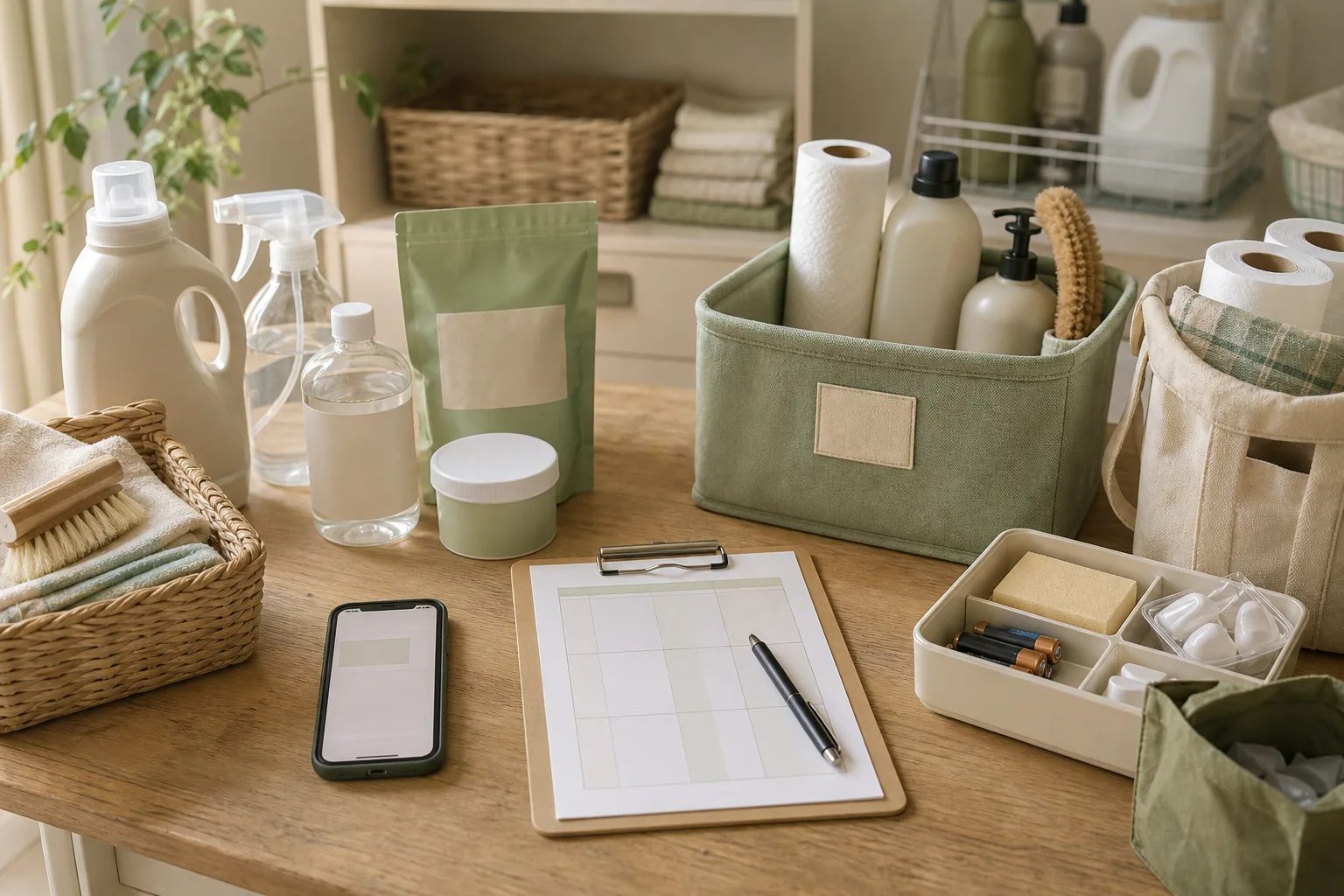
What this routine is for
This routine works best for everyday supplies that tend to disappear into cabinets, drawers, closets, or utility areas. Examples include cleaning materials, paper goods, laundry items, light bulbs, batteries, and basic kitchen or bathroom consumables. You can use the same method for any category, but focusing on one category at a time keeps the task within a short session.
For a one- or two-person home, a lightweight note is often more useful than a long spreadsheet. Record only information that helps with the next action:
- What is available now?
- What is open or partly used?
- What is running low?
- What belongs somewhere else?
- What should be checked again later?
A useful home organization system should fit the way the home is used. If a product is used in the kitchen, storing it far away may create friction even when the storage area looks tidy. The routine below therefore considers both quantity and home flow.
Prepare: set up a small review area
Preparation should take about two minutes. Choose one supply category and a surface where items can be grouped temporarily. You can use a table, a clear section of the floor, or the counter near the storage area.
Gather the basics
- A phone note, paper note, or simple spreadsheet
- A pen if you are working on paper
- A small bag or box for items that belong elsewhere
- A recycling or disposal option for empty packaging, following local rules
- A timer set for 15 minutes
Do not remove every supply in the home unless the category is very small. Start with one cabinet, shelf, drawer, or storage zone. A defined boundary prevents the tidy-up routine from expanding into an unfinished house-wide project.
Choose one question
Give the session a practical purpose. For example:
- “Do I have enough cleaning supplies for the next ordinary use?”
- “Which paper goods are duplicated?”
- “Where should laundry supplies live?”
- “What can I stop storing in the daily-use area?”
A question helps you make decisions quickly without trying to redesign every storage rule at once.
Sort: use four simple groups
Spend about five minutes sorting the items you selected. Use four groups rather than creating many labels. The groups can be physical piles or headings in your note.
1. Ready to use
Place items that are in use or easy to reach in this group. If several similar items are open, consider placing them together so the next-use item is visible. This is not a recommendation to discard usable supplies. It is a way to make the current stock easier to understand.
2. Reserve stock
Place unopened or spare items here. Keep reserve stock in one defined location when possible. A single reserve area reduces the chance of buying a duplicate simply because the spare item was hidden in a different room.
3. Relocate
Place items that are usable but stored in an inconvenient location here. Think about the point of use: bathroom items near the bathroom, cleaning tools near the area where they are used, and frequently handled supplies at a comfortable reach. The best location depends on the layout of your home and the habits of the people who use it.
4. Review
Use this group for items that need a separate decision. This may include damaged packaging, unclear contents, items that belong to another person, or products that need label and safety instructions checked before use. If an item involves a safety concern, follow the product label and relevant local disposal guidance rather than relying on a quick assumption.
Act: make only the decisions that matter today
Spend about five minutes on visible actions. Keep the actions small enough to finish during the session.
- Combine the note. Write similar items under one heading instead of listing every individual object. For example, use “cleaning cloths” or “laundry detergent” as a category, with a short note such as “one open, one reserve.”
- Move misplaced items. Return the relocate group to a practical storage area. If you cannot decide on a permanent location, place the item in a clearly marked temporary spot and add it to the review line.
- Create a low-stock marker. Use a simple phrase such as “check before next shop” or “one remaining.” Avoid complicated quantity thresholds unless your household genuinely needs them.
- Make duplicates visible. Keep reserve items together or record them in the note. Visibility can help prevent an unnecessary repeat purchase, but it does not replace checking the item before use.
- Remove only clear waste. Deal with empty containers or clearly unusable packaging according to local recycling and disposal instructions. Leave uncertain items in the review group.
Storage rules should be easy to explain. A useful rule might be “daily-use items stay at the point of use, reserve items stay together, and uncertain items get a review note.” You can adapt this to your home rather than copying a rule that does not fit your cabinets or routines.
A copyable 15-minute action plan
| Time | Action | Result |
|---|---|---|
| 0–2 minutes | Choose one category and one storage zone | A clear boundary for the session |
| 2–5 minutes | Gather the note, timer, and temporary bags or boxes | A ready review area |
| 5–10 minutes | Sort items into ready, reserve, relocate, and review | A quick view of what needs attention |
| 10–14 minutes | Move items, record low stock, and group reserves | Small actions completed during the session |
| 14–15 minutes | Choose a follow-up date or next category | A clear stopping point |
If the timer ends while a decision is unfinished, record it in the review group and stop at the boundary you set. Stopping on purpose helps keep a tidy-up routine manageable.
Copyable household supplies checklist
Use this checklist in a paper notebook or digital note. Adapt the categories to the supplies your home actually uses.
- [ ] Choose one household-supplies category
- [ ] Choose one cabinet, shelf, drawer, or storage zone
- [ ] Set a 15-minute timer
- [ ] Gather a note and a temporary relocation bag or box
- [ ] Group items into ready to use, reserve stock, relocate, and review
- [ ] Record open items and reserve items in short language
- [ ] Move clearly misplaced items
- [ ] Mark items that are running low
- [ ] Group reserve stock in one practical location
- [ ] Separate uncertain items for later checking
- [ ] Handle empty packaging according to local guidance
- [ ] Write the next review date or next category
Simple note template
Category: ____________________
Review date: _________________

Ready to use: ________________
Reserve stock: _______________
Running low: _________________
Relocate: ____________________
Review later: _________________
Next action: _________________
Review: keep the system light
At the end of the session, ask whether the note will be useful the next time you shop or tidy. If it contains too much detail, shorten it. A note that says “one open, one reserve, check next week” may be more useful than a record of brand names, exact measurements, and every storage movement.
Choose a review rhythm that matches consumption. Frequently used supplies may deserve a brief check during a regular household reset. Less frequently used items can be reviewed when the storage zone becomes difficult to navigate. There is no single correct interval because household size, habits, and storage space vary.
Notice repeated friction points. If the same item keeps moving between rooms, the storage rule may need adjustment. If a reserve supply is repeatedly forgotten, its location may be too hidden. If a category takes longer than 15 minutes, divide it into smaller zones rather than treating the longer session as a failure.
FAQ
Should I count every item exactly?
Not for a lightweight review. Exact counts can be useful for a specific household need, but a short note such as “one open and one reserve” may be enough for ordinary planning.
What if I find expired, damaged, or unfamiliar products?
Move them to the review group and check the label, manufacturer guidance, or local disposal instructions. Avoid guessing about safe use or disposal, particularly for chemical products.
Where should reserve supplies be stored?
Choose a location that is dry, practical, and visible to the people who use the supplies, while following product storage directions. Keeping similar reserve items together can make the inventory note easier to maintain.
What if 15 minutes is not enough?
Stop at the timer, write down the unfinished decision, and select a smaller zone for the next session. The purpose of the routine is a repeatable review, not a single large decluttering project.
Conclusion
A lightweight household supplies inventory note can support home organization without becoming another demanding project. Choose one category, sort items into four groups, take a few practical actions, and leave a short note for the next review. Over time, these small decisions can make storage rules and home flow easier to understand, while still allowing the system to change with your household.