작성자: Kai Life Editorial Team
If you have only 15 minutes, begin with the room that affects your next useful activity, not necessarily the room that looks worst. Use this order: prepare your collection points, sort visible items, act on one category, and review what should happen next. A short room-by-room routine can reduce decision fatigue and give your home organization efforts a clear direction without turning the session into a full-house cleaning project.
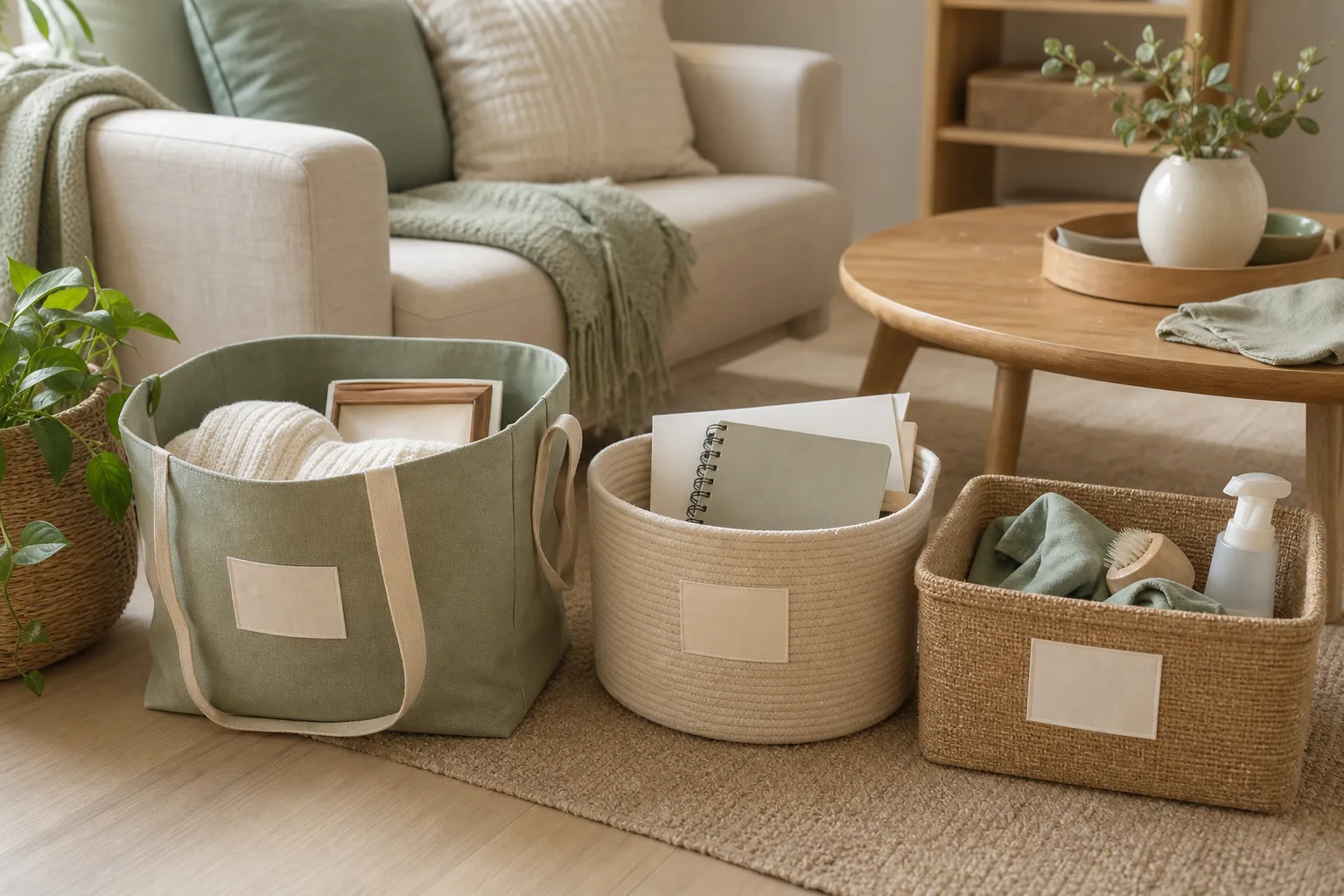
The four-part method: prepare, sort, act, review
A tidy-up becomes easier to start when each stage has a narrow purpose. The aim is not to finish every room in one session. The aim is to create a small, visible improvement and leave a clear next action.
1. Prepare
Choose a 15-minute window and collect three temporary destinations:
- Return: items that belong in another room or another area.
- Decide: items that need a later decision, such as whether to keep, donate, recycle, or discard them.
- Action: items that need a simple next step, such as laundry, washing, filing, or charging.
You can use bags, boxes, or clearly marked floor areas. These containers are temporary sorting tools, not new storage. Keep the number of categories small so that sorting does not become a separate organizing project.
2. Sort
Work from visible surfaces and walkways. Pick up one item at a time and give it a destination. If you are uncertain, place it in the Decide group rather than interrupting the routine with a long judgment.
For a short session, avoid opening every drawer or cupboard. Hidden storage can wait until the visible flow of the room is easier to use.
3. Act
Choose one category that will make the next part of the day easier. Return items to their homes, take rubbish or recycling to the appropriate place, start a small laundry action, or clear one useful surface. Acting on one category creates a concrete finish line for the session.
4. Review
Use the last minute to return containers, identify items that need a later decision, and write down the next starting point. A review prevents temporary piles from becoming permanent features of the room.
Which room should you start with?
Use the following room order when you do not know where to begin. It follows daily function rather than visual drama.
| Order | Room or area | Reason to begin there | Useful first target |
|---|---|---|---|
| 1 | Entryway | It controls the movement of items into and out of the home. | Shoes, bags, keys, mail, and outerwear |
| 2 | Kitchen | It supports frequent daily tasks and benefits from clear working space. | One counter section or the sink area |
| 3 | Living area | It often collects items from several activities. | One table, sofa zone, or walking path |
| 4 | Bathroom | Small visible surfaces can be sorted quickly. | Countertop items or used towels |
| 5 | Bedroom | It supports the next rest period and often has recurring clothing clutter. | Floor, bedside area, or one clothing group |
This is a starting order, not a rule for every home. If your next important task happens in the kitchen, begin there. If the entryway is blocked, clearing it may improve the home flow before you work elsewhere.
The 15-minute action plan
Use a timer if it helps you keep the session contained. The following plan gives each stage a defined role.
- Minutes 0–2: Prepare. Choose one room or one zone. Place three bags, boxes, or baskets nearby and remove obvious rubbish if doing so is quick.
- Minutes 2–7: Sort. Move through visible surfaces and walkways. Sort items into Return, Decide, and Action. Do not reorganize closed storage during this stage.
- Minutes 7–13: Act. Complete one practical category. For example, return items to their homes, clear one counter, or take a collection to its next destination.
- Minutes 13–15: Review. Empty the temporary containers where possible, label unresolved items mentally or on a note, and choose the next zone.
If one category is larger than expected, stop at the end of the time block rather than expanding the session by default. You can record the unfinished category as the next starting point.
Storage rules that support home flow
Storage works best when it reflects how people use an item. Consider these simple rules while returning belongings:
- Store frequent-use items near the point of use. Keep daily entry items near the entrance and cooking tools near the preparation area.
- Give recurring items a visible home. If keys, chargers, or bags regularly land in the same place, consider whether that location can become their designated home.
- Group by activity. Keep items used together together where practical, such as a small set of cleaning supplies or a work-from-home group.
- Protect useful surfaces. A clear section of a counter, table, or bedside surface can serve as a landing area for the next activity.
- Use temporary containers only for sorting. If a basket repeatedly holds unresolved items, schedule a separate decision session or reduce the number of items entering it.
These rules do not require new products. They are ways to test whether an existing home can support the actions you already perform.
A copyable 15-minute tidy-up checklist
Copy this checklist into a note, print it, or adapt it for your home:
- Choose one room or zone.
- Set a 15-minute limit.
- Prepare Return, Decide, and Action containers.
- Clear visible rubbish or recycling.
- Sort items from one surface or walkway.
- Return items that already have a home.
- Complete one Action category.
- Keep uncertain items in Decide instead of stopping to research or debate.
- Remove temporary containers from the active area.
- Write down the next room, surface, or category.
How to handle common sticking points
When every room needs attention
Choose the room connected to the next activity or the main movement path. A small improvement in a functional area can be more useful than a larger change in a room you will not use soon.
When an item has no home
Place it in Decide and continue. During a later session, ask where the item is used, how often it is used, and whether its current storage location makes retrieval and return reasonably easy. If no location supports those actions, the item may need a separate keep, move, donate, recycle, or discard decision.
When sorting creates more piles
Reduce the number of categories. Return, Action, and Decide are enough for a short session. More detailed categories can be useful during a dedicated organizing project, but they may slow down a quick tidy-up.
When another person shares the home
Start with shared surfaces and common paths rather than personal storage. If an item belongs to someone else, place it in a clearly identified Return area instead of deciding on that person’s behalf.
FAQ
Should I clean or organize first?
For a 15-minute tidy-up, begin with basic sorting and movement. Once items are off the chosen surface, you can decide whether a quick wipe or another cleaning task fits the remaining time. Separating sorting from detailed cleaning helps keep the session focused.
What if I cannot finish a room?
Stop at the planned time and leave a short note about the next visible target. Finishing a defined zone, category, or step is enough for one session. The next routine can continue from that note.
How often should I use this routine?
Use it when a short reset would help, such as before a busy part of the day or after several activities have accumulated. The useful frequency depends on your home, schedule, and the amount of shared activity.
Do I need special storage products?
No. The routine can begin with existing bags, boxes, baskets, or clearly separated areas. Consider storage products only after you understand what needs to be stored and where it is used.
Conclusion
A practical home organization routine can start with one room, three temporary categories, and 15 minutes. Begin where the next activity or the main home flow will benefit, sort visible items, act on one category, and review the next step. Repeating this small framework can make tidying easier to resume without requiring a full-home project every time.