작성자: Kai Life Editorial Team
The simplest way to arrange a shopping list by store route is to begin with your meal notes, remove items you do not need, and then sort the remaining items in the order you normally move through the store. A 15-minute routine can be divided into four parts: prepare the notes, sort items by route, act on the finished list, and review what should carry forward.
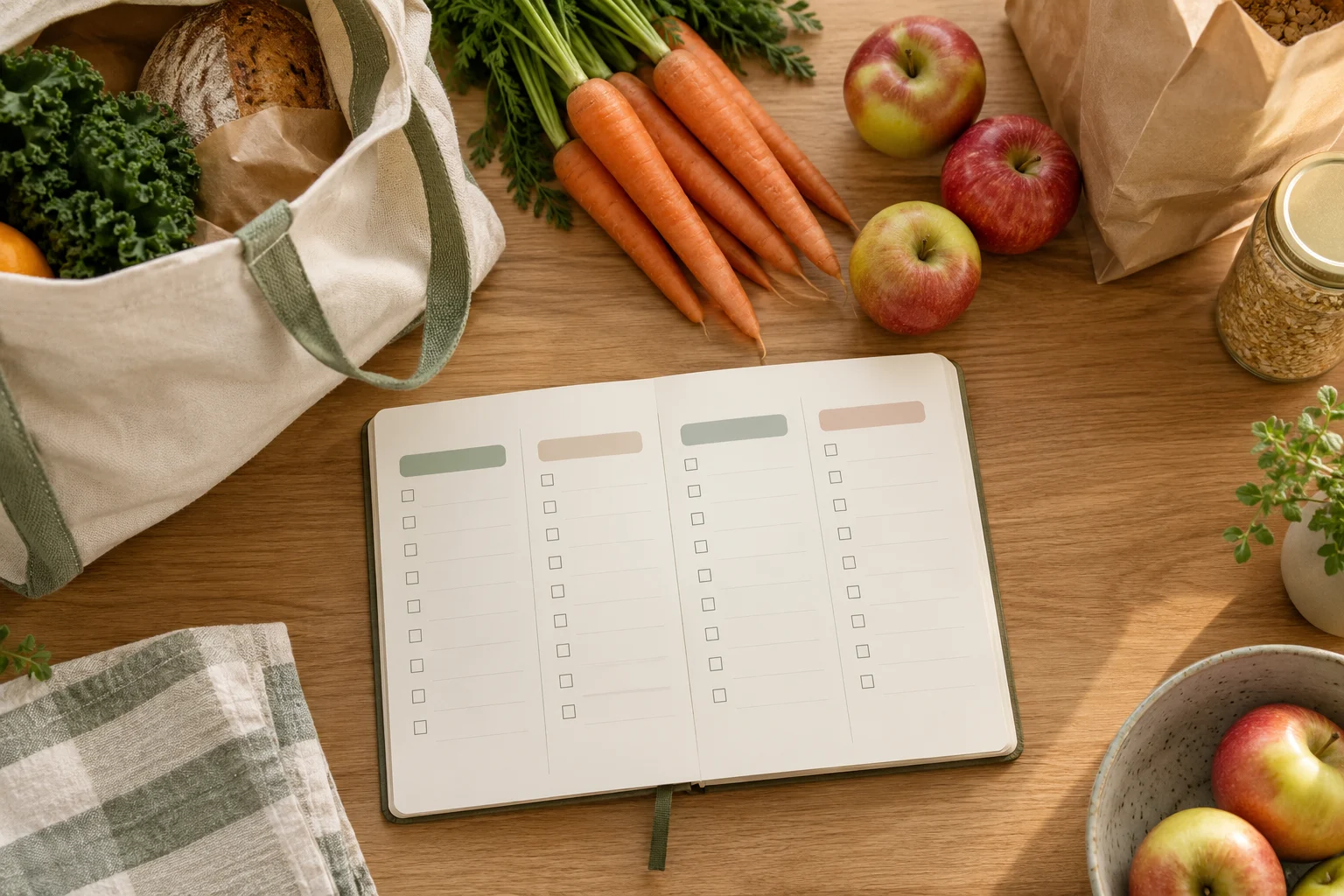
This approach is useful when your shopping list contains a mixture of meal ingredients, household items, and reminders. Instead of grouping everything only by recipe or food type, you create a list that matches the physical sequence of your shopping trip.
Why a store-route list can simplify kitchen organization
A meal-based list answers the question, “Which recipe uses this item?” A route-based list answers a different question: “What do I need to pick up next?” Both views can be useful, but the route view is often easier to follow while you are moving through a familiar store.
For example, your notes may contain ingredients for two meals, breakfast items, cleaning supplies, and a reminder to check the freezer section. If these notes remain in the order they were written, you may need to scan the whole list repeatedly. Sorting them into route sections creates a short sequence of decisions.
The goal is not to build a detailed inventory system. It is to create a usable bridge between three kinds of notes:
- Meal notes: dishes, ingredients, or portions you are considering.
- Shopping items: things you actually need to look for.
- Route cues: the sections or stops where those items are usually found.
The prepare, sort, act, and review framework
1. Prepare: collect the notes in one place
Set a timer for three minutes. Gather the notes you are using for this trip, such as a phone note, paper list, recipe reminder, or message to yourself. Do not try to organize each item yet. The first aim is to create one working list.
As you collect items, write them in plain language. “Ingredients for soup” is less useful during a trip than the individual items you expect to buy. If a meal note is still undecided, mark it with a question rather than treating it as a confirmed purchase.
Use a quick decision label beside each item:
- Buy: needed for the current plan.
- Check: confirm whether you already have it.
- Optional: useful if convenient, but not central to the plan.
- Skip: an old note or an item that no longer fits the plan.
2. Sort: arrange items by your actual route
Spend about five minutes sorting the confirmed items. Use the route you usually take, not a generic store layout. One person may begin with produce, while another may enter near pantry goods or household supplies.
Create broad route sections such as:
- First section after entering
- Produce or fresh items
- Pantry and dry goods
- Refrigerated section
- Frozen section
- Household or non-food items
- Checkout-area reminders or items from another stop
Keep the sections broad enough to scan quickly. A list with too many tiny categories can become another form of clutter. If two items are usually close together, place them in the same section even when they belong to different meal notes.
3. Act: turn the sorted list into shopping instructions
Spend four minutes making the list easy to use while walking. Put a square or other simple marker beside each item. Add a quantity only when it helps distinguish what you need. You can also add a short meal tag, such as “breakfast” or “Tuesday dinner,” if the purpose of the item is easy to forget.
Keep extra information out of the main line when it slows scanning. For example, write “tomatoes — dinner” rather than adding a long explanation. If an item has a specific requirement, use one short note below it.
Separate optional items from the main list. This protects the essential route while leaving room for flexible choices. A small “if convenient” section at the bottom can be useful for items that do not justify backtracking.
4. Review: close the loop after the trip
Use the final three minutes after shopping, or before your next planning session, to review the list. Mark items that were unavailable, unnecessary, or difficult to place on the route. This is not a performance score. It is a way to improve the next version of the routine.
Ask three questions:
- Which item was hard to find because its section was unclear?
- Which note was not specific enough to act on?
- Which item should be moved to an optional or recurring reminder?
A copyable 15-minute action plan
Use the following sequence when you want a repeatable kitchen organization routine. Adjust the time blocks if your notes are unusually long.
| Time | Task | Result |
|---|---|---|
| 0–3 minutes | Collect meal notes and shopping reminders | One rough list |
| 3–5 minutes | Remove old notes and label uncertain items | Buy, check, optional, and skip decisions |
| 5–10 minutes | Group confirmed items by store route | Route-based sections |
| 10–12 minutes | Add quantities, meal tags, or short clarifications | Action-ready list |
| 12–15 minutes | Check for duplicates and create a small optional section | Compact final list |
Reusable shopping-list template
Copy this structure into a note or write it on paper. Replace the section names with the route you actually use.
SHOPPING TRIP: __________    DATE: __________

FIRST SECTION
[ ] ____________________
[ ] ____________________

PRODUCE OR FRESH ITEMS
[ ] ____________________   meal: __________
[ ] ____________________   meal: __________

PANTRY OR DRY GOODS
[ ] ____________________
[ ] ____________________

REFRIGERATED
[ ] ____________________
[ ] ____________________

FROZEN
[ ] ____________________

HOUSEHOLD OR OTHER STOP
[ ] ____________________

CHECK BEFORE BUYING
[ ] ____________________

OPTIONAL IF CONVENIENT
[ ] ____________________

AFTER THE TRIP
Unavailable: ____________________
Move or remove next time: ____________________
Small adjustments for different shopping styles
If you shop for several meals at once
Keep the route as the main structure and add a short meal label after each item. This preserves the movement order while helping you remember why an item is on the list. A separate meal section can be added only for ingredients that require a decision before buying.
If your shopping trip includes more than one store
Separate the list by stop before sorting each store internally. Use headings such as “Store A,” “market,” or “household stop.” Within each heading, keep the route order that matches that location. This prevents items from different stops from blending into one long list.
If you often change your plan while shopping
Leave space for substitutions or optional choices. The main list can contain the planned items, while a small flexible section holds alternatives. This keeps a change from forcing you to rewrite the whole list.
Quick checklist before you leave
- Have all current meal notes been collected?
- Have old or duplicate items been removed?
- Are uncertain items marked for checking?
- Do the headings follow your usual store route?
- Are optional items separated from the main list?
- Can each line be understood at a quick glance?
- Is there a short space for unavailable items or next-trip notes?
FAQ
Should I organize the list by recipe or by store section?
Use the structure that supports the task in front of you. Recipe grouping helps during meal planning, while store-route grouping helps during shopping. A practical compromise is to use store sections as the main headings and add a brief meal label beside items that need context.
What if I do not know the store layout?
Start with broad areas rather than exact aisles. After the trip, note where misplaced items were found and adjust the headings gradually. The route can become more specific as you learn what is useful to you.
Do I need a shopping-list app?
No special tool is required for this method. A paper list, phone note, or other simple format can work if it lets you group items and mark them as you go. Choose the format that is easiest to update before and during the trip.
Conclusion
A route-based shopping list is a small kitchen organization system: prepare the notes, sort items by movement, act on a concise list, and review what to change next time. The 15-minute routine works best when it stays lightweight. Use broad route sections, separate optional items, and keep meal context short so the list remains easy to scan when your attention is divided.