Tag: lang-en

English content

  • A Refined Guide to Gucci’s Compact Shoulder Bag

    Gucci small GG Emblem embossed shoulder bag in black calfskin with embossed GG detail and adjustable strap

    The Gucci small GG Emblem embossed shoulder bag brings a precise, understated character to the modern crossbody wardrobe. Presented in black calfskin, its compact silhouette is defined by an embossed GG motif rather than overt decoration, while silver-tone hardware adds a discreet point of contrast. The result is a versatile accessory with a polished presence, suited to daily styling as well as more considered evening looks.

    Its proportions are designed for essentials rather than excess. Measuring 23 cm in width, 14.5 cm in height and 6 cm in depth, the bag offers a neat profile that can sit comfortably within a streamlined outfit. A zip fastening keeps the design visually clean, and the adjustable shoulder strap allows the way it is worn to be adapted to different layers and styling preferences.

    Made in Italy and supplied with a protective dust bag, this piece offers a focused approach to luxury accessories: recognisable detailing, functional construction and a colour palette that coordinates with ease. Whether worn across the body for an everyday edit or positioned closer to the shoulder for a more elevated finish, it is a compact companion with a strong sense of proportion.

    Why the Gucci small GG Emblem embossed shoulder bag stands out

    The appeal of the Gucci small GG Emblem embossed shoulder bag lies in its balance of signature identity and restrained form. The embossed GG detail gives the black exterior texture and visual definition, allowing the motif to read as part of the surface rather than an added embellishment. This makes the bag particularly adaptable: it can complement tonal dressing without disappearing, while also providing a composed counterpoint to more expressive clothing.

    • Black calfskin exterior: A refined, versatile foundation for both casual and tailored wardrobes.
    • Embossed GG motif: A distinctive Gucci signature expressed through subtle surface detailing.
    • Zip fastening: A practical closure that preserves the bag’s clean, compact appearance.
    • Adjustable shoulder strap: Flexible for different wearing positions and layers.
    • Silver-tone hardware: A cool, polished accent against the black exterior.
    • Compact dimensions: The 23 cm width, 14.5 cm height and 6 cm depth create a purposeful everyday format.
    • Protective dust bag included: A useful storage accessory for keeping the piece protected between uses.
    • Made in Italy: A stated origin that forms part of the product’s identity.

    The dimensions are worth considering carefully. At 6 cm deep, the design remains relatively close to the body, making it well suited to outfits where a low-profile accessory is preferred. Its 23 cm width provides room for selected essentials without shifting the overall look towards an oversized bag. The adjustable strap also supports a more individual fit, whether the bag is worn over a jacket, a knit layer or a lighter top.

    How to style it across the day

    For a pared-back daily look, pair the Gucci small GG Emblem embossed shoulder bag with a black, charcoal or cream foundation. The tonal GG embossing can add interest to a simple combination of knitwear, relaxed trousers and understated footwear, while the silver-tone hardware introduces a small, precise highlight. Keeping the rest of the outfit uncluttered allows the bag’s texture and proportions to remain the focus.

    For a smart-casual edit, use the adjustable strap to position the bag neatly across the body with a tailored jacket or structured outer layer. The compact dimensions work well alongside sharper silhouettes, where a larger carryall could interrupt the line of the outfit. Black calfskin also makes the bag easy to coordinate with denim, wool, cotton or monochrome suiting without requiring a closely matched colour story.

    For evening styling, carry it closer to the shoulder and let the silver-tone hardware provide a restrained finishing detail. It works naturally with a dark dress, a clean blazer and trousers, or a refined separates look. The zip fastening supports a neat visual impression, while the embossed GG design offers recognition without relying on a highly contrasting pattern.

    The bag can also serve as an anchor for more relaxed weekend dressing. Consider it with a crisp shirt, a simple jersey top or a lightweight jacket, keeping the palette controlled so the black finish remains versatile. If the outfit includes statement jewellery or graphic elements, the bag can balance them through its compact shape and measured detailing.

    When coordinating accessories, silver-tone jewellery or a watch with a cool metal finish can echo the hardware. Alternatively, warm-toned accessories can create a deliberate contrast rather than a matched effect. The most important styling consideration is proportion: the compact format is best complemented by clothing that allows the bag to remain visible and comfortably placed.

    What to consider before choosing it

    Begin with your preferred carrying style. The adjustable shoulder strap makes the bag suitable for crossbody wear or a closer shoulder position, but the ideal placement will depend on your layers and daily routine. Consider whether you prefer an accessory that stays close to the body and carries a selected edit of essentials, rather than a design intended for larger belongings.

    Next, review the measurements in relation to what you usually carry. With a width of 23 cm, a height of 14.5 cm and a depth of 6 cm, this is a compact shoulder bag. Its proportions are suited to a considered, lighter load. Checking the listed dimensions against your everyday items before purchase is a practical way to assess whether the format matches your needs.

    Material and finish are also central to the decision. The exterior is listed as 100% calfskin, with a black finish and embossed GG detailing. This combination offers a polished visual character, so it may appeal most to those who value a refined accessory that can move between casual and elevated outfits. The silver-tone hardware adds a cool accent and may be especially easy to coordinate with similarly toned jewellery or other accessories.

    Finally, think about storage and rotation. The included protective dust bag provides a designated way to store the piece when it is not being used. Keeping the bag stored thoughtfully and allowing the embossed exterior and hardware to remain free from unnecessary contact can help preserve the considered appearance of the design. For product-specific handling guidance, consult the information supplied with the item and the product page.

    Frequently asked questions

    What colour is the bag?

    The bag is black, with silver-tone hardware and an embossed GG motif.

    What are its dimensions?

    It measures 23 cm wide, 14.5 cm high and 6 cm deep.

    What material is listed?

    The composition lists the outer as 100% calfskin.

    Does it have an adjustable strap?

    Yes. The design features an adjustable shoulder strap.

    How does it close?

    It has a zip fastening.

    Is a storage accessory included?

    The product comes complete with a protective dust bag.

    Where was it made?

    The product information states that it was made in Italy.

    Please verify the current product details, measurements, composition, included accessories and purchase information on the product page before purchase.

    View the Gucci small GG Emblem embossed shoulder bag at THANKS KAI.

    Product: Gucci small GG Emblem embossed shoulder bag

  • A Plissé Leather Clutch for Polished Day-to-Evening Style

    CHLOE Chloe Plisse clutch bag in Woodsmoke smooth leather with a gold finish, single handle, and chain strap

    The CHLOE Chloe Plisse clutch bag is an elegant study in proportion, texture, and adaptable styling. Presented in Woodsmoke, its refined silhouette is defined by smooth leather and a gold finish, creating a polished focal point without relying on excessive ornament. The design balances the intimacy of a clutch with the flexibility of a single handle and chain strap, allowing it to shift naturally between hand-carried and shoulder-worn looks.

    With a width of 28 cm, a height of 14.5 cm, and a depth of 24 cm, it offers a distinctive, structured presence. Made in Italy, the bag is finished with a main material of 100% leather and a main lining of 100% polyester. It is a considered choice for wardrobes that favour elegant accessories with more than one way to wear them.

    The details that shape its character

    A composed silhouette

    The bag’s proportions give it a clear visual identity. Its 28 cm width creates a horizontal profile, while the 14.5 cm height keeps the form sleek and easy to integrate into an outfit. The 24 cm depth adds definition to the shape, making the accessory feel substantial rather than incidental. Together, these measurements create a silhouette that can anchor a simple look or complement a more expressive ensemble.

    Smooth leather with a gold finish

    Smooth leather brings a clean, refined surface to the design, while the gold finish introduces a measured note of luminosity. The combination works particularly well when the rest of an outfit is restrained: a tonal knit, tailored trousers, or a pared-back dress can allow the bag’s finish to take the lead. Woodsmoke offers a sophisticated colour direction, with a character that can sit comfortably alongside neutrals and deeper shades.

    Two ways to carry

    The single handle and chain strap are central to the bag’s versatility. Carry it by hand when you want a more deliberate, polished gesture, or use the chain strap for a relaxed shoulder-worn arrangement. This change in handling can alter the mood of the same outfit, moving from refined occasion dressing to an easier everyday composition.

    Essential product information

    • Product name: CHLOE Chloe Plisse clutch bag
    • Colour: Woodsmoke
    • Main material: 100% leather
    • Main lining: 100% polyester
    • Measurements: 28 cm width, 14.5 cm height, 24 cm depth
    • Country of manufacture: Italy
    • Product code: CHLCD5H4GRYZZZZZ00

    How to style it across the day

    For a refined daytime look

    Use the CHLOE Chloe Plisse clutch bag to bring focus to a clean daytime outfit. Its Woodsmoke colour can work with a tonal palette of soft neutrals, charcoal, cream, or other muted shades. Carrying the bag by its single handle emphasises its clutch character and gives a simple coat, tailored separates, or an understated knit a more finished direction.

    For an evening transition

    The gold finish makes the bag a natural partner for evening dressing. Pair it with a sleek dress or a streamlined top and skirt, keeping jewellery and other metallic details selective so the accessory remains intentional rather than competing with the overall look. The chain strap can be introduced when you want to keep both hands free while preserving the bag’s polished presence.

    For a modern contrast

    Its refined construction can also be used against more relaxed pieces. Consider styling it with denim, a crisp shirt, or softly tailored trousers. The contrast between casual clothing and a smooth leather accessory creates an edited, contemporary outfit. Let the bag provide the finished element while keeping the surrounding shapes uncomplicated.

    For occasions that call for flexibility

    When an event moves between settings, the two carrying options become especially useful. Begin with the handle for a composed arrival, then switch to the chain strap as the atmosphere becomes more relaxed. This small change gives the piece a practical role without losing its elegant character.

    A considered way to choose and coordinate

    Begin with colour. Woodsmoke is the defining palette choice, so consider whether you want the bag to blend into a neutral wardrobe or provide a subtle contrast against darker or lighter clothing. Its restrained tone makes it suitable for coordinated dressing, while the gold finish adds enough distinction to prevent a tonal outfit from appearing flat.

    Next, consider how you prefer to carry a bag. If you enjoy a more formal, hand-carried accessory, the single handle supports that approach. If everyday movement and hands-free wear are more important, the chain strap offers another styling route. The value of this design lies in being able to make that decision according to the occasion rather than committing to one fixed arrangement.

    It is also useful to assess the proportions in relation to your existing wardrobe. The 28 cm width and 14.5 cm height give the bag a clear presence, while the 24 cm depth contributes to its defined shape. Compare these measurements with the bags you already use and think about the visual scale you prefer alongside coats, dresses, tailoring, or casual separates.

    For coordination, repeat one element rather than matching everything. The gold finish might be echoed through a discreet piece of jewellery or a warm-toned detail, while Woodsmoke can be balanced with neutrals or used beside richer shades. The smooth leather surface benefits from uncluttered styling, allowing the silhouette and finish to remain visible.

    Finally, review the product information before purchasing, including the stated measurements, material composition, colour, and product code. A careful check helps confirm that the design suits both your practical preferences and your intended wardrobe combinations.

    Frequently asked questions

    What is the exact product name?

    The exact product name is CHLOE Chloe Plisse clutch bag.

    What colour is the bag?

    It is listed in Woodsmoke, a refined shade that can coordinate with neutral, dark, and softly contrasting wardrobes.

    What materials are specified?

    The main material is 100% leather, and the main lining is 100% polyester.

    How can it be carried?

    The design includes a single handle and a chain strap, offering hand-carried and shoulder-worn styling options.

    What are its measurements?

    The stated measurements are 28 cm in width, 14.5 cm in height, and 24 cm in depth.

    Where was it manufactured?

    The country of manufacture is listed as Italy.

    Please verify the current product details, measurements, material information, colour, and purchase information on the product page before purchase.

    View the CHLOE Chloe Plisse clutch bag at THANKS KAI to explore its details and consider how it could coordinate with your wardrobe.

    Product: CHLOE Chloe Plisse clutch bag

  • A 15-Minute Self-Care Routine for Real Breaks in a Busy Calendar

    A 15-Minute Self-Care Routine for Real Breaks in a Busy Calendar

    작성자: Kai Life Editorial Team

    If your calendar is full, a useful self-care routine can begin with one clearly marked 15-minute break. The aim is not to create an elaborate wellness plan. It is to reserve a small, visible block, decide what kind of pause fits the moment, and make it easy to start and stop. The framework below uses four steps—prepare, sort, act, and review—so break planning feels like a practical organization task rather than another performance target.

    A planner with a reserved break beside a cup of tea

    Why a calendar break needs a clear shape

    A vague note such as “take care of myself later” can disappear when meetings, errands, or household tasks expand. A calendar entry gives the pause a place, but the entry works better when it answers three questions:

    • When: What 15-minute window is realistic?
    • What: What activity will you do during the pause?
    • What protects it: How will you reduce interruptions or avoid extending the task?

    These questions do not turn rest into a productivity assignment. They simply reduce the number of decisions you need to make when the break arrives. A short pause might include quiet sitting, stretching within your comfort level, making a drink, reading a few pages, writing a few lines, or stepping away from a screen. The suitable option depends on your schedule, space, energy, and responsibilities.

    It also helps to separate break time from catch-up time. Sorting messages, preparing tomorrow’s work, or clearing a task list may feel useful, but those activities serve a different purpose. If you want a genuine break, label the event so its intention is visible.

    The prepare-sort-act-review framework

    1. Prepare: choose a window you can see

    Look at the next day or the current afternoon and find a 15-minute period with the fewest predictable conflicts. A gap after a meeting, before dinner, or near the end of an evening may work. Avoid choosing a time only because it looks empty; consider transitions as well. If a meeting usually runs late, a break immediately afterward may need a small buffer.

    Create a calendar entry with a plain label, such as “15-minute reset,” “quiet break,” or “evening routine.” Add the activity in the notes if that helps: “tea and three lines of journaling” is more actionable than “self-care.” Use a reminder only if reminders support you. A notification that creates pressure is not useful protection.

    2. Sort: decide what kind of pause you need

    Use a quick sort instead of asking yourself to invent a new routine each day. Choose one category:

    • Quiet: sit away from a screen, breathe naturally, listen to calm audio, or look out a window.
    • Body change: stand, change rooms, walk briefly indoors or outdoors, or make a comfortable adjustment to your space.
    • Creative: sketch, play an instrument, write a few sentences, or work on a small personal interest.
    • Connection: send a kind message or have a short, intentional conversation if that feels restorative rather than demanding.
    • Evening transition: dim a light, prepare a non-work activity, put away work materials, or write a short closing note for the day.

    Pick one primary activity. A long menu can make a 15-minute break harder to begin. You can keep two backup options for days when the original plan does not fit.

    3. Act: follow a small beginning and ending cue

    When the calendar block begins, use a simple start cue. Close the relevant work window, place your phone out of reach if appropriate, or move to the location associated with the break. The cue does not need to be dramatic. Its purpose is to make the change in activity noticeable.

    During the pause, avoid grading the experience. A break may feel pleasant, neutral, or slightly awkward, especially when the day has been busy. The useful question is whether the activity gave you a defined interval away from the task that filled your schedule.

    Use an ending cue as well. A timer, a calendar notification, or a visible clock can help you return without checking the time repeatedly. If the activity naturally takes longer, decide in advance whether you are extending it or closing it. The choice should be deliberate rather than caused by losing track of time.

    4. Review: adjust the system, not your self-judgment

    At the end of the day, spend one or two minutes reviewing the entry. Ask:

    • Did the time fit the shape of the day?
    • Was the activity easy enough to begin?
    • What interrupted it, if anything?
    • Would a different time, location, or activity be more realistic next time?

    Record one short observation rather than writing a full report. For example, “The break worked better before the late meeting” or “Journaling felt too effortful after dinner.” This turns the routine into a small learning loop. Missing a planned break is information about the schedule, not proof that you failed at self-care.

    A 15-minute action plan

    Use the following sequence when you want to mark a break today. It is designed to take about 15 minutes to set up and complete, although the actual break can be placed later in the calendar.

    1. Minute 1–3: Scan. Look at the next section of your calendar and identify one plausible opening.
    2. Minute 4–5: Name. Add a calendar event with a neutral label and a start and end time.
    3. Minute 6–7: Choose. Select one activity from the quiet, body change, creative, connection, or evening transition categories.
    4. Minute 8–9: Prepare. Put one needed item in place, such as a notebook, mug, book, or comfortable layer.
    5. Minute 10–13: Take the break. Follow the selected activity without adding extra tasks.
    6. Minute 14–15: Close and review. End with a cue and write one note about what to keep or change.

    If you cannot take the break immediately, complete the first four steps and keep the event visible. If the day changes, move the entry to another reasonable window rather than treating the original time as a permanent failure. A shorter pause may also be a practical substitute when responsibilities leave less room.

    Copyable break-planning checklist

    Planning point Write or choose
    Calendar window Start: ______   End: ______
    Break label ____________________________
    Primary activity ____________________________
    Backup activity ____________________________
    Start cue ____________________________
    Ending cue ____________________________
    Likely interruption ____________________________
    Adjustment for next time ____________________________

    Before saving the event, check the following:

    • □ The break has a start and end time.
    • □ The activity is specific enough to begin without extra planning.
    • □ The break is not secretly a work or household catch-up block.
    • □ One simple item is ready, if an item is needed.
    • □ There is a backup plan for a changed schedule.
    • □ The review asks what to adjust, not whether you performed perfectly.

    How to fit the routine into an evening

    An evening routine can become overloaded when it contains every desirable habit at once. Instead, give the 15-minute block one job. For instance, use the first few minutes to transition away from work, spend the middle portion on a quiet activity, and reserve the final minute for a simple note about tomorrow. If journaling is part of the routine, use a small prompt such as “What can I leave unfinished for today?” or “What would make the next hour feel less crowded?”

    Keep the language flexible. “Read for 10 minutes” may be more approachable than “complete a reading session.” “Write three lines” may be easier to start than “journal about the day.” These are invitations, not standards. On a demanding evening, the routine can be reduced to marking the break and sitting somewhere away from the current task.

    FAQ

    What if my calendar has no obvious 15-minute gap?

    Look for a transition rather than an empty block. A pause may fit before a scheduled call, after a commute, or between two recurring responsibilities. If a full 15 minutes is not realistic, begin with a shorter block and review whether another time can be protected later.

    Should I schedule the same self-care routine every day?

    A recurring entry can reduce planning effort, but it may not fit every day. You can schedule a broad block, such as “break,” and choose the activity on the day. A flexible recurring plan may be easier to maintain than a detailed routine that regularly conflicts with real responsibilities.

    What should I do if I keep ignoring the reminder?

    Change the design before blaming your motivation. Try a different time, a less demanding activity, a quieter reminder, or a location that is easier to reach. You can also place the calendar event beside a natural transition, such as finishing lunch or closing a work session.

    Is journaling required for this routine?

    No. Journaling is one possible activity and may not suit every person or situation. If writing feels like work, choose quiet sitting, reading, music, a brief walk, or another low-pressure option. The central practice is making a defined space for a break.

    Conclusion

    A realistic self-care routine can be small enough to fit a busy calendar. Mark one 15-minute window, choose one clear activity, add a beginning and ending cue, and review the setup without self-criticism. The prepare-sort-act-review framework keeps the focus on practical design: making rest visible, reducing decisions, and adjusting the plan when life changes.


  • A Refined Raffia Tote for Everyday Styling

    LOEWE Large tote bag with logo in natural raffia with double handles

    LOEWE Large tote bag with logo brings an easy, spacious elegance to everyday dressing. Crafted in 100% raffia and presented in a natural colour, it has the relaxed visual character of a warm-weather accessory while retaining the polished presence associated with a considered designer piece. Its generous proportions make it a practical companion for daily plans, and the embroidered front logo provides a defined focal point without overwhelming the overall look.

    With a width of 36.5 cm, a height of 30.5 cm and a depth of 17 cm, the tote offers room to organise essential belongings with ease. Interior card slots add a useful point of structure, while the two sturdy handles allow it to be carried in the hand or worn on the shoulder. That flexibility makes it suitable for a range of routines, from a relaxed daytime outfit to a more composed city look.

    The natural raffia finish pairs especially well with a restrained wardrobe. Think crisp shirting, lightweight tailoring, denim, neutral knitwear or flowing separates. Rather than requiring a carefully matched ensemble, this tote works as a textural accent: it can soften a sharper outfit or reinforce the relaxed character of casual pieces. The result is a versatile accessory with a distinctly seasonal sensibility and a practical everyday role.

    Design details and everyday strengths

    A spacious, adaptable silhouette

    The large tote shape is designed around capacity and ease. Its 17 cm depth creates a substantial profile, while the balanced proportions offer space without relying on excessive ornament. The open shopper-inspired character suits days when you prefer to keep frequently used items accessible and together.

    Natural raffia texture

    Made from 100% raffia, the bag has an organic surface that brings visual warmth to simple outfits. The natural colour is particularly easy to coordinate, sitting comfortably alongside white, black, cream, tan, navy and denim. Its woven-looking character also introduces contrast when worn with smooth fabrics such as cotton poplin, fine knitwear or tailored cloth.

    Logo-led finish

    The embroidered logo on the front adds a signature detail while preserving the clean, uncomplicated shape of the tote. It gives the accessory a recognisable point of identity and helps anchor the natural material within a more refined styling context.

    Two ways to carry

    Double handles support hand carrying and shoulder wear, allowing the tote to adapt to the pace of the day. Carry it by hand when you want the bag to act as a prominent styling element, or place it on the shoulder when convenience is the priority.

    • Material: 100% raffia
    • Colour: Natural
    • Measurements: 36.5 cm wide, 30.5 cm high and 17 cm deep
    • Interior detail: slots for cards
    • Form: shopper or tote bag with double handles

    How to style and use the tote

    For everyday city dressing: Pair the natural tote with straight-leg denim, a clean top and understated flats or trainers. The raffia texture gives the outfit a relaxed finish, while the embroidered logo keeps the overall impression polished. This is an effective combination for errands, casual meetings or unhurried days in the city.

    For a refined neutral palette: Build an outfit around cream, beige, white or soft brown tones. The natural colour of LOEWE Large tote bag with logo will blend into the palette while its texture creates subtle variation. A sharply cut shirt or tailored trousers can provide useful contrast to the tote’s more relaxed material.

    For denim and weekend layers: Use the bag to complement casual layers such as a denim jacket, a simple knit or a lightweight overshirt. The generous size supports a practical weekend rhythm, while the structured double-handle design keeps the look intentional rather than purely utilitarian.

    For shoulder-friendly convenience: When your hands are occupied, the ability to wear the tote on the shoulder becomes especially useful. Keep the rest of the outfit streamlined so the roomy silhouette remains the main accessory statement. Interior card slots can help separate smaller essentials from the main contents.

    For seasonal coordination: Raffia naturally suggests warm-weather styling, but the natural tone can also work with transitional outfits. Combine it with darker denim, navy or black for contrast, or use it beside lighter separates for a softer result. To care for the overall appearance, avoid treating the bag as a heavily packed catch-all and store it thoughtfully between uses, following any product-page guidance available at purchase.

    What to consider before choosing it

    Begin with the role you want the bag to play. If you are looking for a spacious tote with a relaxed material, a natural colour and flexible carrying options, this design is well suited to an everyday wardrobe. Its large proportions are a benefit for those who prefer to keep daily essentials in one substantial bag, but they should be considered alongside your usual carrying habits and preferred scale.

    Next, assess how the natural raffia finish will coordinate with your existing clothing. It is an approachable neutral, but its texture has a distinctly casual and seasonal character. Consider whether you want that quality to soften tailored clothing, complement denim and knitwear, or become part of a broader natural-toned wardrobe.

    Pay attention to the carrying format. The two handles allow both hand and shoulder wear, providing styling flexibility without introducing unnecessary complexity. If you regularly move between occasions, this versatility may be more valuable than a highly formal construction.

    Finally, review the listed measurements before purchase. At 36.5 cm wide, 30.5 cm high and 17 cm deep, the tote has a clearly generous profile. Compare these dimensions with the bags you already use and consider how you prefer to organise contents. The interior card slots offer a dedicated detail for smaller essentials, while the main tote format leaves the broader storage area adaptable.

    A considered care routine can help preserve the bag’s presentation: avoid overfilling, protect the raffia from avoidable friction and keep it stored in a clean, suitable place when not in use. Always follow the care information supplied with the product or shown on the product page.

    Frequently asked questions

    What material is the tote made from?

    It is made from 100% raffia.

    What colour is available?

    The listed colour is Natural.

    How can it be carried?

    The tote has two handles and can be carried in the hand or worn on the shoulder.

    What are its measurements?

    It measures 36.5 cm in width, 30.5 cm in height and 17 cm in depth.

    Does it have interior organisation?

    Yes. The description lists interior slots for cards.

    Please verify the current product details, measurements, condition and purchase information on the product page before purchase.

    View LOEWE Large tote bag with logo at THANKS KAI to explore its details and styling potential.

    Product: LOEWE Large tote bag with logo

  • A 15-Minute One-Page Review for Recurring Subscriptions

    A 15-Minute One-Page Review for Recurring Subscriptions

    작성자: Kai Life Editorial Team

    To review recurring subscriptions in 15 minutes, gather the latest payment records, place each recurring charge in one comparison table, sort the list by usefulness and review date, choose a specific action for each item, and set a future review date. The aim is not to build a detailed budget. It is to create a clear household spending organization system that makes recurring payments easier to notice and discuss.

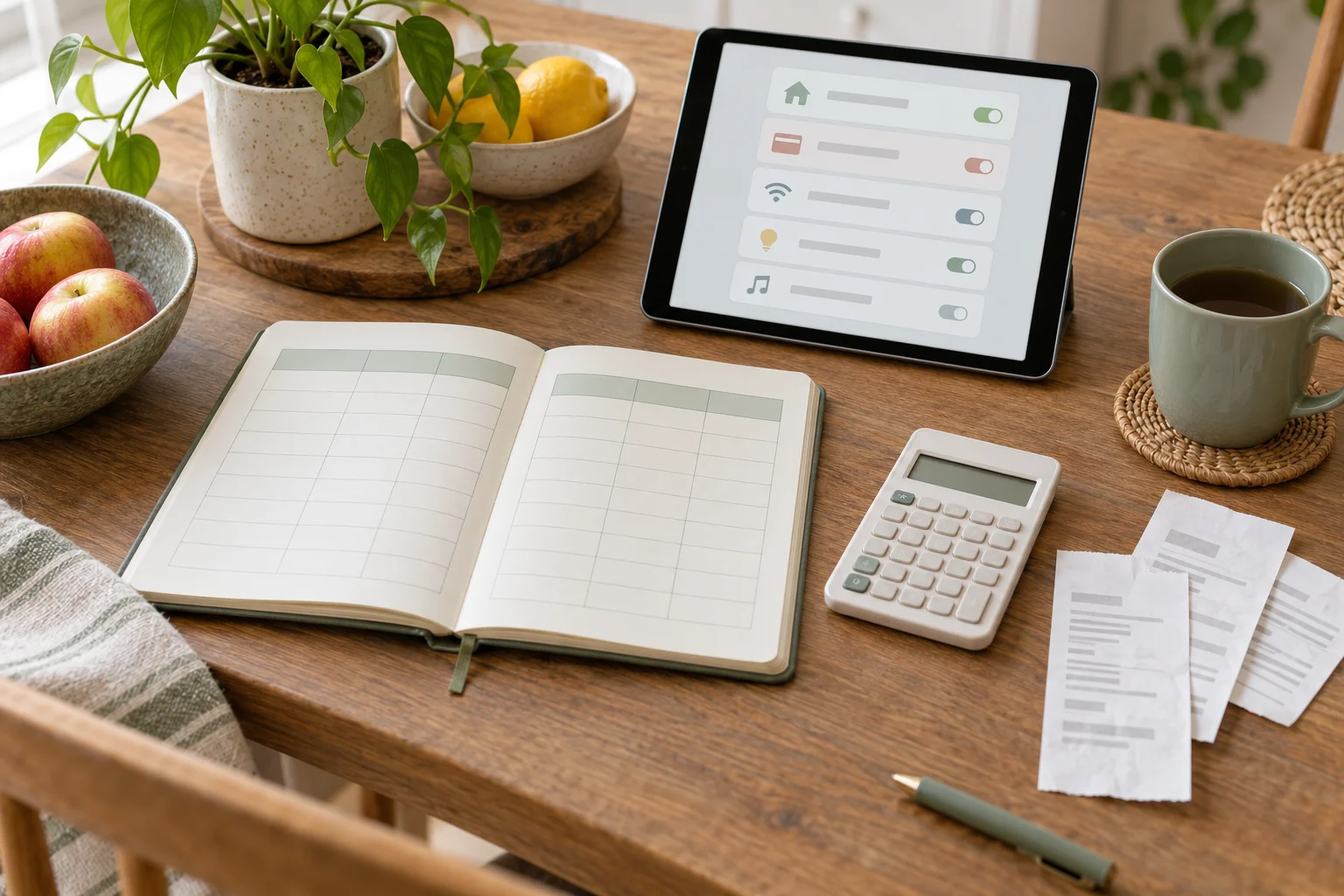
    A household spending ledger and tablet for reviewing recurring payments

    Why a one-page review helps

    Recurring payments can become difficult to track when information is spread across bank statements, email receipts, app stores, family members’ accounts, and paper notes. A one-page view brings the practical details together without requiring a complex finance system.

    The page can answer four useful questions:

    • What recurring payment is this?
    • Who uses it and how often?
    • When should the household review it?
    • What action, if any, should happen next?

    This approach focuses on organization rather than financial advice. It does not require judging a purchase by price alone. A service may be valuable because it supports work, education, communication, entertainment, or household routines. The table simply makes the current arrangement easier to see.

    Prepare: collect the information without overbuilding the system

    Start with one place for the review. This could be a sheet of paper, a notes app, or a spreadsheet. Choose the format that household members can open and update with the least friction.

    Collect recent evidence from places you already use, such as:

    • Bank or card transaction records
    • Email receipts and renewal notices
    • App-store subscription pages
    • Household members’ payment records
    • Invoices or account settings for recurring services

    For each item, record the name shown on the payment record rather than relying on memory. Payment descriptions can differ from the brand or service name, so add a short plain-language label if the charge is unclear.

    Keep the first pass narrow. The purpose is to identify recurring payments, not to classify every household purchase. One-off purchases, variable utility bills, and irregular expenses can be listed separately for a later review if needed.

    Sort: use a comparison table that supports decisions

    A useful table contains enough detail to support a conversation but not so many columns that updating it becomes a burden. Copy the template below into a document or spreadsheet.

    Service or payment User Payment note Usefulness Next action Review date
    Example service Person or household Renewal or payment detail Keep, question, or unclear Keep, check, pause, or cancel Date to revisit

    Use short labels instead of long explanations. For example, “used for school work” or “shared by two people” may be more useful than a detailed review. If the payment amount or billing interval is known from your own records, add it to the payment note. If it is not clear, write “check record” rather than guessing.

    For the usefulness column, try three neutral labels:

    • Keep: The household currently relies on it or has a clear reason to retain it.
    • Question: The service may be useful, but the household needs to confirm usage, duplication, or timing.
    • Unclear: The payment or service is not yet identified well enough to decide.

    These labels delay a rushed decision when the evidence is incomplete. They also make the table more useful for a household conversation.

    Act: choose one next step for each row

    After the list is visible, assign one practical next action to each entry. The action should describe something a person can do, not a vague intention.

    • Keep: Add a short reason and a future review date.
    • Check: Open the account or receipt to confirm the payment details.
    • Ask: Confirm with the household member who uses the service.
    • Compare: Check whether another household payment serves a similar purpose.
    • Pause or cancel: Follow the service’s account instructions after the household agrees.
    • Monitor: Leave the item in the table and review it after a defined period.

    Writing the next action prevents the page from becoming a passive list. It also separates identification from decision-making. A charge can be recorded today even when the household needs more information before changing it.

    When more than one person pays for subscriptions, note the responsible person or account location in a private field if that helps coordination. Avoid storing passwords, full payment card details, or security answers in the table.

    The 15-minute action plan

    Use a timer if a short session helps the household stay focused. The following structure is designed for a first pass, not a complete financial review.

    1. Minutes 0–3: Prepare. Open the chosen page and gather the payment records, receipts, or account screens that are readily available.
    2. Minutes 3–7: List. Add each recurring payment you can identify. Record the service name, user, and a brief payment note.
    3. Minutes 7–10: Sort. Mark each row as keep, question, or unclear. Group similar services or payments that may overlap.
    4. Minutes 10–13: Act. Assign one next action to each row. Complete a quick confirmation when the relevant account or receipt is already open.
    5. Minutes 13–15: Review. Choose a future review date, note unresolved questions, and store the page where household members can find it.

    If the list is longer than the available time, stop after recording the items you found and write “continue list” as the next action. A partial, clearly labeled record can be more practical than rushing through every account.

    A copyable household checklist

    Use this checklist before closing the review:

    • Prepare: I chose one shared location for the recurring-payment list.
    • Prepare: I checked the payment records and receipts available to me.
    • Sort: I recorded the service name as it appears in the payment record.
    • Sort: I added the likely user or household purpose.
    • Sort: I marked items as keep, question, or unclear.
    • Act: I gave each row a next action.
    • Act: I avoided guessing when a payment detail was uncertain.
    • Review: I wrote a future date for the next check.
    • Review: I stored the page in a location household members can access.

    Make the routine easier to repeat

    The system works best when the next review requires little setup. Keep the table name clear, such as “Recurring payments review,” and place it with other household records. If a new subscription starts, add it when the receipt or confirmation arrives rather than waiting for the next review session.

    A short note can also explain how the table is used: “Add recurring payments, record questions, and review the next actions on the selected date.” This gives household members a shared starting point without requiring a long set of rules.

    Consider separating three kinds of information:

    • Current list: Services and recurring payments that need household attention.
    • Questions: Charges that need identification or confirmation.
    • Past decisions: A brief record of what was changed and when, if the household finds that useful.

    Do not put confidential login details in the spending record. The table is an organization tool, not a replacement for secure account management.

    Common problems and practical adjustments

    “I cannot identify the payment name.”

    Copy the payment description exactly, then label it “unclear” and record where you plan to investigate it. Check an available receipt, account page, or household member’s records rather than relying on assumptions.

    “Different people use different payment accounts.”

    Add a user or account-location note that helps the household coordinate. Keep the note general and avoid recording sensitive account credentials.

    “The table is becoming too detailed.”

    Remove columns that do not support a decision. A service name, user, payment note, next action, and review date may be enough for a simple system.

    “We do not agree about whether to keep a service.”

    Mark the row as “question,” record the specific point to discuss, and choose a date for revisiting it. The table can hold the unresolved item without forcing an immediate conclusion.

    FAQ

    How often should a household review recurring subscriptions?

    Choose a schedule that fits the household’s routines, such as a monthly, quarterly, or seasonal review. The useful choice is one that people can remember and carry out. A new or changed payment can be added outside that schedule.

    Should the table include payment amounts?

    It can, if the amount is available in your own records and helps the household understand the entry. If the amount changes or is uncertain, include a note such as “verify current record” rather than entering an unconfirmed figure.

    What should happen to an unfamiliar recurring charge?

    Record the charge, mark it as unclear, and investigate it through the relevant payment record or account channel. Avoid deleting the row before its source and purpose are understood.

    Is a spreadsheet required?

    No. Paper, a notes app, or another shared document can work. The key feature is a single, readable view with a clear next action for each item.

    Conclusion

    A one-page recurring-payment review turns scattered spending records into a manageable household routine. In 15 minutes, prepare the records, sort them into a comparison table, assign practical actions, and set a review date. The result is not a promise of lower spending; it is a clearer system for noticing recurring payments and deciding what deserves attention next.


  • Turn Repeated Work Into a Reusable Checklist in 15 Minutes

    Turn Repeated Work Into a Reusable Checklist in 15 Minutes

    작성자: Kai Life Editorial Team

    If a repeated task keeps consuming mental energy, turn it into a reusable checklist instead of rebuilding the process from memory. In about 15 minutes, identify the task’s trigger, write its essential steps, separate urgent decisions from routine actions, and add a short review point. The result should be a practical work checklist that supports your priorities without becoming another project to manage.

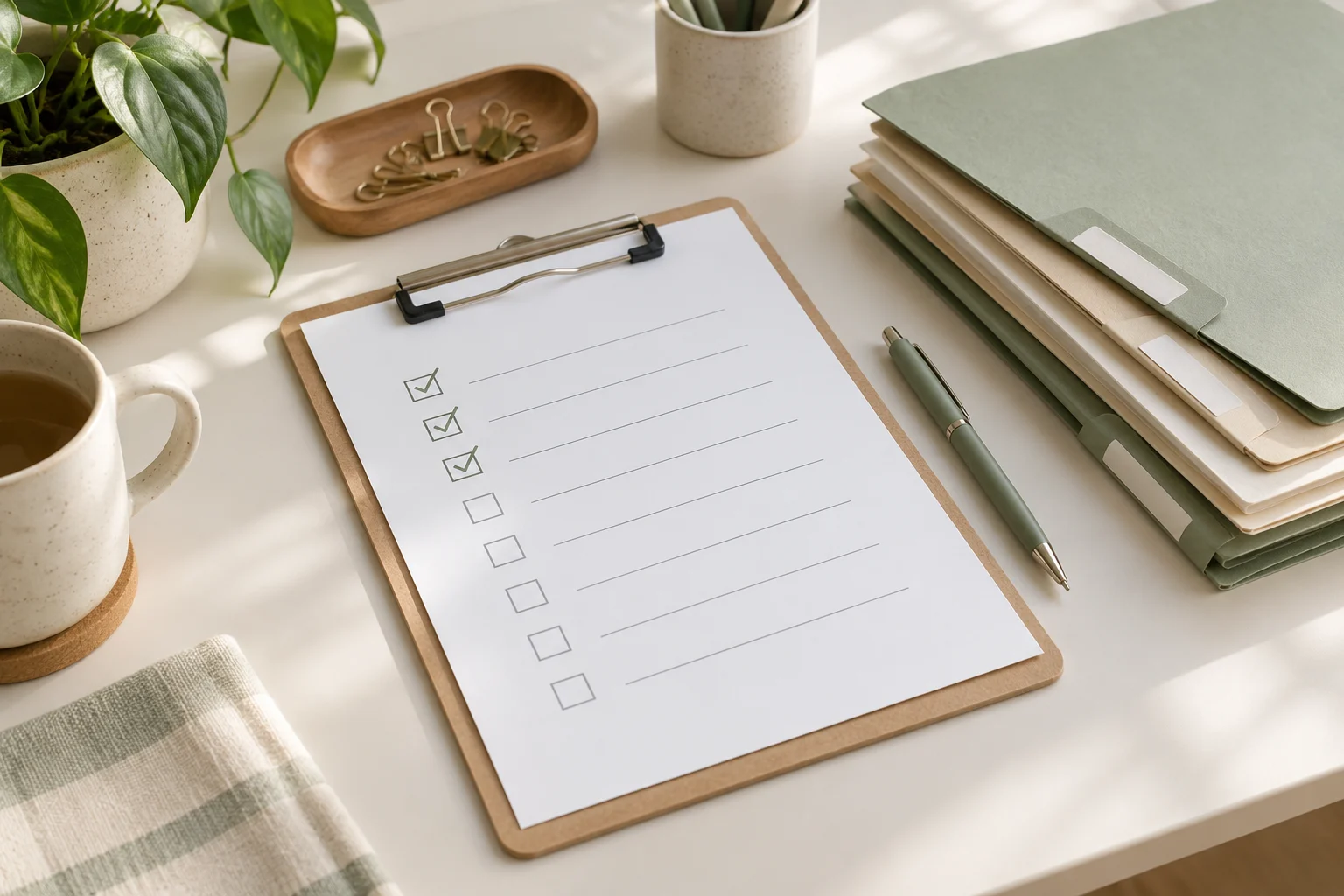
    A reusable work checklist beside neatly arranged folders

    Why repeated tasks become difficult to manage

    Repeated work often looks simple from a distance. It may involve preparing a weekly report, processing requests, organizing meeting notes, checking a shared inbox, or sending a regular update. The difficulty comes from the small decisions around the task:

    • When should the task begin?
    • What information needs to be collected first?
    • Which parts are time-sensitive?
    • What can be skipped when the available time is limited?
    • What should be recorded for the next person or the next cycle?

    When these decisions remain in your head, the task can feel new each time. A checklist makes the starting point visible and gives you a place to capture exceptions. It does not need to describe every possible situation. It needs to support the common path and point out the decisions that deserve attention.

    The four-part framework: prepare, sort, act, and review

    Use four sections to design a checklist that is short enough to use and detailed enough to help.

    1. Prepare: define the trigger and inputs

    Begin with the event that starts the task. A trigger could be a calendar reminder, the arrival of a request, the end of a workday, or the first day of a workweek. Write it as a clear sentence, such as “When the weekly update request arrives” or “At the start of the Monday planning block.”

    Next, list the inputs needed before action begins. These might include a document, a list of open items, meeting notes, a deadline, or a person to contact. If an input is missing, the checklist should tell you what to do rather than leave you searching without a plan.

    • Trigger: What tells me it is time to start?
    • Inputs: What information or files do I need?
    • Time box: How much time can I give this pass?
    • Starting condition: What counts as “ready to begin”?

    2. Sort: separate priorities from background work

    Sorting prevents a routine task from expanding to fill every available minute. Divide the work into three groups: actions that affect a current deadline, actions that keep the process moving, and items that can wait.

    Group Question Example action
    Priority now What has a near deadline or blocks someone else? Confirm a missing decision before sending the update
    Routine next What supports the standard process? Update the task status and file the notes
    Later or optional What would be useful but does not affect this cycle? Improve formatting or add background detail

    Keep the “priority now” group small. If every item is urgent, the checklist is not helping you choose. When priorities conflict, write down the decision or ask the relevant owner for clarification rather than silently changing the scope.

    3. Act: describe observable actions

    Write each checklist item as an action that can be checked off. “Handle report” is too broad to guide the next step. “Compare this week’s figures with the previous update” is easier to start and verify.

    Use one action per line where possible. Include a result when the result matters:

    • Collect the latest information from the agreed source.
    • Check for missing fields, conflicting dates, or unclear ownership.
    • Record decisions and open questions in the meeting notes.
    • Send the update to the intended group.
    • Move unfinished items to a named follow-up list.

    A useful checklist also identifies stopping points. For example, after a routine check, you might stop and escalate only if a deadline, owner, or required input is unclear. This keeps unusual cases from making the standard process unnecessarily long.

    4. Review: improve the checklist after use

    Reserve a short review at the end of the task or during a weekly review. Ask what slowed the process, what was repeated unnecessarily, and what question appeared more than once. Then change one or two lines rather than redesigning the entire system.

    Useful review notes include:

    • A step that was missing from the checklist.
    • An item that no longer belongs in the routine.
    • A decision that needs a clearer owner.
    • An input that should be collected earlier.
    • An exception that deserves a separate note instead of a longer main list.

    A 15-minute setup routine

    Use the following sequence when you want to convert one repeated task into a usable checklist during a short planning block.

    1. Minutes 0–2: name the task. Write the task in plain language and state how often it occurs or what event starts it.
    2. Minutes 2–5: capture the normal path. List the actions you take when nothing unusual happens. Do not edit the wording too much yet.
    3. Minutes 5–8: identify decision points. Mark where you check a deadline, choose a priority, request missing information, or involve another person.
    4. Minutes 8–11: shorten and order. Put preparation first, priority decisions next, routine actions after that, and follow-up last.
    5. Minutes 11–13: add exception instructions. Write a brief response for common problems, such as “If information is missing, record the owner and next request date.”
    6. Minutes 13–15: test the first pass. Read the checklist as if you were starting the task tomorrow. Remove vague items and confirm that the final line tells you where unfinished work goes.

    The goal of this session is not to document every detail. It is to create a reliable first version that can be adjusted after real use.

    Copyable reusable work checklist

    Copy the template below into your notes or task system and adapt the labels to the type of work you repeat.

    Stage Checklist item Notes or owner
    Prepare Confirm the trigger, deadline, and time available.
    Prepare Gather the required files, requests, and previous notes.
    Sort Mark the item that affects the nearest deadline or blocks another person.
    Sort Move optional improvements to a later list.
    Act Complete the standard actions in their working order.
    Act Record decisions, missing information, and follow-up owners.
    Act Share or file the completed output in the agreed location.
    Review Note one friction point and one possible checklist change.
    Review Move unfinished work to a dated follow-up item.

    How to use meeting notes and weekly reviews

    Meeting notes can improve a repeated checklist when they capture decisions rather than only discussion. For each open item, record the decision or question, the owner, and the next point at which it will be checked. This gives the next work cycle a clear starting point.

    During a weekly review, scan completed checklists for patterns. If the same clarification appears repeatedly, add it near the relevant action. If a task is often postponed, examine whether the trigger, time estimate, or priority rule is unclear. If a checklist has grown too long, separate the common path from an exception guide.

    A simple weekly review can use these questions:

    • Which step was easiest to forget?
    • Which item created the most waiting?
    • Did the checklist help distinguish important work from optional work?
    • Were meeting notes clear enough for the next action?
    • What single edit would make the next cycle easier to start?

    Common checklist problems and practical fixes

    The list is too detailed

    If the checklist reads like a training manual, keep the main list focused on decisions and actions. Link or refer to supporting instructions separately, where appropriate.

    The list is too vague

    Replace broad verbs such as “review,” “handle,” or “follow up” with a visible action and a completion signal. State what is being checked and where the result should be recorded.

    Everything is marked urgent

    Add a priority rule based on deadlines, dependencies, or risk to the current work. If two items still compete, record the conflict and seek a decision from the relevant owner.

    Exceptions take over the main process

    Keep the normal path short. Add a small “if this happens” section for recurring exceptions, and create a separate reference when an exception requires extensive detail.

    Unfinished work disappears

    End the checklist with a handoff action: record the next step, owner, and date. A task is easier to resume when its current state is visible.

    FAQ

    How long should a reusable work checklist be?

    It should be short enough to scan during the task. The right length depends on the work, but each line should earn its place by guiding an action, decision, or handoff. Detailed background material can sit outside the main checklist.

    Should every repeated task have its own checklist?

    No. Start with tasks that recur, contain easy-to-forget steps, involve handoffs, or cause repeated uncertainty. A simple task that is already easy to complete may not need formal documentation.

    Where should meeting notes fit?

    Use meeting notes as an input and follow-up record. Pull decisions, owners, and open questions into the relevant checklist step instead of copying an entire conversation into the routine.

    When should I update the checklist?

    Update it after a meaningful friction point or during a regular weekly review. Small changes based on actual use are generally easier to evaluate than a large rewrite based only on assumptions.

    Conclusion

    A reusable checklist is a small work organization system: it tells you when to begin, what to gather, how to sort priorities, which actions to complete, and where to leave the next step. Spend 15 minutes creating a first version with the prepare, sort, act, and review framework. Then use real work, meeting notes, and a weekly review to refine only the parts that cause confusion. The aim is not a more complicated workflow; it is a clearer way to start and finish repeated work.


  • A Refined Guide to a Turquoise Designer Sneaker

    Turquoise LOUIS VUITTON Rivoli Sneaker with oversized LV Initials and bicolor design

    The LOUIS VUITTON Rivoli Sneaker brings a considered, contemporary attitude to everyday dressing. Its turquoise colour creates an immediate focal point, while the smart bicolor palette keeps the overall impression polished rather than overstated. Designed as the first eco-designed edition of the emblematic Rivoli sneaker, it combines recognizable Louis Vuitton signatures with a thoughtful use of sustainable materials.

    The silhouette is especially appealing for wardrobes that move between relaxed and refined settings. Pair it with denim, tailored trousers, or understated casual separates when you want footwear to provide the defining accent. The oversized LV Initials on the side give the profile a distinctive graphic finish, while the Louis Vuitton signature on the back adds another branded detail without requiring additional accessories.

    This guide explores the sneaker’s documented design details, styling possibilities, selection considerations, and care-minded coordination ideas. It is intended to help you decide whether this particular colour, construction, and visual language suit your wardrobe.

    Design Details and Distinctive Features

    The defining feature of the LOUIS VUITTON Rivoli Sneaker is its balance of visual recognition and material-conscious design. The upper uses a mix of sustainable materials, including recycled polyester and bio-based materials, while the outsole is made from recycled polyurethane. In total, the description identifies 90% sustainable materials for this edition.

    • Colour: Turquoise, selected for a vivid yet versatile statement within a modern wardrobe.
    • Signature treatment: Oversized LV Initials appear on the side, creating a strong lateral graphic when the shoe is viewed in profile.
    • Branding details: The tongue features the LV upcycling logo, and the Louis Vuitton signature is placed on the back.
    • Insole: The removable insole is described as shape-memory and anatomic, offering a considered internal detail while allowing it to be removed.
    • Outsole: Recycled polyurethane forms the outer sole, with a listed heel height of 2 cm / 0.79 inches.
    • Origin: The model is manufactured in Italy.

    Together, these elements give the sneaker a layered identity. The colour supplies personality, the bicolor approach adds structure, and the LV details make the design immediately legible. The result is a piece that can carry a simple outfit while remaining suitable for more composed casual styling.

    How to Style It Across the Week

    Use the turquoise tone as the starting point for coordination rather than treating it as a colour that must be matched exactly. Neutral foundations are the most straightforward route: ivory, white, grey, navy, black, and denim can all allow the sneaker to take centre stage. A clean pair of straight-leg jeans and a simple knit creates an easy daily look, while a crisp shirt and relaxed trousers give the same footwear a more tailored direction.

    For an understated outfit, keep the rest of the palette quiet and repeat only one small tonal reference to the turquoise. This might be a subtle detail in a shirt, lightweight layer, or accessory. The aim is not to create a uniform colour story, but to make the sneaker feel intentionally placed.

    For a more graphic approach, work with the shoe’s bicolor character. Pair it with separates in two restrained tones, then let the turquoise function as the visual accent. The oversized LV Initials already provide a strong side detail, so minimal clothing patterns can help preserve the clarity of the silhouette.

    In a smart-casual setting, consider the sneaker with tapered trousers and a structured outer layer. The listed 2 cm / 0.79-inch heel height keeps the profile relatively low, which supports a clean transition between casual and polished pieces. For weekend dressing, combine it with denim or relaxed casual separates and allow the Louis Vuitton signature on the back to appear as a finishing detail when walking.

    Coordination should also consider the sneaker’s material-conscious identity. Accessories in simple, durable-looking finishes can complement the design without competing with it. Avoid overloading the outfit with prominent logos; the side LV Initials, tongue logo, and back signature already provide enough visual information.

    Selection and Care-Minded Considerations

    Begin with colour. Turquoise is expressive, so consider how often your existing wardrobe uses neutral foundations and whether you enjoy footwear that acts as the main accent. If your usual outfits are already highly patterned or brightly coloured, plan a few quieter combinations before choosing this model. If your wardrobe is built around denim, tailoring, and restrained layers, the sneaker can add a clear point of distinction.

    Next, review the sizing information carefully. The supplied details direct you to the size guide, so consult that guide before purchase rather than relying only on your usual sneaker size. The removable shape-memory anatomic insole is a notable construction detail, but it should not be treated as a substitute for checking the product’s current sizing information.

    Consider the branding placement as part of your selection decision. The oversized LV Initials make the side profile prominent, while the LV upcycling logo on the tongue and Louis Vuitton signature on the back reward closer viewing. Choose this model if you appreciate a recognisable designer treatment presented through several coordinated details.

    For care-minded styling, keep the sneaker visually supported by clean, well-organised outfits and handle the turquoise upper with attention. The supplied product data does not specify cleaning instructions, so check the product page and any accompanying care guidance before using cleaning products or applying a treatment. Store it in a way that protects its shape, and avoid assuming that one care method suits every material in the mixed upper and recycled polyurethane outsole.

    Finally, confirm the current product information before completing your decision. The product code is LVU6YSSCBLUU711A00, the country of manufacture is Italy, and the documented colour is turquoise. These details are useful reference points when checking the listing and ensuring that the selected product matches your expectations.

    Frequently Asked Questions

    What colour is the LOUIS VUITTON Rivoli Sneaker?

    The documented colour is turquoise, presented in a smart bicolor palette.

    What materials are described?

    The upper uses a mix of sustainable materials, including recycled polyester and bio-based materials. The outsole is made from recycled polyurethane, and the description states that 90% of the model uses sustainable materials.

    What details identify the design?

    The sneaker has oversized LV Initials on the side, an LV upcycling logo on the tongue, and a Louis Vuitton signature on the back.

    Does it have a removable insole?

    Yes. The description identifies a removable, shape-memory anatomic insole.

    Where is it made?

    The listed country of manufacture is Italy.

    How should I choose the size?

    View the product’s size guide before purchase, as the supplied information does not provide a full size chart.

    What is the listed heel height?

    The listed heel height is 2 cm / 0.79 inches.

    Product details, sizing information, materials, and purchase information may change. Please verify the current details on the product page before purchase.

    View the LOUIS VUITTON Rivoli Sneaker at THANKS KAI to review the current product details and purchase information.

    Product: LOUIS VUITTON Rivoli Sneaker

  • A Refined Guide to a Signature Leather Cardholder

    Black Saint Laurent Cassandre matelasse leather cardholder with chevron quilting and signature YSL logo plaque

    The Saint Laurent Cassandre matelasse leather cardholder is a compact accessory designed to bring a polished finish to everyday organisation. Its black calf leather exterior, chevron quilting and signature YSL logo plaque create a recognisable Saint Laurent expression while keeping the overall profile considered and easy to coordinate.

    Measuring 10.5 cm in length and 7.5 cm in width, this one-size cardholder offers a neat alternative to carrying a larger wallet when the essentials are best kept streamlined. The proportions make it suited to a variety of daily settings, from a minimal workday edit to a more elevated evening arrangement.

    As part of the small leather goods for women category, it can be approached as both a practical accessory and a finishing detail. The black colour works naturally with monochrome dressing, tailored separates and relaxed everyday looks, while the quilted surface adds subtle texture to an otherwise simple combination.

    Signature Details and Everyday Function

    The appeal of the Saint Laurent Cassandre matelasse leather cardholder lies in the balance between distinctive design language and compact utility. Each listed feature contributes to that balance without making the piece feel visually overworked.

    • Black calf leather: The black outer is versatile and easy to place alongside a broad wardrobe palette, from crisp white and neutrals to denim and darker tailoring. Calf leather gives the accessory a refined surface that complements its premium presentation.
    • Chevron quilting: The repeated quilted pattern introduces structure and visual rhythm. It gives the cardholder more dimension than a completely plain leather design while remaining restrained enough for everyday use.
    • Signature YSL logo plaque: The logo plaque provides a focused point of recognition. Against the black exterior, it reinforces the house identity without requiring additional decoration.
    • Card slots: The card slots support a deliberately edited carry. This format is especially appropriate when the goal is to keep frequently used cards together in a smaller accessory.
    • Compact measurements: At 10.5 cm by 7.5 cm, the cardholder has a clearly defined small-leather-goods profile. Its dimensions are useful to consider when comparing it with the space available in your preferred bag or pocket.
    • Made in Italy: The product is listed as made in Italy, adding an important point of origin to its product profile.

    Together, these elements create a piece that can sit quietly within an outfit or act as a small statement detail when placed on a desk, carried separately or paired with other black accessories.

    Ways to Style and Use It

    The strongest styling opportunity is its adaptability. With a black base and a graphic quilted finish, the cardholder can coordinate with both understated and more defined looks.

    • For a minimal daily edit: Pair it with a black bag, clean-lined outerwear and neutral knitwear. The cardholder’s texture adds interest while preserving a cohesive tonal palette.
    • With tailored clothing: A blazer, trousers or a structured coat can be complemented by the precise geometry of the chevron quilting. The logo plaque adds a subtle designer accent to an otherwise restrained arrangement.
    • For softer contrast: Use the black cardholder alongside cream, beige, grey or light denim. The darker accessory can anchor a lighter look without competing with its main pieces.
    • For an evening transition: Its compact format suits occasions when a full-size wallet feels unnecessary. Coordinate it with a small black bag or another polished accessory for a consistent finish.
    • As a considered gift idea: A cardholder is a useful choice when you are looking for a compact luxury accessory rather than a larger leather item. The black colour and recognisable YSL plaque give it a clear identity.

    For coordination, consider repeating one element rather than matching everything. A black belt, shoes, sunglasses or bag can echo the cardholder’s colour, while the quilted texture can remain the distinctive detail. If your outfit already includes prominent patterns, letting the accessory work as a simple black accent will keep the overall composition balanced.

    Because the piece is made from calf leather, it is best to treat it as a refined accessory and consult the product page for any current care guidance. Storing it thoughtfully and avoiding assumptions about cleaning methods can help you make more informed decisions about its upkeep.

    What to Consider Before Choosing

    Before selecting the Saint Laurent Cassandre matelasse leather cardholder, consider how you normally carry cards and how much visual detail you want from a small accessory.

    1. Check the dimensions against your routine: The listed measurements are 10.5 cm in length and 7.5 cm in width. Compare these with the compartments of your usual bag or the space where you plan to carry it.
    2. Review the card-slot format: This is a cardholder rather than a described full wallet. If you prefer a compact, edited carry, the slot-based design may suit your habits. If you need room for additional items, review the product presentation carefully before purchasing.
    3. Consider the colour’s role: Black offers broad coordination potential and works particularly well with a capsule wardrobe. It can also provide a grounding contrast against lighter or more colourful clothing.
    4. Decide how visible you want the branding to be: The signature YSL logo plaque is a defining feature. It makes the accessory immediately identifiable while remaining concentrated in a single detail.
    5. Assess texture alongside your existing accessories: Chevron quilting adds a tactile, patterned finish. It pairs easily with smooth leather pieces, but you may prefer to keep other textures simple if you want the cardholder to remain the focal accent.
    6. Confirm the current listing information: Product details, presentation and purchase information should be checked on the product page before making a final decision.

    The product is listed in one size and includes the reference 423291BOW01, with product identifier 11637389. These details can help you distinguish the item when reviewing the listing.

    Frequently Asked Questions

    What is the product?
    It is a Saint Laurent cardholder in black calf leather, featuring chevron quilting, a signature YSL logo plaque and card slots.

    What are its measurements?
    The listed measurements are 10.5 cm in length and 7.5 cm in width.

    Is it available in different sizes?
    The supplied product information lists it as one size.

    Where is it made?
    The product is listed as made in Italy.

    How can it be styled?
    Its black colour works with monochrome outfits, tailoring, neutral separates, denim and evening accessories. The quilted finish adds texture without requiring a heavily accessorised look.

    What should I check before purchase?
    Review the current product details, dimensions and purchase information on the product page, particularly if you need a specific carrying capacity or compartment arrangement.

    Please verify the current product details, measurements, condition or presentation where applicable, and all purchase information on the product page before purchase.

    View the Saint Laurent Cassandre matelasse leather cardholder at THANKS KAI to explore its current product details and styling potential.

    Product: Saint Laurent Cassandre matelasse leather cardholder

  • A Refined Guide to a Versatile Monogram Cross-Body Bag

    LOUIS VUITTON Soft Polochon PM in black Monogram Eclipse with detachable handle and jacquard shoulder strap

    LOUIS VUITTON Soft Polochon PM presents a polished interpretation of relaxed everyday carrying. In black Monogram Eclipse coated canvas, its compact proportions and clear white Louis Vuitton lettering create a distinctive visual presence without relying on excess decoration. The shape feels considered and adaptable: carry it by hand for a composed finish, or attach the textile strap when a shoulder or cross-body option better suits the day.

    With a width of 26 cm, a height of 14 cm and a depth of 14 cm, this is a compact format with a softly practical character. The zip closure helps keep the interior contained, while the inside flat pocket offers a designated place for smaller essentials. A removable name tag adds another functional detail, and the combination of black colouring, Monogram Eclipse fabric and a jacquard strap makes coordination straightforward across a modern wardrobe.

    This guide focuses on how to style and assess the bag before purchase: its carrying options, visual balance, organisation and care considerations. Whether selected for a streamlined daily look or as a refined accent to understated tailoring, LOUIS VUITTON Soft Polochon PM is best understood as a flexible compact bag with a strong branded identity.

    Design details that shape the experience

    The appeal of LOUIS VUITTON Soft Polochon PM lies in the relationship between its defined details and easy styling potential. Each element contributes to how the bag looks, carries and coordinates.

    • Compact proportions: At 26 cm wide, 14 cm high and 14 cm deep, the silhouette is easy to integrate into everyday outfits while retaining a clear, structured visual presence.
    • Monogram Eclipse character: The black Éclipse reverse Monogram fabric gives the design a dark, graphic foundation. It works naturally with tonal outfits and can also ground lighter separates.
    • Multiple carrying options: The detachable handle supports hand-carry styling, while the removable and adjustable textile strap allows shoulder or cross-body wear. This makes the bag suitable for changing the rhythm of a day.
    • Distinctive strap finish: The jacquard strap features “Louis Vuitton” woven into it, introducing a visible branded detail when the bag is worn across the body or over the shoulder.
    • Practical closure and storage: A zip closure keeps the main compartment enclosed, and an inside flat pocket provides a separate location for smaller items.
    • Considered finishing: The removable name tag, cowhide leather trimming, fabric lining and metal details complete the design language. The bag is listed in black and manufactured in France.

    Together, these features create a bag that can move between a cleaner hand-carried appearance and a more relaxed hands-free profile. The choice of strap configuration is therefore not only functional; it also changes the character of the outfit.

    How to style it across the day

    For a refined everyday look, pair the bag with black, charcoal, navy or soft grey. The dark Monogram Eclipse pattern will sit comfortably within a tonal wardrobe, while the bold white lettering and woven strap can provide a controlled point of contrast. Keep the rest of the outfit clean if you want the bag’s branding to remain the main visual accent.

    A cross-body arrangement works especially well with relaxed separates: a simple shirt, knitwear, straight-leg trousers or a casual jacket. Adjust the textile strap so the bag rests securely and naturally against the body, then keep additional accessories restrained to preserve the compact silhouette. Because the strap itself carries a woven “Louis Vuitton” detail, it can function as part of the outfit rather than disappear into it.

    For a more polished setting, remove the strap and use the detachable handle. Hand-carrying gives the bag a quieter, more composed attitude that pairs well with tailored trousers, a dark overshirt or a neat coat. The black colour makes coordination easy, while the rounded softness of the Polochon form prevents the look from becoming overly formal.

    The bag can also anchor a lighter weekend palette. Consider white, cream, stone or muted denim with black footwear or a black outer layer to echo the bag’s colour. This creates visual connection without requiring an entirely dark outfit. For travel between casual and smarter settings, carrying the bag by hand and keeping the strap available offers a simple way to adjust the styling as needed.

    Before filling it, consider the bag’s compact measurements and intended contents. The inside flat pocket is useful for smaller essentials that benefit from separation, while the zip closure keeps the main area contained. Avoid treating the compact format as an invitation to overpack; its appeal is strongest when the shape remains neat and the details stay visible.

    What to consider before choosing

    Begin with your preferred carrying style. If you regularly alternate between hand-carry, shoulder and cross-body use, the detachable handle and removable, adjustable textile strap offer useful flexibility. If you mainly want a compact bag with a prominent strap detail, the jacquard “Louis Vuitton” wording will be an important part of the visual appeal.

    Next, assess scale against your daily routine. The listed measurements are 26 cm in width, 14 cm in height and 14 cm in depth. This compact profile may suit essentials-led dressing, but it should be considered carefully if you usually carry larger personal items. The interior flat pocket adds organisation, although the available information does not specify the full internal capacity.

    Style preference is another key selection point. Black Monogram Eclipse coated canvas offers a graphic, recognisable appearance. It is versatile with dark neutrals and effective alongside lighter pieces, but it remains a branded design rather than a completely minimal one. Choose it if you want an accessory that contributes visible character to an outfit.

    For coordination, decide whether you prefer the strap to be a prominent feature or a removable option. Worn across the body, it adds texture and identity; removed, the handle presents a more pared-back look. The removable name tag provides an additional detail that can be appreciated when the bag is carried by hand.

    Care should begin with preservation rather than experimentation. Store the bag in a clean, dry place and avoid placing it against rough or dirty surfaces. Keep the coated canvas, cowhide leather trimming, fabric lining and metal details in mind when handling it, and use gentle, appropriate care rather than unverified cleaning methods. Always review the current product page for the most reliable purchase information and any care guidance provided there.

    Frequently asked questions

    What carrying options does LOUIS VUITTON Soft Polochon PM offer?
    It has a detachable handle for hand-carrying and a removable, adjustable textile strap for shoulder or cross-body wear.

    What are its listed measurements?
    The listed dimensions are 26 cm wide, 14 cm high and 14 cm deep.

    What storage details are specified?
    The bag has a zip closure and an inside flat pocket. It also includes a removable name tag.

    What material and colour are listed?
    The product data lists Éclipse reverse Monogram fabric, cowhide leather trimming, a fabric lining and metal details. The colour is black.

    How can it be coordinated?
    Its black base suits tonal dressing, tailored looks and lighter outfits with black accents. Use the strap for a relaxed finish or remove it for a cleaner hand-carried appearance.

    Where is it manufactured?
    The supplied product information lists France as the country of manufacture.

    Please verify current product details, measurements, condition, packaging and purchase information on the product page before purchase.

    View LOUIS VUITTON Soft Polochon PM at THANKS KAI to explore its details and styling potential.

    Product: LOUIS VUITTON Soft Polochon PM

  • A 15-Minute Short-Trip Packing Routine

    A 15-Minute Short-Trip Packing Routine

    작성자: Kai Life Editorial Team

    For a short trip, you can build a useful packing list in 15 minutes by first checking the trip basics, then sorting items into a few categories, packing only what supports the plan, and reviewing the list once before leaving. This travel planning organization routine is designed for independent travelers who want a quick system that works across different kinds of local visits and short journeys.

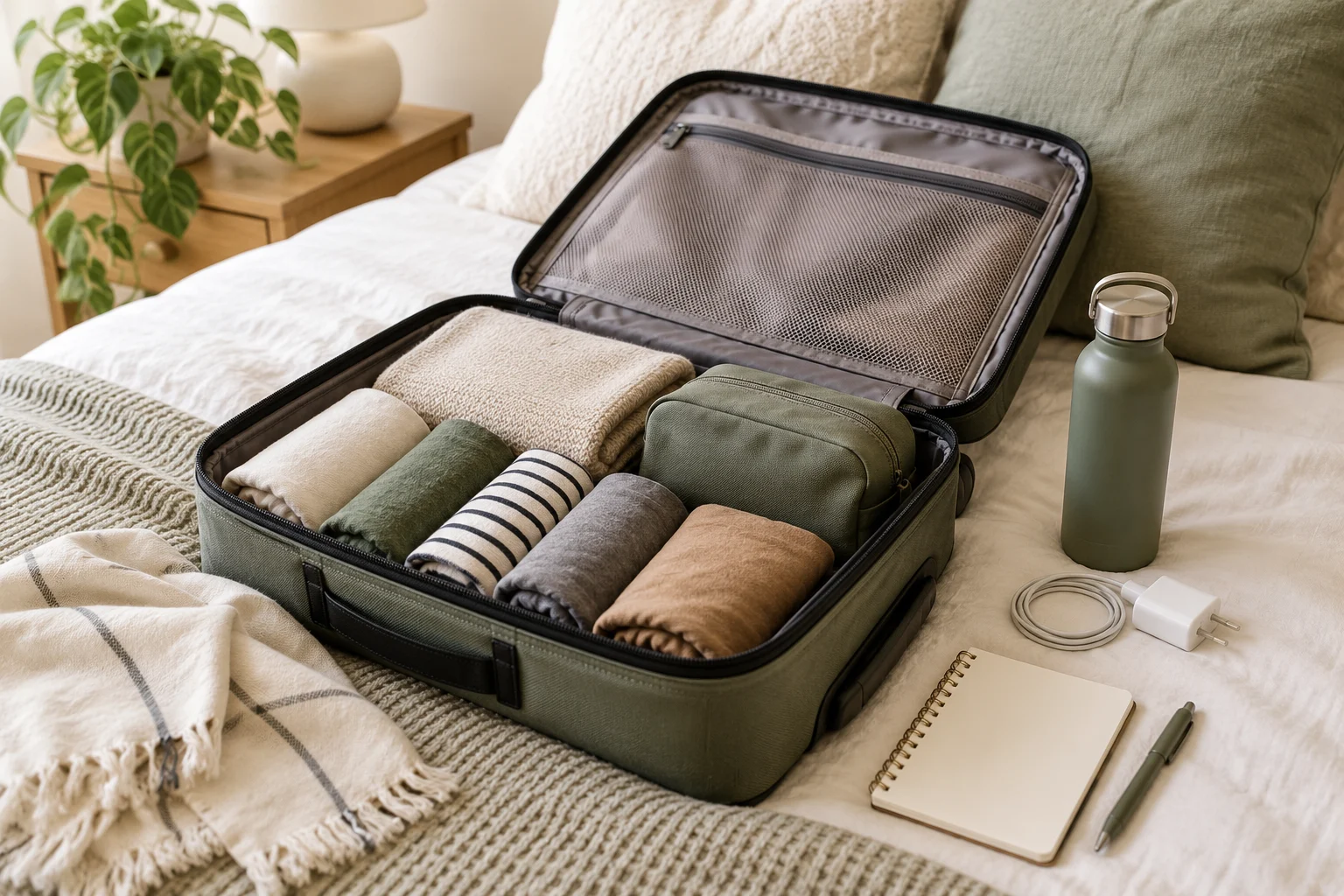
    A compact bag with clothes and essentials arranged for a short trip

    Why a short-trip packing list can become complicated

    Packing often takes longer when the decision is treated as one large question: “What might I need?” A better approach is to connect each item to a real part of the trip. Your transport, accommodation, planned activities, access to basic supplies, and personal requirements all affect the list.

    The goal is not to create a universal list. A city visit, an overnight stay, a family visit, and a day of outdoor activities can require different items. The goal is to create a repeatable decision process that helps you notice important needs without adding unnecessary objects.

    Use four stages:

    • Prepare: collect the few facts that affect packing.
    • Sort: group possible items by purpose.
    • Act: place the selected items together and record what is still missing.
    • Review: check the packed set against your departure and return plans.

    Minute 0–3: Prepare the trip information

    Start with your itinerary, booking details, calendar, or trip notes. You do not need to rewrite the entire plan. Look for information that changes what you carry.

    1. Write the departure and return dates or times.
    2. Note how many nights you will be away, if applicable.
    3. List the main activities in short phrases, such as walking, dining, swimming, work, or visiting family.
    4. Check the accommodation and transport information for practical constraints.
    5. Record any personal items that cannot be replaced easily during the trip.

    At this stage, avoid browsing for additional places or building a detailed itinerary. New research can expand the scope of the trip and make the packing decision less clear. Keep the preparation focused on information already relevant to this visit.

    A compact trip snapshot

    Question Short note Packing effect
    When am I leaving and returning? Dates or time window Clothing, food, medication, and charging needs may change
    Where will I sleep? Accommodation type Check what is already available and what you prefer to bring
    How will I travel? Walking, public transport, car, or another option Consider carrying comfort, access, and document storage
    What will I do? Short activity list Pack items that support the actual plan
    What is personally important? Health, accessibility, work, or routine needs Set these aside before optional items

    Minute 3–7: Sort possible items into four groups

    Place possible items into four groups. You can use a table, notes app, open bag, or a clear surface. The sorting step separates decisions that are often mixed together.

    1. Essentials

    Essentials are items linked to identity, access, communication, health, or the ability to complete the trip. Examples may include identification, required payment methods, keys, medication, glasses, and a phone. The exact items depend on your circumstances and destination.

    2. Clothing and personal care

    Choose clothing based on the number of days, planned activities, and available washing or changing options. Personal care items should reflect what you use and what is available at your destination. Smaller quantities can reduce bulk, but personal health and comfort take priority over saving space.

    3. Activity-specific items

    These are objects needed because of a particular plan, such as work materials, exercise clothing, a reusable water container, or equipment for a hobby. If an item is connected to no activity in your trip notes, pause before adding it.

    4. Convenience items

    Convenience items can make a trip more comfortable but are less central to completing it. Examples include entertainment, an extra accessory, or a backup item. Select these after the first three groups, so they do not crowd out essentials.

    Group Decision question Action
    Essentials Would access, health, or communication be affected without it? Set aside early
    Clothing and personal care Does the trip length or activity plan support bringing it? Choose a reasonable quantity
    Activity-specific Which planned activity requires it? Match it to a trip note
    Convenience Will it provide enough value to justify carrying it? Review last

    Minute 7–11: Act with a focused packing list

    Now turn the sorted groups into a list you can use immediately. Write one line per item or item group. Avoid vague entries such as “everything I need,” because they are difficult to check. Use clear phrases like “charging cable,” “sleepwear,” or “work document.”

    Pack or place together the items already available. For anything missing, record a short follow-up action rather than leaving it in your memory. For example, write “collect key from desk,” “wash clothing,” or “check booking message.” This turns packing into a visible task list.

    Use this copyable checklist as a starting structure:

    • Trip information: dates, route, accommodation details, and planned activities reviewed
    • Access: identification or required documents, keys, payment method, and tickets or booking details
    • Communication: phone, charging equipment, and any needed work or contact information
    • Health and routine: medication, glasses, accessibility items, and personal care needs
    • Clothing: clothing for the trip length and activities, sleepwear, and suitable footwear
    • Activity items: only the equipment or materials linked to the actual plan
    • Comfort: a small selection of optional items after the essential groups are complete
    • Before leaving: keys, lights or appliances, rubbish, notifications, and transport timing checked according to your situation

    For a reusable digital version, create a note titled Short trip packing with the same headings. Copy it for each journey, then remove sections that do not apply. A consistent structure reduces the need to start from a blank page.

    Minute 11–13: Connect packing with itinerary organization

    A packing list is more useful when it sits beside your itinerary organization system. Keep three short lists together:

    • Plan: places, appointments, and activities you intend to visit or attend.
    • Pack: items that support those plans.
    • Notes: useful details such as opening information, meeting points, or questions to confirm.

    This separation prevents a place list from becoming a packing list. A restaurant, museum, park, or shop may belong in your place list, but it does not automatically require a special item. Add an item only when the plan creates a clear practical need.

    You can also use a small connection table:

    Trip note Possible preparation Status
    Planned activity Relevant clothing or equipment To pack, packed, or not needed
    Transport detail Document, ticket, timing, or carrying adjustment To check or complete
    Accommodation detail Personal item not provided or preferred Confirm or pack
    Personal routine Health, work, or accessibility item Set aside early

    Minute 13–15: Review and close the task

    The final review should be short. Compare the packed items with the trip snapshot, then check the items most likely to be forgotten. Review your actual departure situation rather than adding more possibilities.

    1. Confirm that essential documents, keys, communication items, and personal requirements are accounted for.
    2. Check that clothing and activity items match the length and purpose of the trip.
    3. Look for missing actions, such as charging a device or collecting an item from another room.
    4. Remove duplicates and optional items that no longer seem worthwhile.
    5. Place the bag, outerwear, and departure-day items where they are easy to find.

    Then close the note. If a future trip reveals a repeated omission, update the template after returning rather than constantly adding items before every departure.

    Common packing decisions that need a pause

    “I might need it” items

    Uncertainty is a useful signal, but it is not a decision by itself. Ask whether the item supports a known activity, a personal requirement, or a realistic contingency. If not, place it in the convenience group and review it at the end.

    Weather-dependent items

    Weather can affect clothing and equipment, but conditions vary by destination and date. Check a reliable forecast or local information when it is relevant to your trip, then adjust the list. Do not treat a generic packing template as a substitute for current conditions.

    Shared items

    If you are traveling with another person, clarify who is carrying shared items. Record the owner beside the item in your trip notes. This can reduce duplicate packing while keeping responsibility visible.

    Health and accessibility needs

    Personal health and accessibility requirements should be handled before optional convenience items. This article does not replace advice from a qualified professional. If a prescribed treatment, medical device, or accessibility arrangement is part of your routine, use the instructions that apply to you and confirm destination-related requirements when relevant.

    A reusable 15-minute routine

    Save the following sequence as a note or calendar description:

    1. Prepare for 3 minutes: review dates, transport, accommodation, activities, and personal requirements.
    2. Sort for 4 minutes: separate essentials, clothing and personal care, activity items, and convenience items.
    3. Act for 4 minutes: gather selected items and write follow-up actions for anything unavailable.
    4. Review for 2 minutes: compare the bag with the trip snapshot and remove duplicates.
    5. Close: save the updated trip notes and put departure-day items in one visible place.

    Conclusion

    A short-trip packing list does not need to be a long inventory. The practical value comes from using a repeatable structure: prepare with the trip facts, sort by purpose, act on clear items, and review against the itinerary. Keeping a place list, trip notes, and packing list close together can make decisions easier without turning every journey into a large planning project.

    FAQ

    How many items should a short-trip packing list contain?

    There is no useful universal number. The list should reflect the trip length, activities, accommodation, transport, and personal requirements. Start with essentials, then add activity and convenience items only when they have a clear role.

    Should I use a paper list or an app?

    Use the format you can check easily during preparation. A paper list works well for a visible packing surface, while a note app can be copied for future trips and connected with itinerary details.

    How can I avoid overpacking?

    Link each nonessential item to a known activity or realistic need. Review convenience items last, remove duplicates, and distinguish between an item that would be pleasant and one that supports the actual trip.

    What should I do if my plans change?

    Update the trip snapshot first, then revise the activity-specific section. Recheck clothing, documents, and transport-related items after the change instead of rebuilding the entire list from the beginning.


THANKS KAI CONTACT

WeChat

위챗에서 QR코드를 스캔해 주세요.
Scan the QR code in WeChat.

Thanks Kai WeChat contact QR code위챗 열기 / Open WeChat