Tag: lang-en

English content

  • How to Organize Your Phone Home Screen in 15 Minutes

    How to Organize Your Phone Home Screen in 15 Minutes

    작성자: Kai Life Editorial Team

    If you lose time looking for work apps, files, or saved links, you can improve the situation with a short home-screen reset. In 15 minutes, prepare a temporary holding area, sort items by how you use them, place the most important tools where your hand and attention reach them easily, and schedule a brief review. The goal is not a visually perfect phone. It is a home screen that helps you find the next useful item with fewer decisions.
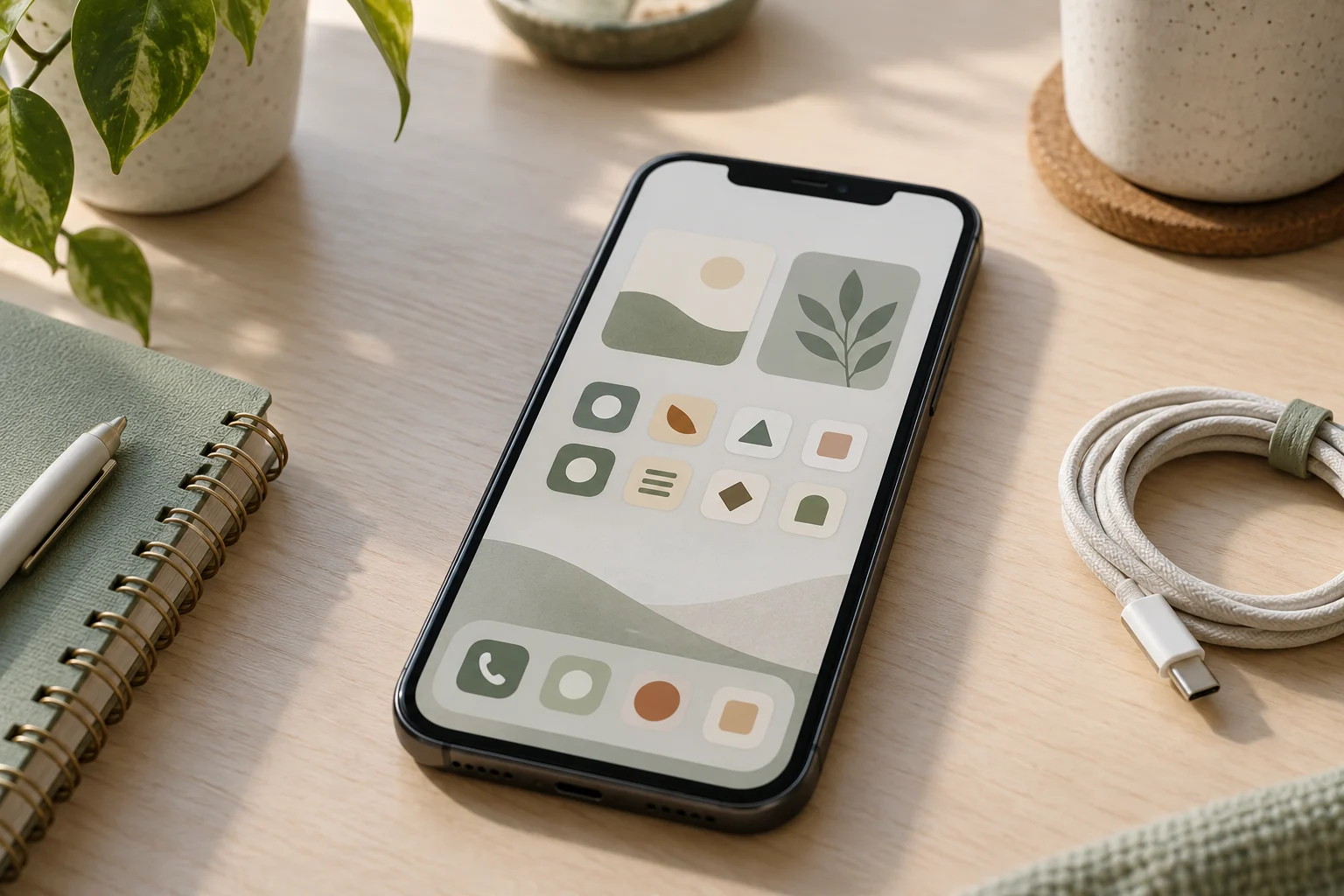
    A simplified smartphone home screen with grouped app icons

    Before You Start: Define What “Easy to Find” Means

    Phone organization becomes easier when you organize around actions rather than app names. A worker may need to check a calendar, respond to a message, open a document, and visit a project link. A solo business owner may need a payment dashboard, customer messages, a camera, an expense folder, and a social publishing tool. These items do not belong together because they come from the same company or have similar icons. They belong together because they support a task.

    Choose one practical definition of success for this reset:

    • Work tools are visible without searching through several pages.
    • Frequently used personal tools do not compete with work tools.
    • Files and links have a predictable place outside the home screen.
    • Unused apps and distracting shortcuts create less visual noise.

    Keep the scope narrow. This routine is for the home screen and the routes connected to it. It is not a complete photo archive, email cleanup, or cloud-storage migration. If you find a larger problem, write it down for a later session instead of allowing it to consume the 15-minute reset.

    The Prepare–Sort–Act–Review Routine

    1. Prepare: create a temporary holding area

    Start by choosing a simple holding area for items you are unsure about. Depending on your phone, this could be a second screen, an existing utility folder, or a temporary note that lists items for later review. The holding area is not a permanent filing system. It gives you somewhere to move items while you decide.

    Next, write down three to five actions you perform on the phone during a normal workday. For example:

    • Check today’s schedule.
    • Reply to an important message.
    • Open a current project file.
    • Review a business dashboard.
    • Capture a photo, note, or receipt.

    These actions will guide placement. They are more useful than a generic rule such as “put similar apps together,” because similar-looking apps can serve very different purposes.

    2. Sort: separate essential, occasional, and uncertain items

    Look at the first home-screen page and classify each item into three groups:

    • Essential: used frequently or needed quickly when a task appears.
    • Occasional: useful, but not part of the normal daily route.
    • Uncertain: unfamiliar, duplicated, distracting, or no longer connected to a current task.

    Move occasional and uncertain items away from the primary screen temporarily. This creates space for a clearer decision. Avoid deleting an app simply because it is not used every day. Check whether it supports travel, security, payments, accessibility, work continuity, or another occasional need. If you are unsure, leave it in the holding area and review it later.

    Use folders when they reduce decisions, not merely because they make the screen look compact. A folder called “Work” may be useful if it contains a small set of tools you open together. A very large folder can become another place to search, so consider splitting it by action, such as “Communicate,” “Create,” or “Manage,” if that matches your routine.

    3. Act: place tools by frequency, urgency, and context

    Place high-use tools on the primary screen, but give them different positions according to the way you reach for them. A tool used several times a day can stay visible. A tool used only when a notification arrives may work better in a folder or search route. A tool containing sensitive information may deserve a less exposed location, depending on your device and privacy needs.

    A practical layout can include:

    • Primary action area: calendar, messages, notes, tasks, or another daily starting point.
    • Work area: project, document, communication, or business tools.
    • Capture area: camera, voice notes, scanning, or quick-entry tools.
    • Occasional area: travel, shopping, finance, settings, and other less frequent tools.

    Keep the bottom dock or equivalent persistent area for tools you open across multiple contexts. If your phone offers widgets, use them only when they answer a repeated question, such as “What is next?” or “What needs attention?” A widget that adds visual information without reducing a decision may increase clutter.

    Do not place every work-related item on the first page. The purpose of digital organization is a reliable route, not maximum exposure. A simple folder, a device search shortcut, or a pinned document may be faster than scanning a crowded page.

    4. Review: test the route with real tasks

    Test the new layout using the actions you wrote down at the beginning. Start from the locked or idle state of the phone and try to reach each item. Notice where you hesitate. If an app is visible but its related file or link remains difficult to reach, the home-screen change is incomplete.

    Record the remaining friction in a short note:

    • Which app was difficult to locate?
    • Which file needed a clearer folder or name?
    • Which link is trapped in a message, email, or browser tab?
    • Which folder contains more items than you can scan comfortably?

    Make only one or two final changes during the 15-minute session. A later review can handle deeper cleanup without turning this routine into an open-ended project.

    Connect the Home Screen to Files and Links

    An organized home screen cannot compensate for unclear file and link storage. Use a small set of consistent destinations for the items you reach from your phone.

    File organization

    Choose folder names that describe the work or decision connected to the file. Names such as “Current Clients,” “Tax Records,” “Content Drafts,” or “Receipts to Review” may be more useful than vague labels such as “Miscellaneous.” Match the names to your actual responsibilities rather than copying a system that does not fit.

    For active work, consider separating files by status, such as “In Progress,” “Waiting,” and “Reference,” if those stages help you decide what to do next. Avoid creating a new folder for every individual file. The structure should make retrieval easier without requiring a long series of taps.

    Link management

    Saved links often become invisible inside browser bookmarks, messages, or email threads. Collect links that support recurring work in one intentional place, such as a bookmark folder, a note, or a project document. Give the link a descriptive label that explains its purpose. “Weekly order report” is easier to recognize than a raw address or a label copied from a page title.

    Review saved links for access and relevance. A link may require an account, redirect to a different page, or depend on information that has changed. If it is important, add enough context to help your future self understand why it was saved.

    A Copyable 15-Minute Action Plan

    Time Action Output
    0–2 minutes List three to five phone tasks you perform during work. A task-based placement guide
    2–5 minutes Move occasional and uncertain items to a temporary holding area. More space for daily tools
    5–9 minutes Place essential apps by frequency, urgency, and context. A clearer primary screen
    9–12 minutes Group related tools and check nearby files or links. A connected route from app to information
    12–15 minutes Test the layout with real tasks and note remaining friction. A short follow-up list

    Use this checklist during the reset:

    • [ ] I listed the phone tasks that matter most during work.
    • [ ] I moved occasional or uncertain items away from the primary screen.
    • [ ] I placed frequently used tools where they are easy to reach.
    • [ ] I used folders only where they reduce searching.
    • [ ] I checked the route from key apps to related files.
    • [ ] I collected important links in a recognizable location.
    • [ ] I tested the layout with real tasks.
    • [ ] I wrote down deeper cleanup for another session.

    Keep the System Useful Without Constant Rearranging

    After the reset, resist changing the layout every time you install an app. Let new items stay in a secondary location until their role becomes clear. This creates a small review point instead of allowing every download to reshape the home screen.

    Set a short review interval that fits your routine, such as once a week or at the end of a project. During the review, ask whether the primary screen still reflects your current work. If a tool has become central, move it closer. If an app has become occasional, move it away. If a file or link repeatedly causes hesitation, improve its name or storage location.

    Also consider notification settings as part of digital organization. A crowded home screen and a crowded notification stream can create similar friction. Review which alerts support timely action and which can wait for a scheduled check. Device menus vary, so use the notification controls available on your phone and change them gradually.

    FAQ

    Should every app be on the first screen?

    No. The first screen should support the actions you perform most often or need to reach quickly. Occasional tools can remain in folders, on another page, or in the device’s search system.

    Is it better to organize apps by category or by task?

    Task-based organization is often easier when you use several tools together to complete an activity. Category folders can still work for occasional tools or when your app collection is small. Choose the structure that reduces hesitation for your own routine.

    How can I organize work links without adding many shortcuts?

    Store recurring links in a small bookmark folder, note, or project document with descriptive labels. Add context when the purpose is not obvious, and review links that no longer support current work.

    What should I do with apps I rarely use?

    Move them away from the primary screen first. Before deleting anything, consider whether it supports an occasional need, account access, security process, or work continuity. If the decision is unclear, put it on a later review list.

    Conclusion

    A useful phone home screen is a navigation system for your actual work, not a display of every available app. In 15 minutes, you can list your key actions, separate essential from occasional tools, connect apps with files and links, and test the route with real tasks. Keep the layout modest, review it after your work changes, and let deeper cleanup happen in separate sessions.


  • A Refined Guide to Choosing a Monogram Baseball Cap

    Beige LOUIS VUITTON LV First Cap with tone-on-tone Monogram jacquard crown, leather visor and natural cowhide back belt

    LOUIS VUITTON LV First Cap brings a polished finish to the relaxed language of a baseball cap. Introduced as a new-for-2023 design, it combines a classic summer shape with a considered mix of textures: a tone-on-tone Monogram jacquard crown, a leather visor and top button, and a natural cowhide back belt.

    In beige, the overall effect is understated rather than overstated. The signature pattern remains integrated into the colour story, making this an adaptable accessory for everyday dressing, travel-inspired outfits, and casual looks that benefit from a more refined final layer. Its 100% cotton material and classic proportions also make it easy to approach as a wardrobe piece rather than a one-occasion statement.

    The design is described as helping keep the face cool and shaded, while the back belt is intended to provide a snug, secure fit. For a closer assessment, review the stated measurements and size guide on the product page before purchase.

    Design details that define the look

    • Tone-on-tone Monogram jacquard crown: The pattern is woven into a restrained beige presentation, giving the cap a recognisable signature while preserving a quiet visual balance.
    • Leather visor and top button: These details introduce a sharper contrast of texture and help frame the classic baseball-cap silhouette.
    • Natural cowhide back belt: The rear belt contributes to the design and supports a snug, secure fit that can be adjusted according to preference.
    • 100% cotton material: The listed material suits the cap’s light, summer-oriented character and complements its relaxed everyday styling.
    • Classic summer shape: The profile is easy to coordinate with casual wardrobes, from simple daywear to more carefully assembled off-duty looks.
    • Beige colour: This neutral shade can sit comfortably alongside denim, white, black, navy, tan, and other natural tones without dominating the outfit.

    The listed item measurements are 29 cm in width, 15 cm in height, and 15 cm in depth. The product information also states that the item is manufactured in Italy and delivered in 24S packaging. These details are useful reference points when considering the cap’s scale, presentation, and place within an accessories collection.

    Ways to style it across the day

    For an understated daily look, pair the beige cap with a white shirt, a simple knit, or a clean T-shirt and denim. Keeping the rest of the outfit quiet allows the tone-on-tone Monogram jacquard to remain visible without making the styling feel overly formal. Neutral trainers or simple leather accessories can continue the balanced mood.

    For a relaxed summer combination, use the cap with light separates in cotton or similarly easy textures. The leather visor and top button add definition to an outfit built from softer pieces, while the natural cowhide belt echoes warm tan details elsewhere in the look. A tonal palette of beige, cream, ecru, and denim creates a cohesive finish.

    For travel and outdoor-leaning plans, the classic shape offers a practical finishing touch for casual layers. Try it with a lightweight jacket, an overshirt, or a relaxed sweatshirt. The cap can also provide visual continuity when the outfit includes several neutral pieces: the Monogram pattern supplies subtle detail without requiring additional prominent logos.

    For a more elevated off-duty outfit, contrast the casual silhouette with tailored trousers, a structured blazer, or polished loafers. The result works best when the colours remain controlled and the cap is treated as the single relaxed element. Its beige tone and mixed materials make that contrast feel deliberate rather than accidental.

    When coordinating accessories, consider repeating either the warm beige family or the leather and cowhide accents, rather than matching every element exactly. The design already contains several textural cues, so a restrained approach will keep the overall appearance refined.

    What to consider before choosing

    1. Check the colour role in your wardrobe. Beige is versatile, but its soft presence will work best if you regularly wear neutrals, denim, or warm earth tones. If your wardrobe is built around strong, contrasting colours, consider whether you want the cap to blend in or serve as a quieter counterpoint.
    2. Review the fit information carefully. The natural cowhide back belt is described as providing a snug, secure fit, and the product page includes a size guide. Use that guide alongside the listed item measurements before ordering.
    3. Decide how visible you want the signature pattern to be. The Monogram jacquard is tone-on-tone, so it offers a subtler expression than a high-contrast motif. This makes it suitable for buyers looking for recognisable detailing with a restrained finish.
    4. Assess the material mix. The 100% cotton crown, leather visor and top button, and natural cowhide back belt create a varied surface. If you enjoy accessories where texture contributes as much as colour, this combination may suit your styling preferences.
    5. Plan its place in your accessories rotation. Its classic summer shape is naturally suited to everyday and warm-weather outfits. Consider the occasions on which a baseball cap complements your wardrobe, and whether the beige colour will extend the range of your existing looks.
    6. Preserve the presentation. Store and handle the cap in a way that respects its mixed materials, and consult the product page for any current care guidance before cleaning or treating it. Avoid relying on assumptions about leather, cowhide, or cotton care.

    Frequently asked questions

    What is the exact product name?
    It is LOUIS VUITTON LV First Cap.

    What colour is the cap?
    The listed colour is BEIGE.

    What materials are specified?
    The material is listed as 100% cotton, with a leather visor and top button and a natural cowhide back belt.

    Is the fit adjustable?
    The product description identifies the natural cowhide back belt as supporting a snug, secure fit. Review the size guide on the product page for current fit information.

    What are the listed item measurements?
    The stated measurements are width 29 cm, height 15 cm, and depth 15 cm.

    Where is it manufactured?
    The product information lists Italy as the country of manufacture.

    Product details, measurements, packaging, sizing information, and purchase conditions may change. Please verify the current product details and purchase information on the product page before purchase.

    View LOUIS VUITTON LV First Cap at THANKS KAI to explore its current details and styling potential.

    Product: LOUIS VUITTON LV First Cap

  • A 15-Minute Shopping List by Store Route

    A 15-Minute Shopping List by Store Route

    작성자: Kai Life Editorial Team

    The simplest way to arrange a shopping list by store route is to begin with your meal notes, remove items you do not need, and then sort the remaining items in the order you normally move through the store. A 15-minute routine can be divided into four parts: prepare the notes, sort items by route, act on the finished list, and review what should carry forward.

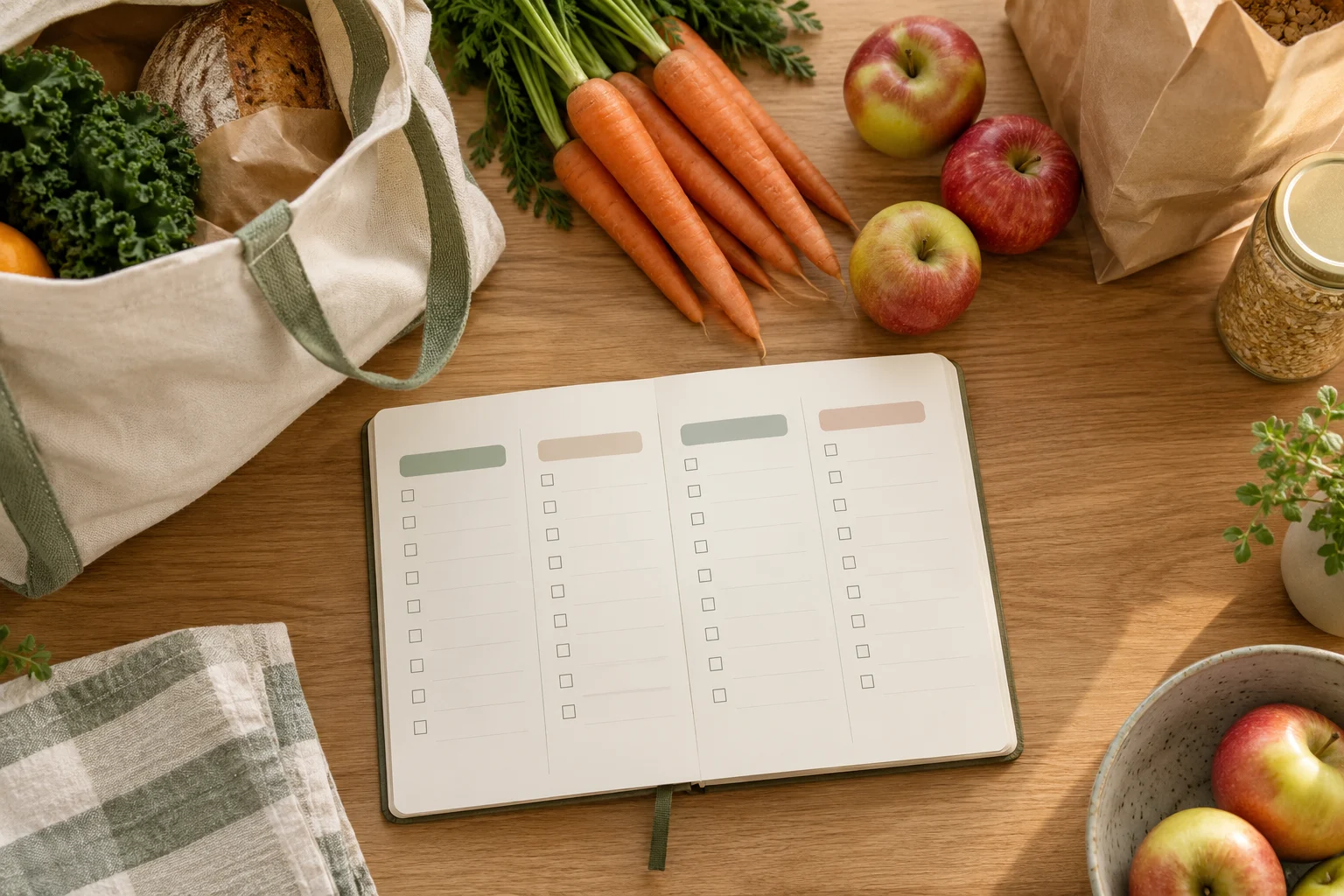
    A grocery list grouped by store section alongside ingredients

    This approach is useful when your shopping list contains a mixture of meal ingredients, household items, and reminders. Instead of grouping everything only by recipe or food type, you create a list that matches the physical sequence of your shopping trip.

    Why a store-route list can simplify kitchen organization

    A meal-based list answers the question, “Which recipe uses this item?” A route-based list answers a different question: “What do I need to pick up next?” Both views can be useful, but the route view is often easier to follow while you are moving through a familiar store.

    For example, your notes may contain ingredients for two meals, breakfast items, cleaning supplies, and a reminder to check the freezer section. If these notes remain in the order they were written, you may need to scan the whole list repeatedly. Sorting them into route sections creates a short sequence of decisions.

    The goal is not to build a detailed inventory system. It is to create a usable bridge between three kinds of notes:

    • Meal notes: dishes, ingredients, or portions you are considering.
    • Shopping items: things you actually need to look for.
    • Route cues: the sections or stops where those items are usually found.

    The prepare, sort, act, and review framework

    1. Prepare: collect the notes in one place

    Set a timer for three minutes. Gather the notes you are using for this trip, such as a phone note, paper list, recipe reminder, or message to yourself. Do not try to organize each item yet. The first aim is to create one working list.

    As you collect items, write them in plain language. “Ingredients for soup” is less useful during a trip than the individual items you expect to buy. If a meal note is still undecided, mark it with a question rather than treating it as a confirmed purchase.

    Use a quick decision label beside each item:

    • Buy: needed for the current plan.
    • Check: confirm whether you already have it.
    • Optional: useful if convenient, but not central to the plan.
    • Skip: an old note or an item that no longer fits the plan.

    2. Sort: arrange items by your actual route

    Spend about five minutes sorting the confirmed items. Use the route you usually take, not a generic store layout. One person may begin with produce, while another may enter near pantry goods or household supplies.

    Create broad route sections such as:

    • First section after entering
    • Produce or fresh items
    • Pantry and dry goods
    • Refrigerated section
    • Frozen section
    • Household or non-food items
    • Checkout-area reminders or items from another stop

    Keep the sections broad enough to scan quickly. A list with too many tiny categories can become another form of clutter. If two items are usually close together, place them in the same section even when they belong to different meal notes.

    3. Act: turn the sorted list into shopping instructions

    Spend four minutes making the list easy to use while walking. Put a square or other simple marker beside each item. Add a quantity only when it helps distinguish what you need. You can also add a short meal tag, such as “breakfast” or “Tuesday dinner,” if the purpose of the item is easy to forget.

    Keep extra information out of the main line when it slows scanning. For example, write “tomatoes — dinner” rather than adding a long explanation. If an item has a specific requirement, use one short note below it.

    Separate optional items from the main list. This protects the essential route while leaving room for flexible choices. A small “if convenient” section at the bottom can be useful for items that do not justify backtracking.

    4. Review: close the loop after the trip

    Use the final three minutes after shopping, or before your next planning session, to review the list. Mark items that were unavailable, unnecessary, or difficult to place on the route. This is not a performance score. It is a way to improve the next version of the routine.

    Ask three questions:

    • Which item was hard to find because its section was unclear?
    • Which note was not specific enough to act on?
    • Which item should be moved to an optional or recurring reminder?

    A copyable 15-minute action plan

    Use the following sequence when you want a repeatable kitchen organization routine. Adjust the time blocks if your notes are unusually long.

    Time Task Result
    0–3 minutes Collect meal notes and shopping reminders One rough list
    3–5 minutes Remove old notes and label uncertain items Buy, check, optional, and skip decisions
    5–10 minutes Group confirmed items by store route Route-based sections
    10–12 minutes Add quantities, meal tags, or short clarifications Action-ready list
    12–15 minutes Check for duplicates and create a small optional section Compact final list

    Reusable shopping-list template

    Copy this structure into a note or write it on paper. Replace the section names with the route you actually use.

    SHOPPING TRIP: __________    DATE: __________
    
    FIRST SECTION
    [ ] ____________________
    [ ] ____________________
    
    PRODUCE OR FRESH ITEMS
    [ ] ____________________   meal: __________
    [ ] ____________________   meal: __________
    
    PANTRY OR DRY GOODS
    [ ] ____________________
    [ ] ____________________
    
    REFRIGERATED
    [ ] ____________________
    [ ] ____________________
    
    FROZEN
    [ ] ____________________
    
    HOUSEHOLD OR OTHER STOP
    [ ] ____________________
    
    CHECK BEFORE BUYING
    [ ] ____________________
    
    OPTIONAL IF CONVENIENT
    [ ] ____________________
    
    AFTER THE TRIP
    Unavailable: ____________________
    Move or remove next time: ____________________

    Small adjustments for different shopping styles

    If you shop for several meals at once

    Keep the route as the main structure and add a short meal label after each item. This preserves the movement order while helping you remember why an item is on the list. A separate meal section can be added only for ingredients that require a decision before buying.

    If your shopping trip includes more than one store

    Separate the list by stop before sorting each store internally. Use headings such as “Store A,” “market,” or “household stop.” Within each heading, keep the route order that matches that location. This prevents items from different stops from blending into one long list.

    If you often change your plan while shopping

    Leave space for substitutions or optional choices. The main list can contain the planned items, while a small flexible section holds alternatives. This keeps a change from forcing you to rewrite the whole list.

    Quick checklist before you leave

    • Have all current meal notes been collected?
    • Have old or duplicate items been removed?
    • Are uncertain items marked for checking?
    • Do the headings follow your usual store route?
    • Are optional items separated from the main list?
    • Can each line be understood at a quick glance?
    • Is there a short space for unavailable items or next-trip notes?

    FAQ

    Should I organize the list by recipe or by store section?

    Use the structure that supports the task in front of you. Recipe grouping helps during meal planning, while store-route grouping helps during shopping. A practical compromise is to use store sections as the main headings and add a brief meal label beside items that need context.

    What if I do not know the store layout?

    Start with broad areas rather than exact aisles. After the trip, note where misplaced items were found and adjust the headings gradually. The route can become more specific as you learn what is useful to you.

    Do I need a shopping-list app?

    No special tool is required for this method. A paper list, phone note, or other simple format can work if it lets you group items and mark them as you go. Choose the format that is easiest to update before and during the trip.

    Conclusion

    A route-based shopping list is a small kitchen organization system: prepare the notes, sort items by movement, act on a concise list, and review what to change next time. The 15-minute routine works best when it stays lightweight. Use broad route sections, separate optional items, and keep meal context short so the list remains easy to scan when your attention is divided.


  • A 15-Minute Home Organization Routine for Seasonal Items

    A 15-Minute Home Organization Routine for Seasonal Items

    작성자: Kai Life Editorial Team

    For a short seasonal tidy-up, use one visible staging area, sort items into four decisions, and give each group a specific storage destination. A practical 15-minute home organization routine is: prepare for 2 minutes, sort for 5 minutes, act for 6 minutes, and review for 2 minutes. The aim is not to reorganize the entire home; it is to create a clear next step for the seasonal items currently taking up space.

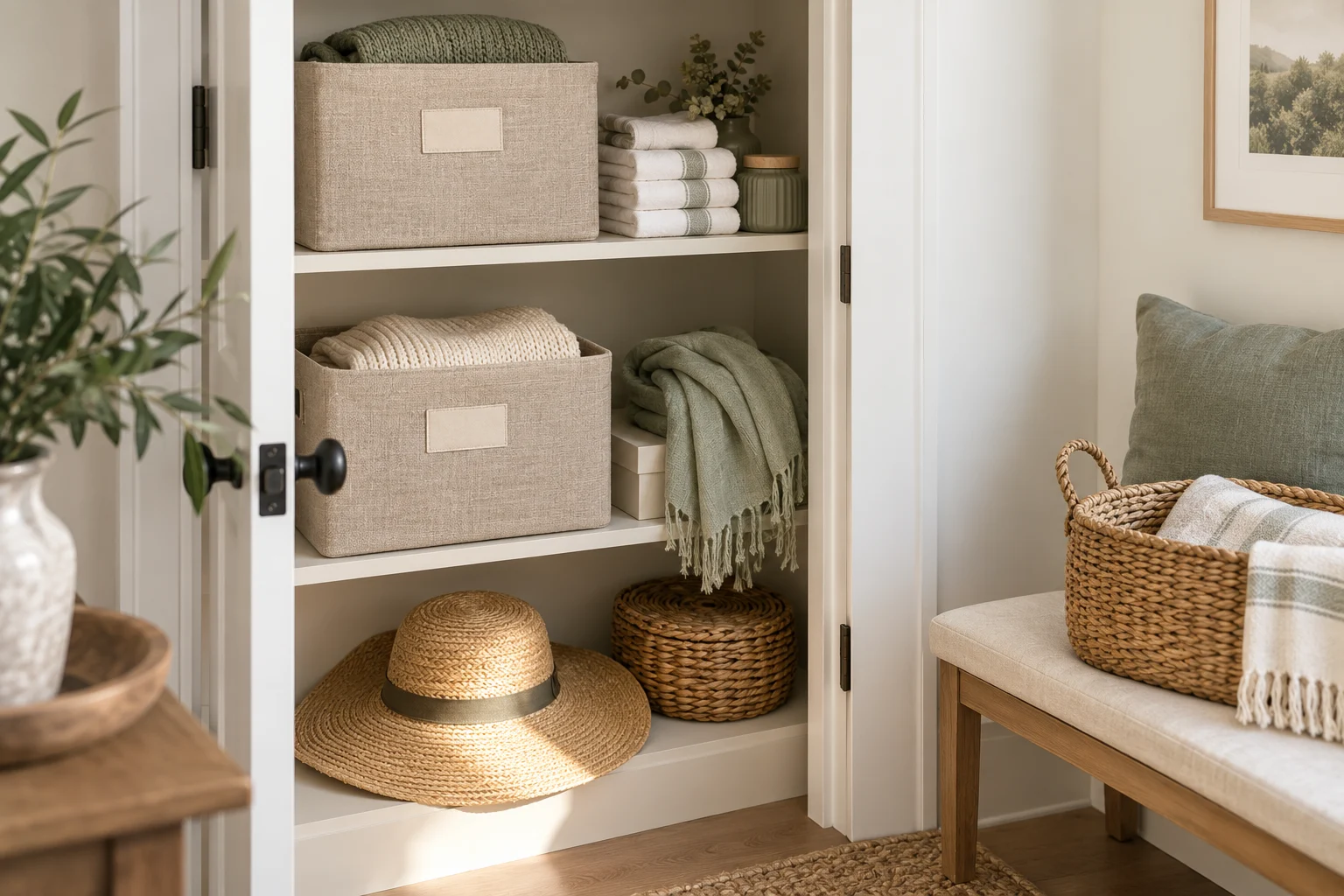
    Seasonal clothes and accessories sorted into storage baskets

    Why seasonal items create friction in small homes

    Seasonal household items often move between useful and unused states. A fan, blanket, picnic set, humidifier, holiday decoration, or rain gear may be needed later, but it does not need to occupy the easiest-to-reach space today. When these items are stored without a shared rule, several small problems appear:

    • Items from different seasons become mixed together.
    • A container is opened repeatedly because its contents are unclear.
    • Useful items are stored too far away, while rarely used items occupy convenient space.
    • One item is kept in a different place from its accessories.
    • A short tidy-up turns into a full-room project.

    A calmer home flow comes from reducing decisions at the moment of putting something away. The system below focuses on four questions: What is this for? When will it be used? How often will it be accessed? Where can it return without blocking daily movement?

    The four-part storage rule

    1. Prepare: define the small project

    Choose one seasonal category or one storage zone. Examples include cold-weather bedding, warm-weather accessories, outdoor meal items, or holiday decorations. Avoid combining several unrelated categories in the same 15-minute session.

    Set out one temporary staging area, such as a clear section of the floor, a table corner, or an empty chair. Gather only what you need to move the items: a cloth if dust is visible, labels or a marker, and an empty bag or box for items that need a different decision. You do not need to buy new storage equipment before testing the system.

    2. Sort: make four decisions

    Handle each item once when possible and place it into one of these groups:

    • Use soon: The item is likely to be needed in the next part of the season or within the next few weeks.
    • Store away: The item is useful but not part of the current routine.
    • Move elsewhere: The item belongs with another category, room, or household member.
    • Review later: The item needs a separate decision because it is damaged, duplicated, incomplete, or no longer relevant.

    The “review later” group prevents a storage session from becoming a difficult decluttering session. Put those items together and give them a visible note or a later review date. The purpose is to contain the uncertainty, not to hide it inside a box.

    3. Act: match access to storage

    Place “use soon” items where they can be reached without disturbing other stored items. Place “store away” items in a less convenient location, provided the area is dry, stable, and suitable for the item. Keep sets together when a part is difficult to replace or easy to lose.

    For each container, use a label that answers a useful question. “Winter” may be too broad if the container holds several unrelated objects. “Winter bedding—guest room” or “Outdoor picnic items” gives a clearer retrieval cue. If you do not have labels, write the category on a piece of paper and place it where the contents can be seen.

    4. Review: check the home flow

    Stand back and look at the route you use most often. Check whether the stored items block a doorway, drawer, cleaning tool, laundry path, or frequently used shelf. Then ask whether the next person in the household could find the category without an explanation. If not, change the location or improve the label.

    The 15-minute action plan

    Time Action Decision rule
    0–2 minutes Prepare one category and one staging area. Keep the project narrow enough to finish a visible part.
    2–7 minutes Sort each item into use soon, store away, move elsewhere, or review later. Do not solve every uncertain item during the sorting phase.
    7–13 minutes Return items to destinations and group accessories. Place frequent-use items closer to the point of use.
    13–15 minutes Label, remove the staging area, and check the walking route. Leave no temporary pile without a next action.

    Use a timer if it helps you stop at the planned point. When the timer ends, unfinished work can become the next session’s starting point. A short routine stays useful when it has a clear stopping boundary.

    Storage rules that work in a one- or two-person home

    Give each category a home

    Choose one primary location for each seasonal category. The location can be a shelf, drawer, cabinet section, under-bed area, or another suitable storage zone. A primary home reduces the chance that similar items will be distributed across several places.

    Store by retrieval effort, not only by size

    A small item may deserve an easy-to-reach location if it is used often. A large item may be acceptable in a harder-to-reach location if it is used briefly during one part of the year. Consider both physical size and retrieval frequency before assigning a space.

    Keep components with the main item

    Place cables, covers, spare parts, attachments, and related instructions with the item they support when practical. If a component needs a separate location, add a note to the main container. This reduces the chance of finding the main item but not the part needed to use it.

    Leave a little decision space

    Do not fill a storage area so tightly that returning one item requires removing several others. Some open space makes future seasonal changes easier and provides room for items that genuinely belong in the category.

    Use visible cues for shared spaces

    In a two-person home, a clear label or category name can be more useful than relying on memory. Use familiar words and avoid labels that describe the storage container rather than its contents. “Rainy-day entry items” communicates more than “blue box.”

    Copyable seasonal storage checklist

    Copy this checklist into a note or print it for the next short tidy-up:

    • [ ] Choose one seasonal category.
    • [ ] Select one staging area.
    • [ ] Gather a marker, label, cloth, and review bag or box.
    • [ ] Set a 15-minute boundary.
    • [ ] Sort items into use soon, store away, move elsewhere, or review later.
    • [ ] Keep important accessories with the main item.
    • [ ] Move frequent-use items closer to their point of use.
    • [ ] Place stored items in a dry, stable, suitable location.
    • [ ] Label the container or shelf with a clear category name.
    • [ ] Give review-later items a separate follow-up note.
    • [ ] Remove the staging area.
    • [ ] Check that doors, drawers, walkways, and daily-use surfaces remain clear.

    What to do when the routine does not fit

    Some items need special handling. Fragile objects may need protective packing. Fabrics may need to be clean and fully dry before storage. Items affected by moisture, heat, weight, or pests should be placed only in a location suitable for their material. If you are unsure whether a location is appropriate, pause the storage decision and check the item’s care guidance.

    If the category cannot be sorted in 15 minutes, reduce the scope. Work on one shelf, one drawer, or one type of item instead of extending the session indefinitely. If the same category repeatedly creates confusion, the issue may be the storage rule rather than the amount of storage. Consider separating items by point of use or by season instead of adding another mixed container.

    FAQ

    Should I buy storage containers first?

    Not necessarily. Sort the items and test a destination with the storage already available. This reveals the category’s actual shape and access needs before you choose any additional container.

    What if I cannot decide whether to keep an item?

    Place it in the review-later group rather than making a rushed decision. Keep that group separate from active seasonal storage and record the follow-up action. A contained delay is easier to manage than an unclear box.

    Where should items used every season go?

    Keep them in a location that is easy to reach during the relevant period. If the item is used frequently, point-of-use storage may be more useful than a distant storage area, even when the item is seasonal.

    How often should I repeat the routine?

    Repeat it when the season changes, when a storage zone becomes difficult to use, or when a category gains several new items. The routine can also be used after returning from a trip or completing a temporary household project.

    Conclusion

    A practical home organization system for seasonal items does not need a large reset. Start with one category, sort by the next useful decision, return items to a clear home, and review the walking route before stopping. The four-part sequence—prepare, sort, act, and review—keeps a 15-minute tidy-up focused while creating storage rules that can be repeated across the home.


  • A Refined Butterfly Necklace for Everyday Styling

    Gold-colour butterfly pendant necklace with a heart-shaped detail and link chain

    The French luxury 18K gold titanium steel necklace for women heart-shaped butterfly pendant collar chain trendy stainless steel brings a playful motif into a polished everyday jewellery wardrobe. Its visual identity is built around a butterfly pendant, a heart-shaped detail, a gold-colour finish and a link chain, creating a piece that can move easily between relaxed daytime dressing and more considered evening looks.

    Listed by Yuanchen as a women’s pendant necklace, it belongs naturally in a rotation of daily accessories. The design is expressive without relying on an elaborate setting: the butterfly remains the focal point, while the collar-chain silhouette gives the necklace a defined presence around the neckline. It is a thoughtful choice for anyone who prefers jewellery with a recognisable shape and a modern, trend-led mood.

    The product information lists stainless steel as the jewellery main material, gold-colour plating, a link-chain construction and a bezel setting. The listing also identifies the application as casual, making this an adaptable accent for everyday outfits, personal styling, and OOTD-inspired looks.

    Design details that define the look

    • Butterfly focal point: The butterfly shape gives the necklace its signature character and introduces a light, feminine note to simple outfits.
    • Heart-shaped pendant detail: The heart and butterfly imagery work together to create a romantic visual language while remaining clearly trend-oriented.
    • Gold-colour finish: The warm-toned appearance pairs naturally with neutral clothing and can be coordinated with other gold-colour accessories.
    • Link-chain structure: The link chain adds definition around the neck and supports the pendant-led composition.
    • Necklace category: The listing classifies it as a pendant necklace for women, making the styling intention immediately clear.
    • Casual versatility: Its stated application is casual, so it can serve as an everyday finishing touch rather than an occasion-specific piece.
    • Recognisable styling language: The butterfly motif, gold-colour plating and trendy style create a cohesive accessory statement without requiring a heavily layered look.

    These details make the necklace particularly appealing when an outfit needs one central accent. The pendant can carry the visual interest on its own, while the chain offers enough structure to keep the overall impression composed.

    Ways to wear it through the week

    With a clean everyday uniform: Pair the necklace with a plain top, knitwear or a simple shirt when you want a small but visible point of distinction. The butterfly pendant can soften minimal clothing and give a familiar daily outfit a more personal finish.

    For an OOTD-focused look: Let the necklace become the detail that ties the outfit together. A restrained base allows the heart-shaped butterfly pendant to stand out, while a coordinated gold-colour watch, bracelet or small earrings can create visual continuity.

    With feminine styling: The heart and butterfly motifs suit dresses, softly shaped blouses and other romantic wardrobe pieces. Keep the rest of the jewellery considered so the pendant remains the clearest focal point.

    With casual layers: The necklace can be worn against a T-shirt, fine knit or open neckline to add definition without changing the relaxed character of the outfit. When layering clothing, use the pendant as a neat centre point rather than competing with busy prints.

    For a polished contrast: Style the gold-colour necklace with tailored separates, a dark top or a crisp monochrome palette. The contrast between a structured outfit and a playful butterfly motif can make the overall look feel deliberate and contemporary.

    When coordinating accessories, begin with the pendant’s colour and shape. Gold-colour pieces can echo its finish, while simpler accessories help preserve balance. If you choose to layer necklaces, consider keeping neighbouring chains visually understated so the heart-shaped butterfly remains easy to read.

    How to decide if it suits your collection

    Start with the motif. A butterfly is a distinctive choice, so this necklace will suit a jewellery collection that welcomes expressive symbols rather than only discreet, geometric forms. The additional heart-shaped detail gives it a romantic direction, making it especially relevant if your wardrobe includes soft, feminine or playful elements.

    Next, consider colour coordination. The listing specifies gold-colour plating, which is most straightforward to integrate with warm-toned jewellery and clothing palettes such as cream, beige, brown, black and denim. If your existing accessories are primarily silver-colour, decide whether you want this necklace to introduce contrast or whether you prefer to build a coordinated gold-colour grouping.

    Review the intended setting. The product information describes the application as casual and the style as trendy. That positioning makes it a natural candidate for daily outfits, weekend dressing and OOTD styling. It may be less suitable if you are specifically seeking a restrained, formal or highly traditional necklace.

    Finally, check the product page for the current presentation and purchase information before ordering. The listing identifies stainless steel as the jewellery main material and provides the model number jf110526, brand name yuanchen and origin as Guangdong, China. Use the current product page to confirm any details you need for your selection.

    Frequently asked questions

    What is the main motif?
    The necklace features a butterfly pendant with a heart-shaped design detail.

    What finish is listed?
    The product information lists gold-colour plating.

    What material is specified?
    The jewellery main material is listed as stainless steel. The product title also uses the wording “titanium steel,” so readers should consult the current product page for the latest material presentation.

    What type of chain does it use?
    The listing identifies the chain type as a link chain.

    Is it intended for everyday wear?
    The application is listed as casual, and the product appears in a daily necklace collection, making it suited to everyday styling.

    Does it include a certificate?
    The supplied product information lists the certificate type as none.

    Which jewellery category does it belong to?
    It is classified as a women’s pendant necklace.

    Please verify the current product details, material description, finish, presentation and purchase information on the product page before purchase.

    View the French luxury 18K gold titanium steel necklace for women heart-shaped butterfly pendant collar chain trendy stainless steel at THANKS KAI and consider how its butterfly detail could complement your everyday styling.

    Product: French luxury 18K gold titanium steel necklace for women heart-shaped butterfly pendant collar chain trendy stainless steel

  • A Refined Pear-Cut Necklace for Everyday Styling

    Pear-cut lab-grown diamond solitaire pendant necklace shown in a gold finish

    The Starsgem Fine Jewelry Solitaire 1ct Pear Brilliant Cut Pendant 10k 14k Gold Pear Shape Lab Diamond Necklace brings a clear, graceful focal point to a considered jewellery wardrobe. Its solitaire pear-cut pendant is designed to read as elegant rather than elaborate, making it a natural companion for daily dressing as well as more formal occasions.

    The design is offered in 10k and 14k gold, with yellow gold, white gold, and rose gold options. That range makes the necklace easy to approach from different styling directions: warm and traditional in yellow gold, crisp and understated in white gold, or softly romantic in rose gold. The listed main stone is a synthetic, lab-grown diamond in a pear shape, with a listed white diamond colour of D.

    With occasions listed including gifting, parties, weddings, anniversaries, and engagements, this piece can be selected as either a personal finishing touch or a meaningful present. Its unisex designation also encourages a broader interpretation of the pendant: wear it as a delicate statement, layer it with other necklaces, or let it stand alone against a clean neckline.

    Design Details and Selection Points

    A distinctive solitaire silhouette

    The pear cut combines a rounded end with a tapered point, giving the pendant an elegant directional shape. As a solitaire design, it keeps attention on the central stone rather than on a busy arrangement. This makes the necklace especially useful when the rest of an outfit is intentionally restrained.

    Six gold combinations

    • 14k yellow gold: a classic, luminous choice for warm neutrals, cream tailoring, denim, and traditional jewellery combinations.
    • 14k white gold: a cooler option that pairs naturally with monochrome dressing, silver-toned accessories, and clean contemporary lines.
    • 14k rose gold: a softer, warmer interpretation suited to blush, ivory, taupe, and feminine tonal styling.
    • 10k yellow gold: a familiar golden finish for everyday wardrobes built around earthy or warm colours.
    • 10k white gold: a streamlined alternative for understated outfits and mixed cool-metal looks.
    • 10k rose gold: a gentle colour direction for subtle contrast against neutral or softly coloured clothing.

    The supplied product information identifies the main jewellery material as gold and lists precious-metal purity at 58.5%. It also identifies the diamond type as synthetic, lab grown, with no diamond certificate or certificate type listed. These details are important selection points for anyone comparing the six available gold combinations.

    Style language

    The listed style is vintage and fashionable jewellery. In practice, the pear silhouette can bridge both moods: it has a classic outline that works with a polished blouse, while its clean solitaire presentation can also suit a modern T-shirt, knit, or tailored jacket.

    How to Wear It Across the Wardrobe

    For daily looks

    For an everyday outfit, allow the pendant to sit against a simple neckline so its shape remains visible. A white shirt, fine knit, plain crew neck, or uncomplicated dress creates a calm background. Yellow gold works particularly well with beige, camel, chocolate, olive, and denim; white gold complements black, grey, navy, and bright white; rose gold can soften stone, cream, dusty pink, or warm grey.

    For an OOTD-ready finish

    When building a carefully styled daily look, use the necklace as the final point of balance. If the outfit has strong volume in the sleeves or shoulders, keep other jewellery minimal and let the solitaire provide vertical emphasis. For a more layered approach, combine it with fine chains of different lengths while keeping the additional pieces visually quiet, so the pear pendant remains the focal point.

    For occasion dressing

    The product information lists party, wedding, anniversary, and engagement occasions. For these settings, the pendant can accompany a clean neckline, a slip-style silhouette, or tailored evening separates. White gold offers a restrained, polished effect; yellow gold adds warmth; rose gold introduces a softer romantic note. The choice should follow the rest of the outfit and the wearer’s existing jewellery rather than a strict rule.

    For gifting

    A solitaire pendant is a versatile gift direction because it can mark a personal milestone without relying on an overly ornate design. Consider the recipient’s usual metal preference, the colours in their wardrobe, and whether they typically wear classic, contemporary, or softly romantic accessories. The listed occasion range makes the necklace relevant to both celebratory and relationship-focused gifting.

    A Considered Buying Guide

    Begin with the metal colour. Look at the jewellery already worn most often: yellow gold suggests continuity with warm-toned pieces, white gold provides a cooler and more neutral visual language, while rose gold offers a distinct but gentle alternative. If the necklace is intended as a gift, observing the recipient’s everyday accessories can be more useful than choosing solely by personal taste.

    Next, compare 10k and 14k options as listed. The supplied data identifies both purity options and states a precious-metal purity of 58.5%; confirm the exact purity and variant information on the product page before placing an order. The product is presented as a pear brilliant cut pendant with a listed 1ct description, while the available product details should be checked for any additional variant information.

    Consider how the pendant will function in the wardrobe. Choose a colour that can move between daily outfits if versatility is the priority. For a special-event or gift-led purchase, choose the finish that best expresses the intended mood. Since the product information lists no certificate type and no diamond certificate, readers who require particular documentation should verify what is included directly on the product page.

    For coordination, keep the pear shape central. A small, refined earring or a slim bracelet can support the necklace without competing with it. When storing the piece, use a clean, separate jewellery space and avoid placing it where it may become tangled with other chains. Before wearing, check the pendant and chain visually and follow any care instructions provided on the product page.

    Frequently Asked Questions

    What is the stone shape?

    The listed diamond shape is pear cut, presented as a solitaire pendant.

    Is the diamond lab grown?

    Yes. The supplied details identify the diamond type as synthetic, lab grown.

    Which gold options are listed?

    The necklace is listed in 10k and 14k gold, each with yellow gold, white gold, and rose gold options.

    Is a diamond certificate listed?

    No. The supplied information lists no diamond certificate and no certificate type.

    Can it suit formal occasions?

    Yes. The listed occasions include parties, weddings, anniversaries, and engagements, as well as gifting and daily wear.

    Please verify the current product details, available gold variant, purity information, documentation, care guidance, and purchase information on the product page before purchase.

    View the Starsgem Fine Jewelry Solitaire 1ct Pear Brilliant Cut Pendant 10k 14k Gold Pear Shape Lab Diamond Necklace at THANKS KAI to explore the listed options.

    Product: Starsgem Fine Jewelry Solitaire 1ct Pear Brilliant Cut Pendant 10k 14k Gold Pear Shape Lab Diamond Necklace

  • A Compact Black Purse for Day-to-Evening Styling

    LOUIS VUITTON Noe Purse LV Charms in black calfskin leather with LV charms and gold-color hardware

    LOUIS VUITTON Noe Purse LV Charms presents a compact interpretation of the House’s recognisable trunk-inspired vocabulary. Designed by Nicolas Ghesquiere exclusively for the Korea show, this black calfskin leather purse brings together a rounded, highly considered silhouette and distinctive metal detailing. Its small proportions make it an elegant choice for edited carry, while the drawstring closure and decorative charms give the design an immediately identifiable finish.

    At 11.5 cm wide, 11.5 cm high and 11.5 cm deep, it is a piece to approach as a focused accessory rather than an expansive everyday tote. The balanced dimensions allow the purse to sit neatly within a refined wardrobe, whether styled with understated tailoring, a soft knit, or an evening look. Black calfskin leather keeps the visual direction versatile, while gold-color hardware introduces a polished contrast.

    The appeal lies in its ability to function as both a compact day bag and a distinctive day-to-evening accent. Rather than relying on excess decoration, it uses a concentrated arrangement of House details: trunk-style metal corners, an embossed LV Circle charm, a round charm engraved with LV, and the signature drawstring closure. Together, these elements create a strong visual identity without losing the clean impact of the black finish.

    Design Details and Styling Character

    LOUIS VUITTON Noe Purse LV Charms is defined by a compact, rounded construction in black calfskin leather. The material is specified for the leather, trim and lining, giving the purse a consistent tactile and visual language throughout. Gold-color hardware provides a warm counterpoint to the deep black surface and helps the decorative elements stand out when the bag is worn.

    • Compact proportions: the width, height and depth are each 11.5 cm, creating a neat, balanced profile for carefully selected essentials.
    • Drawstring closure: a practical design feature that also reinforces the purse’s softly gathered, compact character.
    • Trunk-inspired metal corners: a structured House reference that adds definition to the silhouette.
    • Signature charms: the embossed LV Circle charm and round LV-engraved charm bring focused detail to the exterior.
    • Black calfskin leather: a versatile foundation for both tonal dressing and high-contrast styling.
    • Gold-color hardware: a refined accent that coordinates naturally with gold jewellery and warm-toned accessories.

    For a quiet daytime look, pair the purse with black trousers, a crisp shirt and a fine-gauge knit. The compact shape can provide a considered finishing note without competing with the rest of the outfit. For a more expressive approach, use it against cream, camel or soft grey, allowing the black leather and gold-color hardware to become the focal point.

    In the evening, its day-to-evening character makes it well suited to a streamlined dress or tailored separates. Keep other accessories selective so the LV charms and trunk-style corners remain legible. A simple watch, small earrings or a single gold-tone detail can echo the hardware while preserving the purse’s distinctive signature flair.

    How to Wear a Compact Statement Purse

    The most effective way to style this purse is to treat its compact size as an invitation to edit. Before carrying it, consider the essentials you genuinely need for the occasion and keep the overall composition light. This approach suits the bag’s small, balanced dimensions and allows its design details to remain central.

    1. Refined daily dressing: combine the black purse with a monochrome base, such as a black skirt or trousers with a matching top. Add a contrasting outer layer in a neutral shade to create depth while maintaining a clean, polished outline.
    2. Smart casual coordination: use it with denim, a tailored jacket and minimal footwear. The formal cues of the gold-color hardware and charms can elevate relaxed pieces without making the outfit feel overworked.
    3. Work-adjacent occasions: style it with compact tailoring and keep larger work items separate, as the stated dimensions are designed for edited carry rather than broad storage. Its defined shape can complement a precise blazer or structured coat.
    4. Day-to-evening dressing: transition from a knit or shirt during the day to a sleek dress or tailored evening look. Changing only the surrounding accessories can make the purse feel newly focused while its black finish remains consistent.
    5. Detail-led accessorising: echo the gold-color hardware with restrained jewellery, or let the LV charms stand alone against a simple outfit. Avoid introducing too many competing emblems if you want the House details to read clearly.

    Colour coordination is particularly straightforward. Black offers a strong foundation for white, ivory, grey, camel, burgundy and denim. Gold-colour accents can be repeated subtly through jewellery, eyewear details or footwear hardware. Alternatively, keep the rest of the look cool and minimal so the hardware becomes a small, warm point of contrast.

    Selection and Care Considerations

    When considering LOUIS VUITTON Noe Purse LV Charms, begin with the intended role. Its 11.5 cm cube-like dimensions make it best suited to compact, selective carry. If your usual routine requires a larger quantity of belongings, consider whether this purse will serve as a focused accessory for specific occasions rather than as your only daily bag.

    The black colour is a practical styling choice because it works across seasons and can move between understated and more formal wardrobes. The design is also particularly suitable if you appreciate visible House detailing: the LV Circle charm, engraved round charm and trunk-style metal corners are central to its character. Those who prefer an entirely minimal exterior may find the signature elements more expressive than expected.

    The material details are equally important to the selection process. The purse is described as calfskin leather, with calfskin leather trim and lining, alongside gold-color hardware. As a leather item with decorative metal components, it should be handled thoughtfully and kept away from situations that may cause avoidable rubbing, marking or contact with moisture. Store it in a clean, dry place and avoid placing heavy or sharp objects inside the compact interior.

    For regular coordination, rotate it with outfits that allow the black surface to remain clear and visually intentional. When setting it down, choose a clean surface, and take care around rough textures that could catch against the leather or hardware. Use only care methods appropriate for the specified leather and follow any current guidance provided with the product. Packaging and accessories should also be checked carefully: only items shown in the product photos and expressly listed on the product page are included, and original brand packaging is not guaranteed.

    The listed country of manufacture is France, and the product code is LVUHJBJVBCKZZZZZ00. These details can help you identify the precise item when reviewing the product page and comparing the presentation with your styling needs.

    Frequently Asked Questions

    What is the size of LOUIS VUITTON Noe Purse LV Charms?

    Its listed measurements are 11.5 cm in width, 11.5 cm in height and 11.5 cm in depth.

    What materials and colours are specified?

    The purse is specified in black calfskin leather, with calfskin leather trim and lining, plus gold-color hardware.

    What are the main design details?

    It features trunk-style metal corners, an embossed LV Circle charm, a round LV-engraved charm and a drawstring closure.

    Can it be styled for evening occasions?

    Yes. Its compact proportions, black finish and distinctive hardware make it suitable for a carefully edited day-to-evening look.

    What is included with the item?

    Only items shown in the product photos and expressly listed on the product page are included. Original brand packaging is not guaranteed.

    Please verify the current product details, measurements, included items and purchase information on the product page before purchase.

    View LOUIS VUITTON Noe Purse LV Charms at THANKS KAI and consider how its compact black silhouette could complement your wardrobe.

    Product: LOUIS VUITTON Noe Purse LV Charms

  • A Refined Guide to Everyday Ballet-Pump Styling

    JIMMY CHOO Eleri ballerinas in black with square toe, pearl-embellished strap and open-weave detail

    JIMMY CHOO Eleri ballerinas in soft spazzolato leather bring a composed, distinctive finish to the ballet-pump wardrobe. Designed in a BLACK/BLACK colourway, this pair balances a closed square toe and low, flat heel with contrasting-looking texture and detail: patent leather, open-weave fishnet, visible stitching and a pearl-embellished buckled strap. The result is a silhouette that feels polished without becoming overly formal.

    As part of the women’s ballet-pump edit, these ballerinas are especially well suited to wardrobes built around considered neutrals, tailored separates and quietly expressive accessories. The 2 cm heel keeps the profile low, while the structured toe and decorative strap give the shoe a clear visual identity. A side logo adds another branded detail without displacing the overall elegance of the design.

    The design is manufactured in Italy and is listed as true to size, with the recommendation to take your normal size. The stated composition is 60% textile, 20% leather, 10% rubber, 5% salpa and 5% metal. These details make the pair a useful choice for anyone seeking a refined flat with texture, definition and a strong evening-to-day styling range.

    Design details that shape the look

    The appeal of this pair lies in the dialogue between classic ballet-pump codes and more decorative finishing. Its flat, low-heel construction creates a restrained foundation, while the square toe gives the front of the shoe a modern, architectural line. This is a useful distinction when choosing between softer rounded shapes and a more defined silhouette.

    • Closed square toe: a clean, structured front that works naturally with tailored and streamlined outfits.
    • Low flat heel: the heel height is listed as 2 cm / 0.79 in, preserving a low-profile appearance.
    • Black-on-black palette: the BLACK/BLACK colourway makes the pair easy to coordinate with monochrome dressing and darker accessories.
    • Open-weave fishnet detail: introduces texture and visual lightness within the otherwise dark design.
    • Patent leather finish: contributes a polished surface and a subtle contrast against the textile elements.
    • Pearl-embellished buckled strap: provides the most distinctive decorative accent, bringing a jewellery-like note to the upper.
    • Visible stitching and side logo: add definition to the construction and reinforce the considered finish.

    The material information identifies a mixed composition of textile, leather, rubber, salpa and metal. Because the pair combines several visible surfaces and a decorative fastening, it is best understood as a detail-led ballet pump rather than a purely minimal basic.

    How to wear them across the week

    For a precise daytime look, style the ballerinas with straight-leg trousers and a crisp shirt. The square toe echoes the clean lines of tailoring, while the pearl-embellished strap softens the outfit with a more decorative touch. Keep the rest of the accessories restrained so the shoe remains the focal point.

    They also work naturally with a tonal black outfit. Try a black knit, a fluid midi skirt and the BLACK/BLACK ballerinas for an understated silhouette with variation coming from surface rather than colour. The patent leather and open-weave fishnet details can create gentle depth even when every garment follows the same dark palette.

    For a more relaxed daily look, pair them with cropped denim or ankle-length trousers and a fine-gauge top. Showing a little of the foot can draw attention to the strap and open-weave detail, while the low heel keeps the overall styling grounded. A structured handbag can echo the square toe and make the outfit feel intentional.

    For occasions that call for a refined finish without a high heel, combine the ballerinas with a simple dress in black, cream or another quiet neutral. The visible stitching and pearl detail offer enough presence for an occasion-led outfit, while the flat construction keeps the profile more restrained than a conventional dress shoe.

    When coordinating jewellery, repeat the pearl accent subtly rather than matching it heavily. A single pearl-inspired detail or a clean metal accessory can connect with the buckle without competing with it. The strongest combinations allow the shoe’s mix of patent leather, textile texture and embellishment to remain clearly visible.

    What to consider before choosing

    Begin with the silhouette you want. The closed square toe gives these ballerinas a more defined appearance than a rounded ballet pump, so they suit wardrobes that favour crisp proportions and polished lines. If your existing shoes are mostly soft and understated, this pair can add structure without introducing a bright colour.

    Next, consider your approach to texture. The design combines patent leather with open-weave fishnet, visible stitching and a pearl-embellished buckle. This makes it particularly suitable for outfits where the shoe is expected to contribute detail. If you prefer an entirely plain flat, the decorative elements may feel more prominent; if you enjoy texture-led accessories, they offer useful styling flexibility.

    Check the proportions against your usual wardrobe. A 2 cm / 0.79 in heel keeps the shoe close to the ground, making it visually compatible with trousers, skirts and dresses that benefit from a low profile. The listed colour, BLACK/BLACK, is a practical foundation for black tailoring, tonal dressing and neutral separates.

    For fit, the supplied information states that the ballerinas fit true to size and recommends taking your normal size. Consult the available size guide before purchase, particularly if you are deciding between sizes or are unfamiliar with the brand’s fit. The product code is JCH2F69GBCKJA11A00.

    Finally, plan care around the mixed construction. The product includes textile, leather, rubber, salpa and metal, alongside a patent leather finish and decorative buckle. Keep the pair protected from avoidable contact with rough surfaces, and follow appropriate care guidance for each material rather than treating the shoe as a single-surface design. Store it carefully so the upper, strap and embellishment retain their intended presentation.

    Frequently asked questions

    What type of shoe is this?
    It is a pair of ballet pumps with a closed square toe, flat low heel, buckled strap, visible stitching, patent leather and open-weave fishnet detailing.

    What is the heel height?
    The listed heel height is 2 cm / 0.79 in.

    What colour are the ballerinas?
    The colour is BLACK/BLACK.

    How should I choose the size?
    The supplied product information states that the ballerinas fit true to size and recommends taking your normal size. Check the size guide before ordering.

    Where are they made?
    The country of manufacture is listed as Italy.

    What materials are listed?
    The composition is 60% textile, 20% leather, 10% rubber, 5% salpa and 5% metal.

    Please verify the current product details, composition, sizing information and purchase information on the product page before purchase.

    View JIMMY CHOO Eleri ballerinas in soft spazzolato leather at THANKS KAI.

    Product: JIMMY CHOO Eleri ballerinas in soft spazzolato leather

  • A Refined Mini Bucket Bag for Versatile Styling

    Diorstar Mini Bucket Bag in 928 BleuMulticolor with adjustable leather shoulder strap

    Diorstar Mini Bucket Bag brings a distinctive Dior perspective to the bucket-bag silhouette, balancing a compact profile with considered everyday versatility. Presented in 928 BleuMulticolor, it combines cotton, calfskin and technical fabric in a design that feels expressive without losing its polished character.

    The proportions are deliberately compact: 13 cm wide, 16 cm high and 10 cm deep. Inside, the bag is organised around one main compartment and one interior slip pocket, while a magnetic closure keeps the form visually clean. A leather tag bearing the Christian Dior Paris signature and star adds a recognisable finishing detail.

    For changing moments throughout the day, the adjustable and removable leather shoulder strap gives the bag more than one styling direction. Carry it as a neat shoulder accessory, or use its compact presence as a focused accent within a more considered outfit. The included dust bag also provides a dedicated way to store the piece when it is not in use.

    Design details that shape its character

    The appeal of Diorstar Mini Bucket Bag lies in the balance between its tactile composition and its practical layout. The main exterior composition is listed as 50% cotton, 35% calfskin, 10% polyester and 5% acrylic. The combination gives the design a layered visual identity, while the BleuMulticolor colourway offers room to coordinate with both quiet neutrals and more colourful wardrobe choices.

    • Compact bucket-bag proportions: the 13 cm by 16 cm by 10 cm format creates a small, defined silhouette that can sit comfortably within a streamlined look.
    • Distinctive material mix: cotton, calfskin and technical fabric provide contrast in the overall design, with a lining composed of cotton, linen and technical fabric.
    • Simple interior organisation: one compartment and one interior slip pocket keep the structure straightforward for selected essentials.
    • Magnetic closure: the closure maintains the clean appearance of the bag while providing a clear opening and closing detail.
    • Signature leather tag: the Christian Dior Paris signature and star bring a focused heritage note to the exterior.
    • Adaptable strap: the leather shoulder strap is both adjustable and removable, allowing the silhouette to be styled according to the occasion.
    • Thoughtful storage accessory: a dust bag is included with the piece.

    Made in Italy, the bag presents itself as a compact accessory with a clear design vocabulary: a bucket shape, a graphic colour expression and carefully placed Dior signatures.

    How to style a compact statement accessory

    Its strongest styling quality is flexibility. The BleuMulticolor colourway can become the focal point of a pared-back outfit, or it can join a more expressive combination when the rest of the look shares a similar spirit. Consider pairing it with a neutral coat, tailored separates or a simple knit so that the bag’s colour and material contrast remain visible.

    For a relaxed daytime ensemble, the adjustable shoulder strap supports an easy cross-body or shoulder-led styling approach, depending on the desired line of the outfit. Denim, a clean shirt and understated footwear allow the bag to add polish without making the look feel overly formal. For a more refined daytime setting, coordinate it with tonal blue pieces or soft monochrome layers, using the leather tag as a subtle signature detail.

    The removable strap also creates another direction. Without it, the bag can be treated as a more sculptural accessory when your chosen styling allows a hand-carried format. This is particularly effective with a simple silhouette where the compact bucket shape can stand out clearly. Because the dimensions are modest, it is best approached as a curated accessory rather than a large carry-all.

    For evening or occasion dressing, let the bag provide a touch of colour against a dark or neutral base. A minimal dress, sleek tailoring or a refined skirt-and-knit combination can give the multicolour finish enough space to read as intentional. Keep surrounding accessories selective if you want the Christian Dior Paris signature and star to remain the visual punctuation.

    When not in use, the included dust bag offers a dedicated storage option. Keeping the bag with its supplied accessory helps maintain an organised wardrobe presentation and makes it easier to identify when planning future outfits.

    What to consider before choosing it

    Start with the proportions. At 13 cm wide, 16 cm high and 10 cm deep, Diorstar Mini Bucket Bag is suited to a compact carry. Review what you typically take with you and consider whether one main compartment with one interior slip pocket reflects your preferred level of organisation. The format is most appropriate when you want to carry selected essentials rather than a broad daily load.

    Next, consider colour coordination. 928 BleuMulticolor is a characterful choice, so it can be used in two ways: as the central colour note in a neutral wardrobe, or as part of a deliberate colour story with complementary blues and varied tones. If your existing accessories are mostly understated, the bag can add visual interest without requiring a complete change of style.

    Pay attention to the strap configuration as well. The adjustable and removable leather shoulder strap supports several ways of wearing the bag, but the ideal arrangement depends on how you prefer your accessories to sit within an outfit. Think about whether you value a hands-free shoulder option, a more compact appearance, or the ability to alternate between the two.

    Finally, review the composition and details carefully. The piece combines cotton, calfskin and technical fabric externally, with a cotton, linen and technical fabric lining, a magnetic closure and a leather signature tag. These features define its look and should align with the aesthetic you want from a distinctive mini bucket bag.

    Frequently asked questions

    What is the colour of the bag?

    The listed colour is 928 BleuMulticolor.

    What are its measurements?

    The item measurements are 13 cm in width, 16 cm in height and 10 cm in depth.

    How is the interior organised?

    It has one compartment and one interior slip pocket, with a magnetic closure.

    Can the shoulder strap be adjusted or removed?

    Yes. The leather shoulder strap is adjustable and removable.

    What materials are listed?

    The main composition is cotton, calfskin and technical fabric. The listed material percentages are 50% cotton, 35% calfskin, 10% polyester and 5% acrylic. The lining is described as cotton, linen and technical fabric.

    Is a storage accessory included?

    Yes. A dust bag is included.

    Where was it manufactured?

    The country of manufacture is Italy.

    Please verify the current product details, measurements, composition, condition and purchase information on the product page before purchase.

    View Diorstar Mini Bucket Bag at THANKS KAI and explore its styling potential.

    Product: Diorstar Mini Bucket Bag

  • A 15-Minute Evening Self-Care Routine for Putting Screens Away

    A 15-Minute Evening Self-Care Routine for Putting Screens Away

    작성자: Kai Life Editorial Team

    If you want to put screens away in the evening but find that the transition feels awkward, try a 15-minute self-care routine built around four steps: prepare, sort, act, and review. The goal is not to create a flawless night or remove every digital distraction. It is to give your evening a clear handoff from screen time to rest, journaling, planning, or another low-pressure activity.

    An evening bedside setup with a phone put away and an open book

    This routine is designed for adults with full schedules. You can use it after work, before bed, or at another point when you want to stop scrolling, streaming, or checking messages. The routine also works when you have only a small amount of energy because each step has a narrow purpose.

    The four-part structure

    A screen-free transition can become easier to repeat when you separate it into four decisions:

    • Prepare: Set up the place and time for putting screens away.
    • Sort: Decide which digital items need attention and which can wait.
    • Act: Put devices away and choose one offline activity.
    • Review: Note what helped and adjust the routine for another evening.

    Keeping these decisions separate prevents one small task, such as replying to a message, from expanding into an unplanned hour online. It also leaves room for real life. If an important message or practical task needs attention, you can record it for later instead of pretending it does not exist.

    Step 1: Prepare the transition

    Suggested time: 3 minutes

    Preparation gives your evening routine a visible starting point. Choose a simple signal that marks the beginning of the 15 minutes. This could be a clock time, the end of a show, the completion of a work task, or the moment you finish a meal.

    Before the transition begins, decide where your main device will go. A shelf, drawer, desk, or charging area can work. The location matters less than having a consistent place that is not immediately in your hand.

    • Choose the starting signal for tonight.
    • Pick a storage or charging location for your device.
    • Place one offline option nearby, such as a notebook, book, sketchpad, or prepared drink.
    • Decide whether you are putting away one device or several.

    Make the setup easy enough to repeat. If placing a phone across the room feels unrealistic, begin with a nearby surface. The routine can change as you learn what fits your space and schedule.

    Step 2: Sort open loops

    Suggested time: 4 minutes

    Many people keep checking a screen because they are holding several unfinished items in mind. Use this short step to sort those items instead of solving all of them.

    On paper or in a notes area that you will close afterward, make three brief groups:

    Group What belongs here Next action
    Needs attention A time-sensitive message or practical task Write when or how you will address it
    Can wait Items that do not need a decision tonight Record a short reminder
    Not needed Scrolling, browsing, or repeated checking Close it and leave it unscheduled

    Keep each note short. “Reply to Sam tomorrow” is more useful for this purpose than writing a full explanation. The point is to create a landing place for unfinished thoughts, not to build a second task list that demands more attention.

    If you need to check one item before putting your device away, give that check a defined boundary. For example, you might read one message, write the next action, and close the app. Avoid turning the sorting step into general browsing.

    Step 3: Act on one offline choice

    Suggested time: 5 minutes

    Now put the screen away and move directly into one small offline activity. A clear choice reduces the empty gap in which you may automatically reach for the device again.

    Choose an activity based on the kind of evening you want:

    • For reflection: Write three lines about what is on your mind.
    • For planning: List one personal priority for tomorrow.
    • For a slower transition: Make a drink, arrange clothing for the next day, or tidy one small surface.
    • For creative time: Read a few pages, sketch, write freely, or work on a small hobby.
    • For a pause: Sit quietly and notice the room without adding another task.

    Journaling can be especially useful when your thoughts feel scattered, but it does not need to follow a formal method. Try one of these prompts:

    • What can I set down for tonight?
    • What would make tomorrow a little easier?
    • What kind of rest or personal time would fit my energy right now?
    • What is one thing I do not need to decide today?

    Stop when the five-minute activity ends or continue if it feels natural. The value of the routine comes from creating a deliberate transition, not from completing a particular amount of journaling or reading.

    Step 4: Review without judging the evening

    Suggested time: 3 minutes

    Use the final minutes to review the system rather than evaluate yourself. A useful review asks whether the routine was easy to start, whether the storage location worked, and whether the chosen offline activity matched your energy.

    Write or consider three short answers:

    1. What helped me put the screen away?
    2. What created friction?
    3. What small change could I try next time?

    Possible adjustments include moving the device location, choosing a shorter activity, preparing the notebook earlier, or changing the starting signal. If the routine did not happen, treat that as information about the setup. You can restart with one part, such as sorting open loops or placing the device in its storage location.

    A copyable 15-minute checklist

    Save or copy this checklist into a notebook. Adapt the wording so it sounds natural to you.

    Time Action Done
    0–3 minutes Choose the starting signal, device location, and offline option. □
    3–7 minutes Sort open loops into needs attention, can wait, and not needed. □
    7–12 minutes Put the screen away and do one offline activity. □
    12–15 minutes Review what helped, what created friction, and one adjustment. □

    How to make the routine easier to keep

    Use a minimum version

    On a busy evening, use a three-part version: record any urgent open loop, place the device away from your immediate reach, and choose one offline action. This keeps the structure available without requiring a full 15-minute block.

    Separate practical tasks from personal time

    Putting a device away may reveal tasks that still need attention. Write those tasks down with a next step and a possible time. Then return to the evening activity. This approach gives practical responsibilities a place without allowing them to occupy the whole transition.

    Keep the choice list small

    Too many options can make a self-care routine feel like another decision-heavy project. Prepare two or three offline choices that suit different energy levels. For example, you might keep one reflective option, one practical option, and one restful option.

    Review the environment

    If the screen remains the easiest option, change the surroundings rather than relying only on motivation. Keep the notebook visible, place reading material within reach, or move the charger to the location you selected. Small environmental changes can support the behavior you are trying to practice.

    FAQ

    What if I need my phone for an important matter?

    Use the sort step to identify the specific matter and write the next action. If you need to remain available, choose a limited arrangement that fits your circumstances, such as keeping the device audible for a defined reason while avoiding unrelated apps. The routine is meant to support practical needs, not deny them.

    Does this routine require journaling?

    No. Journaling is one possible offline activity. You can replace it with reading, preparing for tomorrow, a small creative activity, or a quiet pause.

    What should I do if I start scrolling again?

    Notice where the transition broke down and return to the smallest next step. You might close the current app, write down the open loop that triggered the check, and place the device in its chosen location. A reset can be part of the routine.

    When should I use the 15-minute routine?

    Choose a transition that already exists in your day, such as finishing work, eating dinner, or beginning your bedtime preparation. A consistent cue can make the routine easier to remember, but you can also use it whenever you want to create a screen-free interval.

    Conclusion

    A useful evening self-care routine does not need to fill the entire night. With 15 minutes, you can prepare the transition, sort unfinished digital items, act on one offline choice, and review what to change next time. The aim is a calmer handoff from screens to personal time, shaped around your actual energy and responsibilities. Start with the smallest version that feels workable, then let the routine develop through observation rather than pressure.


THANKS KAI CONTACT

WeChat

위챗에서 QR코드를 스캔해 주세요.
Scan the QR code in WeChat.

Thanks Kai WeChat contact QR code위챗 열기 / Open WeChat